

By Negin Khodayari
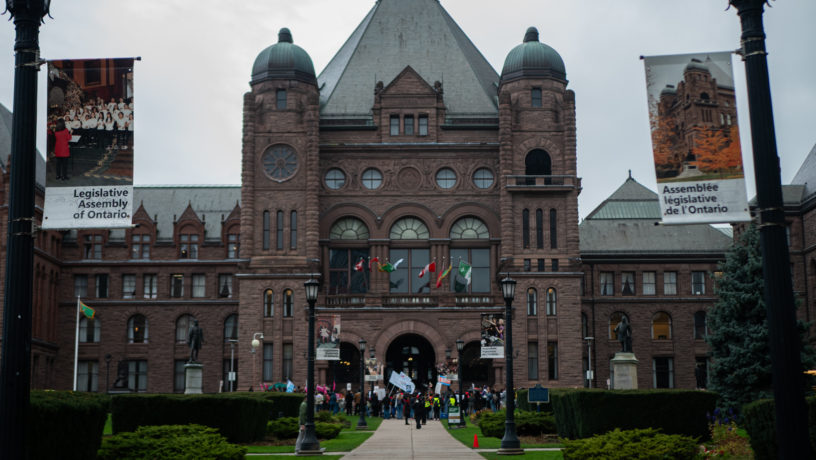
Bill 33, officially called the Supporting Children and Students Act, threatens student organizations across Ontario’s post-secondary campuses. The provincial bill, introduced in May, gives the government more power over what fees colleges and universities can charge students.
At first glance, it looks like a move toward transparency. But the bill could lead to deep cuts to student services, fewer campus supports and more financial instability for institutions already stretched thin.
What’s in Bill 33?
One of the most controversial parts of the bill is a section that gives the Ontario government full control over ancillary fees—extra charges that students pay in addition to tuition. These fees help fund services like mental health programs, food banks, student transit passes, student unions, campus newspapers and radio stations.
If Bill 33 passes, the province can decide which of these fees are ‘essential’ and which ones schools can’t require students to pay.
The bill also includes changes to admissions rules. It would require post-secondary institutions to use more ‘merit-based’ admission criteria, which could limit access for marginalized or underrepresented students.
A repeat of the Student Choice Initiative?
This isn’t the first time the province has tried to control student fees. In 2019, the Ford government launched the Student Choice Initiative (SCI). That policy let students opt in to certain fees, which led to major cuts to campus newspapers, sexual assault support centres, 2SLGBTQIA+ services and other programs.
The court later discovered the Ontario government had not followed the correct procedures and the SCI was dismissed. Now, Bill 33 looks like the government’s second attempt—this time written into law with the correct procedure.
Program cuts already happening
Ontario already has some of the lowest per student funding for post-secondary education in Canada, according to a 2023 Global News report. Domestic tuition has been frozen since 2019 after a 10 per cent tuition cut and many schools rely heavily on international students to balance their budgets.
As of today, colleges and universities have already started cutting programs. Centennial College has suspended over 50 programs this year alone. “We have suspended 54 programs in 2025,” a statement published to the college’s website reads. “These decisions were made as part of a broader strategy to protect the long-term sustainability of the College.”
Who gets to decide what’s “essential”?
Under Bill 33, the government—not students, not schools—would decide which fees are essential. That could mean the end of funding for services that support mental health, equity groups, sexual violence prevention and student media. This could take away local control and silence student voices.
Why student services matter
Student services and campus publications are essential for physical and mental health support and student expression.
Removing student control risks weakening these vital resources and undermining the unique needs of campus communities.
Autonomy ensures students shape their own experiences, fostering inclusion and a strong, supportive environment.
Most student media on Ontario campuses ran referendums in the past where students voted in favour of paying ancillary fees to support these services annually. Now that vote is being threatened.
What’s next?
Student groups across the province have launched petitions and coalitions calling for the government to amend or cancel parts of the bill. Many are demanding that Section 21.1, which gives the province power over ancillary fees, be removed entirely.
The Canadian Federation of Students and Ontario Undergraduate Student Alliance say they’ll keep fighting until students are back in control of how their fees are used.
For now, Bill 33 is still moving through the legislature. But the fight for campus services, access and equity has already begun.









Leave a Reply