

By Gregory Burkell
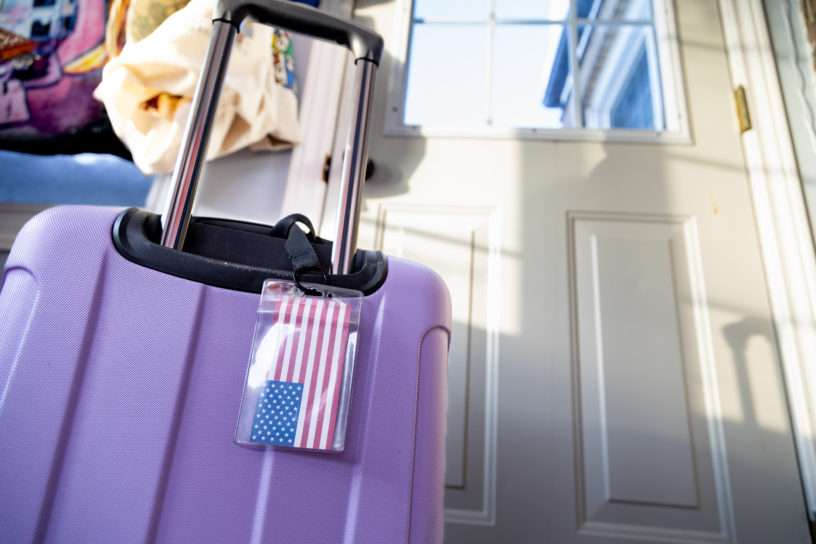
Toronto Metropolitan University (TMU) students and staff are hesitant to travel to the U.S. after the Trump administration’s deployment of Immigration and Customs Enforcement (ICE) officers in cities across the country.
2026 has already been an eventful year. The U.S. federal government captured Venezuelan president Nicolás Maduro, with Trump announcing the next day that his administration would “run the country.”
Four days later, ICE officer Jonathan Ross shot Minneapolis resident, writer and mother Renée Good, killing her in broad daylight. The secretary of homeland security later labelled Good as a “domestic terrorist.”
Keira Ciobanu, a third-year urban and regional planning student at TMU lived in Houston, Texas their whole life until moving to Canada five years ago. “I see ICE as no different from policing that’s allowed to vocally target minorities instead of subtly targeting minorities,” she said.
Ciobanu said when they heard about Good’s murder they were “shocked but not surprised.”
ICE’s stated mission is to “protect America through criminal investigations and enforcing immigration laws to preserve national security and public safety,” according to their website. Despite this, a report from ProPublica found more than 170 U.S. citizens have been detained by ICE agents, with a record of 70,000 detainees total, per CBS reporting.
Ciobanu is concerned for their family in the U.S. Their father immigrated to the U.S. from Romania. “I would be worried in some regard because he has an accent,” they said.
Theo Sucharov, a third-year philosophy student at TMU moved to Canada from Brazil while his grandparents currently live in Colorado. “They have visas and that could get taken away,” he said. “My grandma can’t speak English fully, like she understands and she speaks a little bit, but she can’t pass for an American.”
Sucharov regularly visits family in Colorado, but now he’d think twice about visiting again. “Even with being a Canadian in the U.S., I still feel some sort of unsafety,” he said.
Associate professor Rob Goodman of TMU’s Department of Politics & Public Administration said he’s really cut down his visits. Goodman grew up in Indiana, studying at Duke University before working as a speechwriter in the U.S. House and Senate.
Goodman still plans to see his family but he’ll be visiting less than usual. “It’s simply the case that I don’t want my money to be supporting the economy of an authoritarian state right now,” he said.
The Trump administration has been making threats to Canadian sovereignty since the beginning of his term in January 2025, with talks of Canada becoming the 51st state.
“It’s really hard to imagine treating the [U.S.] as a normal country to go vacationing in when it’s a country that poses such a direct threat to the place where I live,” said Goodman.
Ciobanu intends to continue visiting family but they say if things get worse they might have to stop altogether. They think the safest thing for their family is to leave the country entirely.
“I’m trying to convince them: sell the house and move somewhere else,” they said.




Leave a Reply