

By Harsh Kumar
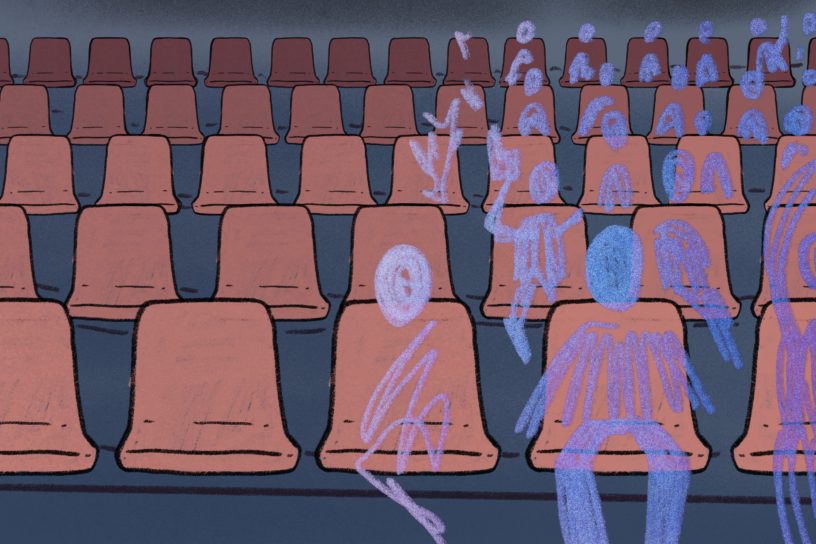
Some Toronto Metropolitan University (TMU) athletes are highlighting reasons Canadian university sports and their governing body, U Sports, get overshadowed by college athletics south of the border.
The National Collegiate Athletic Association (NCAA) has helped turn collegiate sports into a multibillion-dollar industry. Its system includes stadiums that hold over 100,000 people, TV deals worth millions of dollars and a pipeline to professional leagues.
Varsity athletes at TMU who have NCAA experience said there are various differences between the NCAA and U Sports that can explain the latter’s scope—or lack thereof—across Canada.
Jack Budd is a third-year defenseman on the TMU Bold men’s hockey team who spent two years with the Canisius University Golden Griffins in Buffalo, N.Y. He said that the NCAA becomes embedded in general student life because of its competitive nature.
“When you’re at a big school…the students just want to see their team win because it’s bragging rights, right? When your hockey team wins a national championship, it’s pretty sick for the whole school. Classes will get shut down. The students feel part of the team,” said Budd.
Similarly, Aidan Campbell, a second-year business management student at TMU and an avid fan of the NCAA, believes university culture and sports in the U.S. go hand-in-hand.
“In the States, when you go to school, that’s your heart and soul, that’s your blood. That’s what people are doing year round, that’s all they care about,” said Campbell.
Adam O’Marra, a first-year Bold men’s hockey forward, spent one season with the Robert Morris University Colonials near Pittsburgh and remembers seeing a large student turnout at home games.
“There would be a group of students, they’ll have different chants, and kind of…give jabs to the other team. I think it brings more of a community together,” said O’Marra.
The sports community is a prominent aspect of American university culture. Noah Bickford, a third-year Bold men’s soccer defender who spent two seasons with the Oakland University Golden Grizzlies in Michigan, said he remembers the emphasis U.S. teams put on fans.
“You’re prepped to talk to the fans who are there, go up and say ‘hi,’” said Bickford. “I think it’s just more of an experience than it is here in U Sports.”
Special U Sports events such as the Panda Game between the University of Ottawa and Carleton University, which have a combined student count of around 79,000, sell out annually with crowds of up to 24,000 fans. In contrast, an American school like the University of Michigan has an average game attendance of over 110,000—which it had in 2024 according to the Sports Business Journal.
Many top NCAA Division I programs are direct pipelines to professional leagues. This is most prevalent in the NFL, where as of 2024, over 99 per cent of players drafted all came from NCAA schools, according to The Gauntlet.
This conversion of talent drives media exposure for the NCAA and its over 1,100 schools in a way that U Sports and its 58 schools can’t keep up with. Even when it’s seen greater results in recent years—Inside The Games found there was a 20 per cent increase in viewership for the U Sports national championships between 2022-23 and 2023-24—the NCAA’s success is much greater.
Major sports networks are investing close to one billion dollars for broadcasting deals with the NCAA. In 2024, CNBC reported the NCAA and ESPN signed an eight-year media rights deal worth US$920 million that includes the rights to 40 NCAA championships. In comparison, only 19 U Sports national championships are broadcasted in English on CBC’s digital platforms, according to CBC.
There’s a stark difference between media coverage for university sports on either side of the border. Budd believes prominent NCAA teams garner a larger limelight, partly because of who is playing on them.
“[At] the bigger schools, like Penn State, Michigan State, you’re under a bit more of a microscope. You’re probably dealing with reporters after every game, before games, after games on the road. It also comes with having a bunch of first-round draft picks on your team,” said Budd.
A single 2025 rivalry match between Ohio State and Michigan had more than 18 million viewers on FOX, according to Sports Media Watch, whereas, the entirety of the 2023-24 U Sports season saw around one million streams on CBC platforms.
U Sports coverage is a hindrance to its ability in capturing an audience, according to Campbell.
“I don’t think [U Sports] is as accessible as it is for me just to turn on my TV, watch ESPN. You know, you don’t see TSN going and filming all this stuff for U Sports,” said Campbell.
When it comes to U Sports expanding its reach and becoming more of an NCAA-adjacent, O’Marra believes funding will be the biggest benefit.
“The funding for hockey programs in the States is massive. So all the facilities are very high caliber, and then with that, there’s a better student and fan experience that draws more people in too,” said O’Marra.
Athletic budgets for NCAA schools are significant, and come from television and marketing rights and championship tournaments. Budgets range from US$5 million to $250 million.
By comparison, TMU, which recorded a student body of 47,310 for the 2024-25 academic year, generates $12.5 million annually for its athletics department through annual athletics and recreation fees.
The NCAA’s mass presence and culture only continue to leave U Sports living among its shadows.
“It’s just a different animal, honestly,” said Budd.








Leave a Reply