

By Molly Simpson
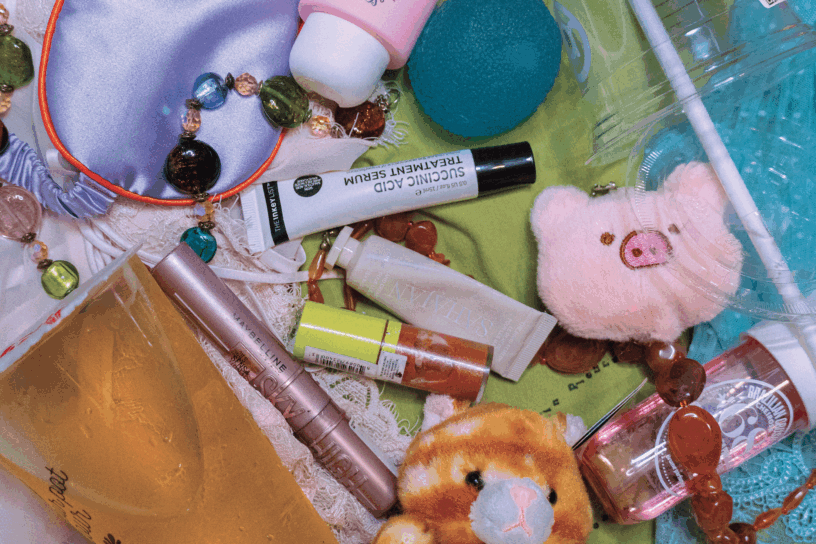
As students face struggles in the job market and a non-promising future around home ownership, many are treating themselves to small luxuries instead.
The “boomerism” advice of curbing impulse buys in favour of milestone purchases does not always work, said Nicholas Li, an associate professor of economics at Toronto Metropolitan University (TMU).
“Why not get the eight dollar latte and $15 avocado toast?…There’s no amount of not consuming those things that’s ever gonna let you reach that goal so that’s where the boomers are kind of wrong,” said Li.
According to a Statistics Canada labour force survey, youth unemployment was recorded at 12.6 per cent in July. This is still higher than the pre-pandemic (2017-19) levels of 10.8 per cent. Despite this, students who spoke to The Eyeopener say they still partake in getting a “sweet treat” often.
Nevaia Whyte, a third-year fashion design student, sees her “sweet treat” habit as a good start to the morning or a reward for a difficult day, and often finds herself buying a Crumbl cookie every Sunday.
“There’s always this notion of, ‘Oh, I can make that back if I work,’ but the more that you spend on these certain things, it does decrease your chance of achieving a bigger goal that you could have one day,” she said.
“So there’s definitely that knack of picking and choosing your battles when it comes to what you spend, especially when it comes to a good treat.”
Li said research supports the idea that people are willing to save more for larger purchases when there is an achievable goal ahead of them.
“You’re willing to save and sacrifice for those things directly related to how far away those objects appear,” he said. However, when large purchases are out of reach, people are much less likely to save.
“’I’m just gonna go eat some delicious greasy fried thing today… because there’s just no chance I’m never gonna be able to afford a single-family home in the Toronto suburbs like my parents had’,” Li said of youth discouragement.
Caterina Rossiti, a fourth-year media production student, said her finances have sometimes given her anxiety. Not having a job has made her more aware of her spending habits, especially as she saved up for a new laptop.
“My computer was a bit expensive, it was more than $1,000 so whenever I would spend on something, I would think, ‘oh, I maybe shouldn’t have’,” said Rossiti.
Despite this, Rossiti still makes small purchases at times. Often, she buys a coffee or a pastry, saying she likes having something to do with her hands while working on something else.
Fourth-year media production student Olivia Presti felt similarly about noticing her bank account balance drop during periods of unemployment.
“When I’m preparing to make a big purchase…then I’m being super aware of my bank account. So after I had that awareness, it was a lot easier to stop buying random [stuff] for no reason,” she said.
In the U.S., young people are more likely to make impulse purchases than their older counterparts, according to Marketing Charts, an American marketing organization.
Their 2022 survey showed that 23 per cent of Gen Z and 22 per cent of millennials make impulse purchases—higher compared to 19 per cent of Gen X and 17 per cent of baby boomers. Most of young people’s spending went to apparel, food and drink categories.
Zahra Salehi, a fourth-year new media student, said that with inflation, getting her treat of choice (coffee and often a donut) has become more difficult. She said enjoying these purchases is harder now because she looks more closely at the price.
According to Trading Economics, Canada’s inflation rate was three per cent for July 2026.
Whyte gave advice for balancing saving money amid a high cost of living while also indulging in sweet treats.
“I don’t think you need to get rid of one thing in your life to gain another,” she said. “It really is a matter of budgeting and knowing your limit to something because you don’t have to abandon something that you like.”







Leave a Reply