

By Michael Elsaesser
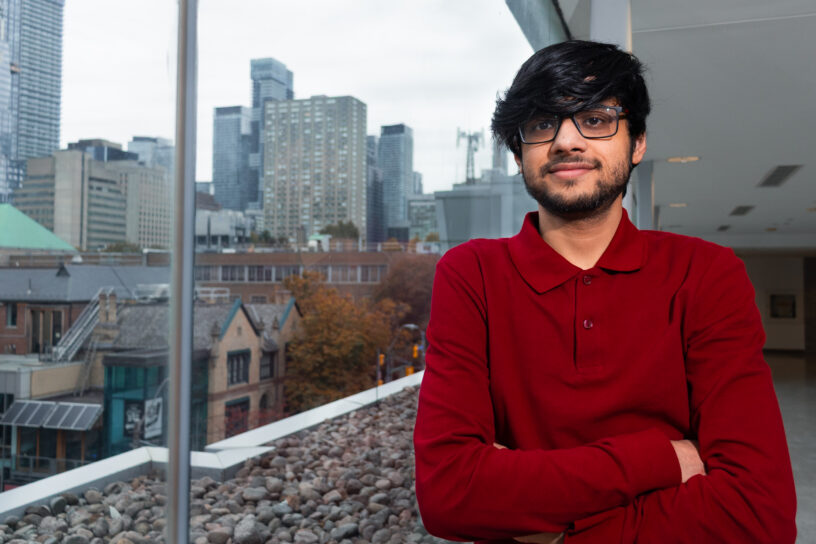
Fifth-year computer engineering student Muhammad Wajeeh Ul Hassan is a research assistant for an AI startup planning to bring digital sign language to Canadian airports.
Hassan has been working at Toronto-based startup Deaf AI. The company is training technology to communicate through sign language using artificial intelligence (AI) with a goal of developing real-time voice-to-sign interpreting services, according to their website.
For Hassan, who is hard of hearing himself, the project means more than technological development.
“I am eager to help people with disabilities because I am hard of hearing. I’m deaf but I have cochlear devices and so I can understand what it’s like to struggle with hearing difficulties,” he said.
Deaf AI’s pilot project is working with smaller Canadian airports to display announcements with sign language on screens, said Hassan.
The team includes a sign language interpreter who pre-records set airport announcements, and uses face-swap software to anonymize the clips while keeping the language consistent.
Once the sign language announcement videos have gone through the AI face swap software, they are reviewed by the team’s sign language interpreters for accuracy.
“Sign language is very sensitive, so basically, let’s say if there’s any wrong change in the movement or something, it can change the meaning. So we have to…verify that the sign language is always consistent,” said Hassan.
Through his work with Deaf AI, which started as a student placement, Hassan sees a future where this kind of technology could increase accessibility at universities.
“I’m pretty sure there are lots of hard-of-hearing people in TMU…and I believe that I’m not the only one who’s struggling to hear,” he said.
The university’s Academic Accomodation Support (AAS) office states that 11 per cent of the TMU student population are supported by their services.
During his lectures, Hassan uses a microphone that connects to his cochlear device.
Yet, he continues to face challenges in the classroom, specifically when trying to pick up the audio of a video shown in class or when his groupmates are speaking at the same time during a meeting.
Students who have registered for accommodations through the university’s AAS office can request a sign language interpreter to assist with course instruction such as lectures and tutorials.
The office will then contract to local interpreters, and can work with students if they have a preferred interpreter to assist with course instruction.
Deborah Fels, director of TMU’s Inclusive Media & Design Centre, said the university should look beyond technical aides when it comes to removing accessibility barriers in the classroom.
Fels emphasized the role of professors and the student-instructor dynamic in making education accessible.
“I think we need more human intervention, to balance that power differential so that students can learn how to become self-advocating in a way that makes sense for them, and how to approach their instructors, their academic assistants, and their group members,” she said.
In discussing the potential for AI-assisted sign language interpreters, Fels said she sees more promise in advancements for captioning technology.
She said AI speech recognition for captioning has seen large improvements in recent years, increasing speed and accuracy—though it still has limitations.
“[Captioning] is text-based. It does not respect the cultural importance of sign language for people who are deaf, for sure, but it’s an intermediate solution that can, you know, at least have some kind of educational value compared to AI sign language,” she said.
Expanding on the current pilot program, Hassan is also working with the company on a navigation app for airports. It will provide directions to check-in kiosks, through security and to the gate with a sign language video.
The app will provide both American Sign Language and Quebec Sign Language.
Deaf AI is testing their pilot program in smaller airports in southern Ontario.
“It makes me feel like I should do something, do a lot,” Hassan said, reflecting on his work. “I have the potential to help the Deaf community a lot more.”







Leave a Reply