

By Francesco Cautillo
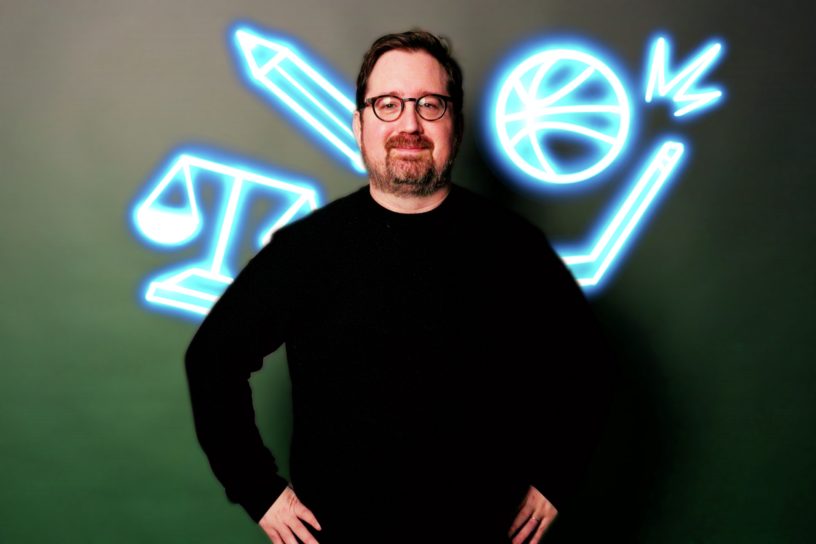
Toronto Metropolitan University (TMU) sociology and RTA sport media professor Stephen Sheps hopes to clear the path and bring justice to the oppressors of the modern sports industry.
Oxford Academic defines the “Modern Sport” as one that “involves political and economic activity at the global level, particularly in the bidding process to host prestigious events.”
After spending the last seven years as a professor at TMU, Sheps became the new program director for the RTA sport media undergraduate program in July 2024.
Sheps’ research focuses on the intersection of sports and sociology as well as analyzing issues in sports governance. His most recent project was a deep investigation into the conduct and structure of international sports governing bodies. With his ongoing research, Sheps and his colleagues in the United Kingdom are hoping to address the societal need for a fair governing body in the sporting realm.
The Eyeopener sat down with Sheps to discuss the issues in today’s sports governance, in addition to how he intends to push people’s understanding of sport through his new role with the RTA sport media program.
Answers have been edited for length and clarity.
What would you say is the biggest issue in sports governance today?
Obviously corruption. When you think about how organizations like FIFA do business, they are technically—and for tax reasons—a non-profit. It’s not something that we often think about. When we think about FIFA, we think about the incredible sponsorship contracts. We think about the glitz, glamour, size and scope of World Cup events but they bring in so much revenue. Where does it go? And that’s just FIFA. It’s such an incredible thing to think about how impactful these organizations are but how filled with corruption they also are. How do certain nations end up getting these tournaments in the first place? What do they have to pay up front? It’s bananas.
What fix would you suggest for this issue?
The thing that my partner and I talk about in our paper is this proposal for a new international council for sport governance. Sports have their own legal system, court system and justice system. So they ultimately are able to avoid scrutiny, either from the nation states that they do business in, or organizations like the United Nations. They always find a way to weasel out of oversights. Because of this idea of sport organizations needing autonomy, who watches the watchers? I would love to see greater measures put in place to actually provide enforceable oversight. If there were actual consequences for the actions of these governing bodies, then maybe they would take fewer risks. They would actually prioritize the health and well-being of their athletes and the people that their athletes might be impacting over their own—or over-preserving their own power and maintaining their own profits, especially given that they’re technically not profits.
How has your past work in sociology factored into your career now in sport media?
I teach the courses that focus on the intersection of sport and social issues. As we continue to move forward, the way that we think about coverage is already changing. The vast majority of sport media students are here to learn production skills. But it’s my role to show the way that sport is often a window into society and that anything that is happening socially, politically or economically in the world can affect sports or the impact that sport has in creating change.
How would you use your experience to help blur the boundaries of what’s possible for the sport media program? Essentially, what are you future goals for this program?
You don’t have to always ask the same kinds of questions, and it’s my job—teaching the sort of critical thinking, sport and social issues courses. To show the different kinds of questions and different ways of seeing the world will allow them to be the change they want to make in the industry once they’re actually out in the field.



Leave a Reply