

By Gray Moloy
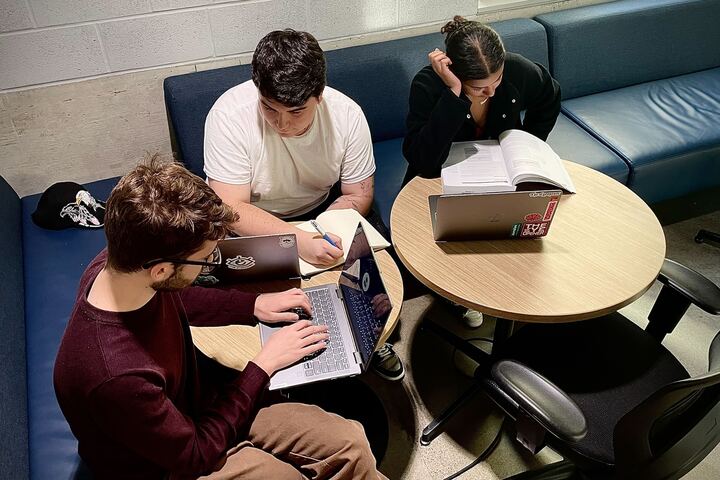
Some students at Toronto Metropolitan University (TMU) say they’re using productivity techniques borrowed from neurodivergent students, like body doubling—sparking a wider conversation on the stigma surrounding accommodations in post-secondary education.
According to the Attention Deficit Disorder Association—an organization advocating for those with Attention Deficit Hyperactive Disorder (ADHD)—body doubling can be defined as: “a productivity strategy used by individuals with ADHD to finish possibly annoying jobs while having another person beside them,” their website reads. “The body double’s duty is to keep the individual with ADHD focused on the task at hand to reduce potential distractions and increase motivation.”
Fourth-year social work student Leah Young is the vice-president of events at the Neurodivergent Student Association (NDSA) at TMU. “When we were tabling at club events a lot of people brought up [body doubling] or they would say [when will] study sessions or study groups be running?” she said. “I think there is a need for it on campus.”
The Academic Accommodation Support (AAS) office—in collaboration with Learning Support*—currently offers low sensory hours for students a few days a week. Young has found it does not meet the needs of a lot of the neurodivergent students. “It has limited space,” said Young.
In a TorontoMet Today article, the AAS office said the hours are meant to create an environment for students to body double or work silently. However, the times offered are difficult to fit into students’ schedules, according to Young.
The NDSA plans to host virtual and in-person body doubling events for students, hoping that the times and spaces will better align with students’ study needs, Young added.
The NDSA runs a Discord server where students can chat and ask questions amongst each other, the server has a channel specifically for body doubling that students can join whenever they find the need for extra motivation.
Malka Finkelstein, first-year psychology student and a part of the events and marketing committee at the NDSA said, “body doubling is a great start to reaching out to students who might need someone to study with, even if they’re not in the same program or even the same class.”
Finkelstein and Young were very vocal about the importance of finding your ideal study habits, though felt disheartened by body doubling being branded as a viral study hack.
Finkelstein finds calling body doubling a “hack” discrediting, as it is a technique proven to help with procrastination, she said.
In the past Finkelstein had felt judged for using productivity techniques like body doubling.
“For a long time, I was embarrassed. I was like ‘I should be able to do this without someone babysitting me.’ It felt like that was the attitude of the people around me,” she said.
“A lot of the times when you name the term for something, people kind of clutch their pearls a little bit, and they’re like ‘oh well, you don’t need to do that’,” Young said.
Young has found it easier than her neurodivergent peers to have her accommodations met by her professors.
“I’ve been kind of lucky in the sense that I’m a social work student, so most of the professors are fairly aware of disability justice or accommodations,” said Young. “I have heard things from friends and people in the [NDSA] where professors will be very rude to them when they need accommodations or be very belittling about it.”
Finkelstein was previously a student at George Brown College and was surprised to learn the barriers of receiving accommodations at TMU.
At George Brown College Finkelstein says she was able to receive academic accommodations through a self diagnosis that had to be verified by a doctor, though this process is not available under TMU’s current AAS services.
Running the body doubling events will give students the opportunity to try out new study habits and feel less judged for any accommodations they may need, said Young and Finkelstein.
Young hopes the university can make changes to their accommodation process to help students with disabilities navigate it easier.
“There needs to be a stricter way of going about accommodations [so professors know] that these are the accommodations and they are needed and they can’t be shot down immediately,” Young said.
“I have mixed feelings on it because on one hand it is normalizing [body doubling], but on the other hand it also feels like it’s turning it into a trend,” she said. “I don’t know if it’s going to be one of those things where people are like, ‘oh, this is all the rage’ for a week, and then a few months later they’re like ‘no, this is weird again.’”
As the school year moves along, students should be encouraged to try new study habits and ask for accommodation with no judgement.
“I think it’s like a don’t knock it till you try it type of thing,” said Finkelstein.
*A prior version of this article did not mention Learning Support’s collaboration with AAS to host low sensory hours. This has been updated for accuracy.



Leave a Reply