

By Meriem Nour
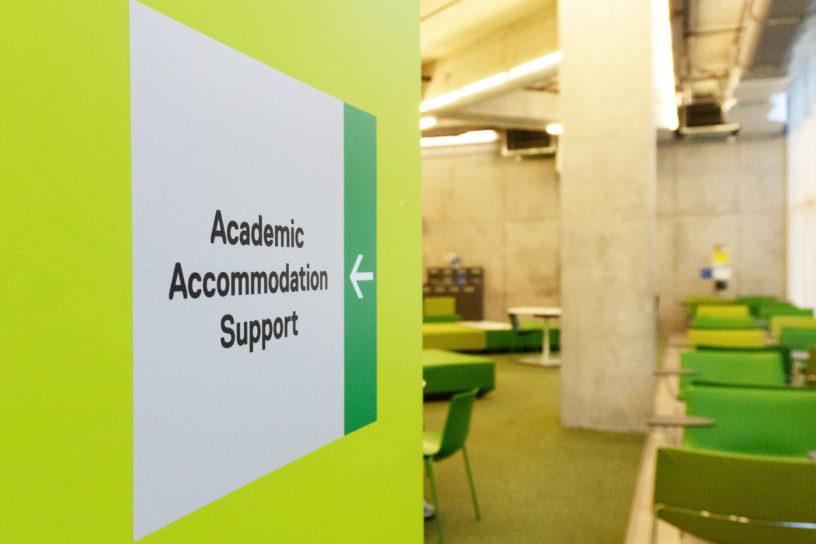
Toronto Metropolitan University (TMU) students using Academic Accommodation Services (AAS) are calling for solutions to address accessibility gaps after the school received a $2 million gift from the RBC Foundation earlier this semester to support students with disabilities.
TMU announced the $2 million investment on Sept. 2 through a TorontoMet Today article. The school pledged to use the funding to expand accommodation services and improve support for students with disabilities as the demand for the AAS is increasing.
“Over the last five years, 54 per cent more students have sought help from AAS…these efforts are part of a new approach that connects different support services to help students succeed,” the article reads.
Despite the growing demand for AAS, TMU students say gaps in accessibility still remain and the $2 million should be used to address the concerns they face.
Andres Cardenas, a second-year sociology student at TMU, said AAS students should be consulted for funding decisions to improve accessibility at the school.
“TMU should be able to get opinions from people who have disabilities on where the money should go, because those are the ones the money is serving,”
he said.
He said he believes diverse voices are essential for determining how resources and funding are allocated effectively.
Cardenas suggested using the $2 million donation to create sleeping areas for students with Attention Deficit Hyperactivity Disorder (ADHD) and other disabilities.
He said he thinks this initiative would help students better manage their schedule.
He also called for the school to fund workshops and social programs to foster community among students that require accommodations.
“There should be more ways to include neurodivergent and disabled people in community life. As someone with ADHD, I struggle to form social bonds like neurotypical people, which makes university lonelier and harder to stay motivated academically,” he said.
Julian Ciaccia, a sixth-year industrial engineering student at TMU points to navigating Kerr Hall as a major challenge due to the lack of elevators, ramps and automatic doors which create significant barriers for students with physical disabilities.
“I would like to see the money to be put into a few more ramps, a few more automatic doors,” he said.
Ciaccia emphasized that such improvements would make TMU more inclusive and create a campus environment where all students can fully participate in academic and social life.
He suggested that the university should create a centralized list of resources and
hire disability experts to consult with students.
“Collect their needs…see their attitudes about accessibility on campus… and then implement the plan, and use the money to finance it,” Ciaccia said.
In an email statement to The Eyeopener, TMU AAS said they are committed to involving students in shaping accessibility programs.
“In the immediate term, AAS will, for the first time, provide work-integrated learning support alongside accommodation support,” the statement said.
“This will create new resources and practical opportunities for skills development for TMU students with disabilities, contributing to more equitable prosperity.”




Leave a Reply