

By Avari Nwaesei
As second-year aerospace engineering student Damien Abat trekked through the woods on his regular path home, he noticed a piece of parchment stuck to a tree with one word on it: ARRG! Abat read the word aloud and was transferred to the Victoria Building’s second floor in room 203—where students meet weekly to lose themselves in the world of board games and tabletop roleplaying.
The Toronto Metropolitan University (TMU) Association of Recreational Roleplayers and Gamers (ARRG) is a club that focuses on providing the school with community game nights.
AARG co–president and third-year graphics communication management student Ally Kamphuis said an important aspect of the club is the ability to sit down and learn the rules of a game with new friends.
The club runs every Thursday from 6 p.m. to 9 p.m., allowing students to drop in during that period. Kamphuis said ARRG gets its game supply from the Student Campus Centre basement, giving students a wide variety to choose from.
“The most popular types are either strategy games like ‘Wingspan’ or ‘Root’ or ‘Dune Imperium’ or social deduction games like ‘Werewolf’ or ‘Secret Hitler’ or ‘Blood on the Clocktower’ but really anything in between,” said Kamphuis.
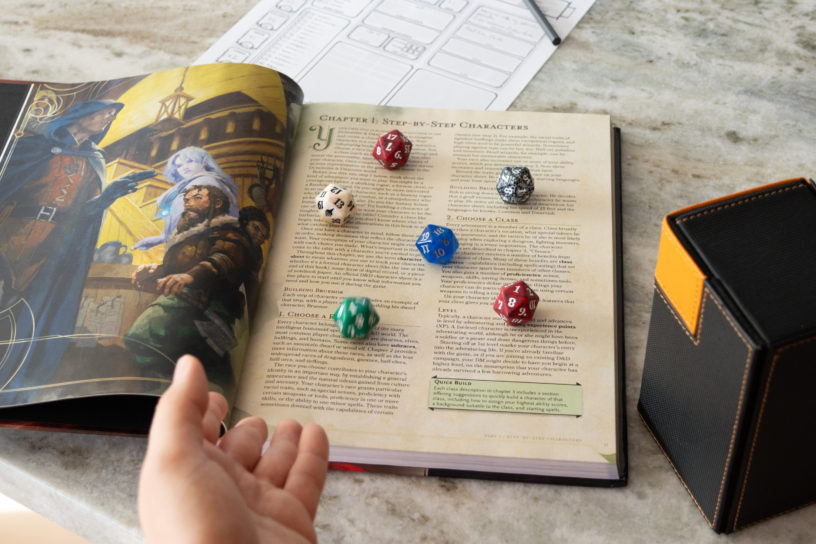
Aside from regular board games, ARRG vice president of communications and fourth-year computer science student Archer Perraton said the club has a setup for tabletop RPGs along with signups for those wanting to play ‘Dungeons and Dragons’ (D&D).
When it comes to actually playing these games, some say people can find learning the rules to be daunting.
“You don’t have to know a lot about D&D. I know that’s something that a lot of people have told me that’s their barrier to entry,” said Kamphuis.
There is more to ARRG than just gaming. Kamphuis said the club occasionally has food, and holds a Halloween event every year—including a costume contest.
“Historically, we’ve had a lot of good collaborations with the TMU Gamers Guild, like a video games club, because there’s a lot of overlap between the target markets for two clubs,” said Kamphuis.
Collaborating with other student groups is great for already existing members and ARRG makes sure students looking to join get to do so easily.
“It’s a very low bar of entry, by which is intentional, because I feel like in the past I’ve been interested in joining a new club and then I look into it and it’s like you have to sign up to become a general member,” said Kamphuis. “We do not want it to be like that at all.”
Club meetings themselves are made to be as laid back as getting involved. ARRG has no strict plans on what will happen during weekly meetings.
“It’s not much structure, because we want people to have the freedom to just do whatever they want in terms of choice,” said Perraton, adding that students joining in on each other’s games is what makes the club meetings work.
Kamphuis said being a part of ARRG’s exec team since her first year allowed her to take note of the club’s influence.
“If you show up, you’re going to be seeing the same people every week. You’re going to make friends with them. You’re going to play some board games with them. It’s a great way to meet people,” said Kamphuis.
Not only is ARRG a way for students to meet fellow board game lovers but to some it’s also a place to have an experience they can’t get anywhere else.
“I’ve always been a board game person. A few of my friends are, but a lot of my family isn’t, so I don’t really get that much of a chance to play board games,” said Perraton. He appreciates now having a group with a shared interest that is willing to play.
Perraton said around 40 students attend weekly, forming a fairly “tight knit” group. He said ARRG creates a space to form connections and unwind on campus.
Abat who has been a regular club attendee since his first year said the club gives him something to “look forward to” whenever he is downtown.
“Honestly, I think it’s been one of the strongest sense of community I’ve had here at TMU,” said Abat.


Leave a Reply