

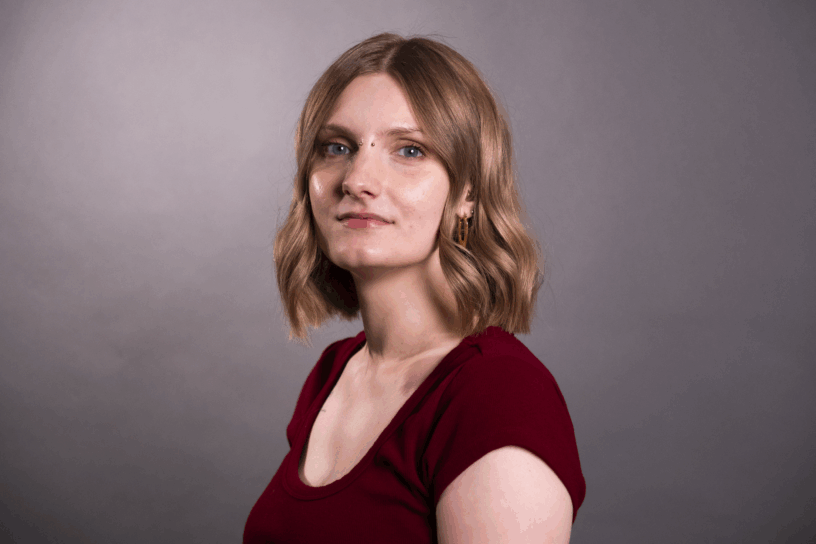
Fuelled by economic pressures and a desire for self-fufillment, an increasing number of older adults are pursuing post-secondary education
By Keesha Levesque
PROUDLY DISPLAYED FOR passersby on Gould Street hangs a blue and yellow banner declaring “You Belong Here.” The banner, which goes up during orientation week, welcomes over 5,000 first-year students to Toronto Metropolitan University (TMU). Inspired by TMU’s coat of arms, the banner’s azure blue represents loyalty and truth.
For Shontelle Allwood, the banner represented a nerve-wracking fear. It was September 2022, and she stood at the paved entrance of the university, looking up at what was meant to be an inspiring affirmation: you belong here. “I’m not sure I do,” she thought. “Did I make a mistake?”
Like most of her freshmen peers, Allwood was new to campus and many facets of university life were a foreign concept. But one thing set Allwood apart from other incoming students—her age.
At 49-years-old, she had already travelled the world, married and raised a family. But nevertheless, she felt an accomplishment was missing. After her husband had a work opportunity that relocated the couple to Toronto, Allwood made the decision to apply for a Bachelor’s of Science in nutrition and food. She submitted the application just ahead of TMU’s deadline.
Allwood classifies as a mature student. For undergraduate programs at TMU, this applies to students at least 21 years old during the year they begin their studies and who have been away from formal education for at least two years.
But outnumbered on most campuses in the country, their experiences and adjusting to university life can be different—especially when their institution may not cater to them as much as their younger counterparts.
Statista reports that over 780,000 students aged 25 or older were enrolled at Canadian universities in 2024—making up a third of the student population. Data from Statistics Canada shows there was a spike in total university credentials during the 2020 school year. For age groups 20 to 24 and 29 and up, the numbers have stayed roughly the same, give or take a couple thousand. For the age group of students 30 and above, their enrolment numbers for degrees and diplomas has been on a steady rise for the last several years.
In the 2026 year, TMU welcomed 198 mature students; the average for the last 10 years has been around 200 annually. Their presence can be seen in Reddit threads where users discuss their struggles with adapting to a younger landscape, especially when it comes to making friends.
One user writes, “Starting fresh at 24, it definitely feels weird being in a room full of people who have no idea who they are as people!”
Another said, “I’ve graduated from two college programs in the past, and TMU is definitely the least social post-secondary environment I’ve experienced.”
While most posts show that the age difference between them and their peers may initially feel strange or unrelatable, many still describe a desire to connect and form friendships with their classmates. At the end of the day, everyone wants a friend to talk to after class or to grab a quick drink with at the campus pub.
AS ALLWOOD SETTLED into school, she quickly realized that the people in her cohort came from all kinds of backgrounds; the youngest were around her youngest child’s age. But there were also some students in the program who had returned for a second degree, in their 30s.
“It was so far from the truth, so far from my expectations,” Allwood says.
Allwood completed her degree this past April, and said she realized she could turn to much of her cohort—including the youngest among them—and call them friends. Over the course of her degree, Allwood found that mentorship as a mature student was a two-way street. She could provide guidance from her life experiences, but she was unfamiliar with using technology to study, such as organizing with Google Calendar. Younger classmates stepped in to help, showing her how to navigate the online space.
“While I was the oldest, one of my closest friends is the youngest in the cohort. So it just really put aside any of those sort of ageist feelings,” says Allwood.
This desire to connect across age groups is a key component of an age-diverse community which, according to an article by The Gerontological Society of America, can support “increased intergenerational understanding and exchange of knowledge, and reduced ageism.” The research also suggests integrating different ages often enhances learning opportunities and representation.
The youngest in Allwood’s cohort were around her youngest child’s age.
Tricia van Rhijn, a professor at the University of Guelph whose expertise covers mature students, says age diversity is important in the classroom.
“We want students to kind of see beyond their own limits, their own experiences. When they have very little life experience, it’s harder for them to incorporate broader perspectives,” van Rhijn says.
Research on age-diversity in the workplace shows that a multigenerational workforce promotes employee well-being and effective collaboration. TMU also recognized this benefit in a statement to The Eyeopener: “They bring their unique perspectives, professional experience and a broader understanding of the world to our campus. In the classroom, this shows up as real-world insights that enrich group discussions and, in some cases, as mentorship.”
Van Rhijn’s interest in the topic is an extension of her own experience as a mature student. She had returned to school for her Bachelor’s, and remembers taking a university statistics course 12 years after taking the high school prerequisite.
Mature students, or “non-traditional students” as van Rhijn often calls them, play a critical role in deepening intergenerational learning. They help expand discussions by naturally incorporating their experiences with family, work and community involvement. Van Rhijn notes that definitions of a mature student varies, with her work centering around age 25 and up, depending on university admission policies.
“Mature students bring a different perspective about why they go back to school. Many traditional learners go to school because they feel they have to,” said van Rhijn. However, most mature students enroll because they choose to.
RENEE PEACE-MILLER FOUND herself back in the world of university applications because she didn’t want to work retail for the rest of her life.
She had tried the high school to post-secondary pipeline earlier, pursuing the journalism program at Humber Polytechnic. She picked the credential largely out of fear she’d be left behind if she didn’t choose school—afterall, her friends seemed to be ready to move onto the next chapter.
Ultimately, journalism wasn’t for her. A few years into the program, Peace-Miller realized it wasn’t what she wanted to do. After giving it up, she turned to retail work and spent roughly the next five years building up to a managerial position. But despite all her effort, Peace-Miller felt a strong sensation of boredom and fatigue.
“I wasn’t really feeling satisfied in my professional life and I knew I needed to do something different,” she says.
At 27, she found herself on TMU’s admissions portal. She sent only one application, for the urban planning program. She ended up on the wait-list, and later, found herself admitted to the environmental and urban sustainability program at the school, a program she’s since grown a liking to.
In her first-year, Peace-Miller could tell who the straight-from-high-school students were; sometimes, their baggy dressing style gave them away—Peace-Miller is from the skinny jeans and Converse era. Other times it’d be the way her peers talked, using slang that reminded her she was closer to her 30s, while her classmates hadn’t hit 20. But now in her second-year, she says it’s getting harder to tell the students apart. Many she assumes are attending right out of high school reveal to her that they’re in their mid-20s, after flip-flopping between various programs.
Occupation is one of three main motivators for students to return to school, according to a survey by a group of University of Guelph professors, including van Rhijn.
Their research, which recorded responses from mature students with children across four Canadian universities, found three primary motivation categories: occupation, education and family. The survey results suggested that “student parents”—those pursuing post-secondary studies with dependent children—are mostly looking for personal fulfillment and future opportunities.
Van Rhijn also referenced the motivation differences between non-traditional learners and younger students, saying she’s heard of students choosing to pursue a master’s program after an undergraduate simply because a parent told them to.
“Mature students are there for specific reasons and they often treat going to school like a job… they’re costing their families money to do this, they’re taking time away from workplaces… kids or partners,” says van Rhijn.
Although Peace-Miller doesn’t have any children, she acknowledges the additional support student parents might need. Having to work a part-time job to stay afloat—as she says can’t go back to live with her parents now—overwhelms her every now and again. She has groceries to buy, errands to run, appointments to schedule. But on sunnier days, she finds fulfillment in her education, and an extra decade of experience leaves her feeling less stressed about post-graduate life than her classmates.
IN THE NINE years between leaving and returning to school, Yash Sukhadia also considers his life experience an advantage.
“[For] people… starting their first year in university, transferring from high school, it can be a big shift,” Sukhadia says. “But I already knew what it was like since I first went into York [University].”
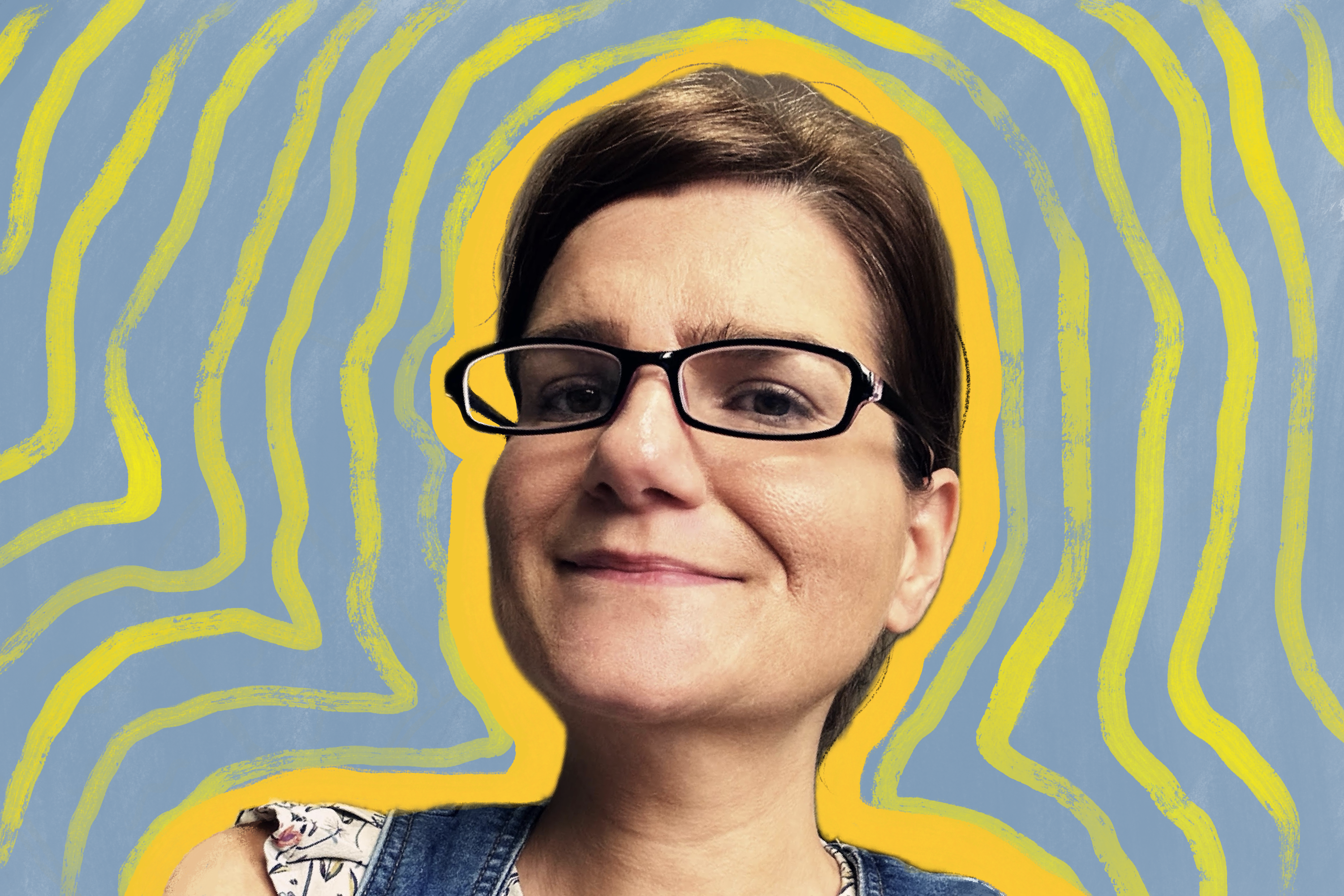
Sukhadia began his academic journey at York almost 11 years ago, but a chronic health condition, ulcerative colitis, forced him to step away from school. After years on medications, and finally, a surgery to remove his colon, his condition improved. So Sukhadia’s brother, a TMU graduate, suggested he should return to school. Sukhadia, now 30, found himself in the chemistry program, though he hopes to switch to computer science soon.
Like Peace-Miller and Allwood, Sukhadia recognized differences between himself and younger classmates but didn’t always find the differences to be a barrier.
“[We all] go to class, talk to friends, hang out after school,” Sukhadia says.
He clearly remembers his first day of class during his freshman year. Sukhadia arrived early, observing the classroom as students began to fill their seats. The professor walked into the room and began reviewing the course outline.
“It kind of felt like I belong here,” Sukhadia says.
He doesn’t deny the internal monologues he sometimes has—“Damn, I’m old,” he admits to thinking every now and again, when high school graduates take their seats next to him in class. But he doesn’t mind it. Like many of them he’s at TMU for one reason: “My main focus is just to get through school and get my bachelor’s.”
While it may not always be perceived, there’s one major disparity between mature learners like Sukhadia and fresh faces. Sukhadia’s younger peers typically have more resources than him. Many clubs, sports, associations and even student services are geared toward students under 25 years, according to van Rhijn.
“We often talk about returning to school because often there’s a gap from their last formal schooling as mature learners, and universities are not the greatest at actually welcoming mature learners,” says van Rhijn.
“Mature students fall into this awkward group where nothing is necessarily targeted for us.”
Renee Peace-Miller
She knows from firsthand experience. During one fall in the late 2000s, van Rhijn was standing amongst the other students at Guelph’s University Centre, a main indoor hub for student activity. It was the start of term and student associations lined the space, beckoning people to stop at tables on their way to grab food at the cafeteria. Hundreds of people passed by, but van Rhijn remembered one particular student all this time later.
Van Rhijn was covering a table at a club day information event with the Mature Students Association, a group that still exists almost 20 years later. It wasn’t as popular compared to other tables, which had candy and free swag to entice onlookers, and van Rhijn questioned if it was worth sticking around with so few people stopping by. She and one other student were manning the table. They had set up an “old school” trifold poster board with information about the association and where to find them.
Weaving through the crowd was a mature student, backpack on and head down. They were uninterested in the surrounding student tables, most of which didn’t cater to them. The student passed by van Rhijn’s table. A few seconds later, they stopped and circled back.
Despite being enrolled at Guelph for a couple years, the student had no idea there was a space designed for them.
“What their experience tells them is that there’s nothing for them—that they’re alone, that they’re not recognized,” says van Rhijn.
While she hasn’t done a comprehensive review of academic institutions in Canada, van Rhijn said she’s heard of around two institutions with designated services for mature students—and the funding, she believes, didn’t continue for either.
“One of them had an actual mature student program counselor focused for mature students, and the other one had started a student service,” van Rhijn says.
The Chang School of Continuing Education has a program called Spanning the Gaps, but it’s designed to help older students re-enter education by providing weekly tutorials to help deepen students’ understanding of coursework, not necessarily to socialize and meet others like them.
Van Rhijn describes the Chang School as a “great example” of an institution that helps people dip their toes back into education. While the school doesn’t have a listed support group on its website, there are a host of free events for students to learn how they can progress in their careers.
The Chang School, named after philanthropist and businessman G. Raymond Chang in 2003, hosts over 800 courses with 75 per cent being available for degree credit. The website boasts that over 26,000 “active learners” are enrolled.
Beyond the Chang School resources, TMU Community Wellbeing occasionally schedules drop-in sessions for the Mature Student Alliance, a peer support group for “mature students who are navigating university life a little differently.”
However, besides those sporadic sessions and Spanning the Gaps, there’s no consistent service for mature learners. With this pitfall, mature students have taken it upon themselves to build community. Sukhadia’s part of a group chat with other mature students, but he’s not an active participant and is unsure of whether it’s specific to TMU.
“I kind of wish there was more support targeted for mature students around accessibility and stuff like that,” Peace-Miller says.
“I’m not really sure what that support would look like, but I find that a lot of supports are targeted towards people that are coming straight out of high school, which those people do need. They’re all very new to this too,” she says. “But I do feel like mature students kind of fall into this awkward group where nothing is necessarily targeted for us.”
ALTHOUGH THE FORAY back to post-secondary as a mature student can be daunting, Allwood quickly found herself falling in love with her degree.
She returned this semester as a Master’s student in nutrition communication, hoping to become a dietitian down the line. But not just any kind of dietitian.
While pursuing her undergrad, Allwood went through menopause. The experience shifted her understanding of where in the industry she wanted to work, now focusing her research on nutrition and menopause. Through TMU’s Zone Learning, she’s even started a business that is menopause-focused. Going back to school as a mature student didn’t just give her a degree, she says, it gave her a purpose.
“Even though it was later than most, I just feel it fell into place,” she says. It’s a story that echoes other mature students’.
Now, at 53, when Allwood stands at TMU’s threshold, the Student Learning Centre beside her and the university buildings just ahead, staring up at the “You Belong Here” banner is no longer scary. Now, it feels just right.




Leave a Reply