

By Adam Motaouakkil
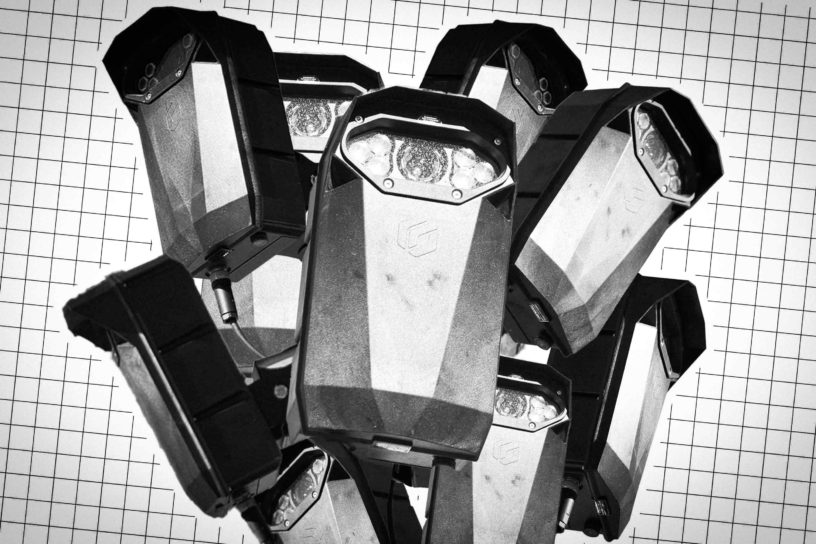
Police services across Ontario are beginning to deploy Automated License Plate Recognition (ALPR) cameras. But according to experts, there are significant privacy risks to the technology and a lack of governance.
These cameras stream live road traffic video to extract license plate information from the images. The images are stored in a database to match against a hotlist of cars involved in criminal investigations.
According to a CBC report from June, Peel Regional Police deployed ALPR cameras across 50 intersections in Brampton at a cost of $2 million.
In the U.S., residents have rallied against these cameras, typically deployed by surveillance company Flock Safety.
In Brampton, content creator and Toronto Metropolitan University (TMU) alumnus Anthony Sistilli noticed the cameras throughout the city and decided to build his own ALPR camera, “as sort of a joke.”
Sistilli documented this process on his YouTube channel where his ALPR video posted on Oct. 7 has garnered over a million views.
“All I did was find a camera on Amazon that was decent enough to capture a license plate,” said Sistilli in an interview with The Eyeopener.
Using large-language models to write software code and open source object detection software YOLO, Sistilli created a working system capable of capturing license plate information and storing it in a database.
“Once the police came to my house to investigate it, that’s when I sort of got angry,” said Sistilli. “I feel like I did nothing wrong,” he said.
Before becoming a full-time content creator, he was a software engineer and start-up founder.
“It’s astounding how little the average person knows about…how much this technology impacts their lives,” said Sistilli about his motivation to make a video on ALPR cameras.
Sistilli spoke to elected officials in the U.S. who adopted the camera systems to tackle retail car theft. “And then one software update later…all of a sudden they’re tracking everyone,” he said, noting that the surveillance scope grew beyond suspected vehicles against the wishes of the officials.
The Toronto Star previously reported that Toronto Police Services (TPS) deployed five cameras.
The Eye identified two cameras on Bloor West and Spadina facing a Jewish community centre and another on University and Armoury, facing the U.S. consulate.
Tamir Israel, director of the Privacy, Surveillance and Technology Program at the Canadian Civil Liberties Association, worries about the intrusiveness of the technology.
“It’s something that could allow police to have a complete picture of where any vehicle was either in real time or at any point in time going back historically,” said Israel in an interview with The Eye.
“There has been documented police misuse of these cameras for personal reasons or for wholly inappropriate reasons,” said Israel. He referred to Project South, an ongoing corruption probe into Greater Toronto Area police officers who are alleged to have used police databases for criminal activity.
Before license plate tracking, facial recognition software such as Clearview AI was making its way into law enforcement. Andre Côté, executive director of the Dais at TMU, a policy and technology think tank, described how the US-based AI software tool was introduced.
“The Toronto police were using trial versions of the tools that certain police officers had,” said Côté. “They were using them in ways that were compromising police investigations, because they were not lawful uses of those tools.”
A 2021 investigation by Canadian privacy commissioners found Clearview allowed companies and law enforcement to match images against their database, which held over three billion images, violating privacy rights.
In December 2021, CBC reported that the TPS had used Clearview in 84 investigations. The report indicated the TPS was no longer using the tool.
In Pflugerville, Texas, the police service was using ALPR cameras for local purposes, only to realize that other jurisdictions were accessing their data.
In contrast, Côté said the speed cameras Ontario took down in late 2025 are examples of cameras being used for good.
For Israel, current governance isn’t moving fast enough he says more independent bodies should be established to govern surveillance technology. “We should be getting more proactive legislation from the government, imposing privacy rules around these tools.”






Leave a Reply