

By Ava Whelpley

At its core, the prophecy of the seven fires is an Anishinaabe teaching that describes different moments throughout Indigenous history since the journey to Turtle Island and the hardships during colonization.
Currently, humanity exists in the seventh fire, which is described as the rebirth or renaissance where all people will turn to Indigenous knowledge keepers in hopes of restoring balance and harmony on earth.
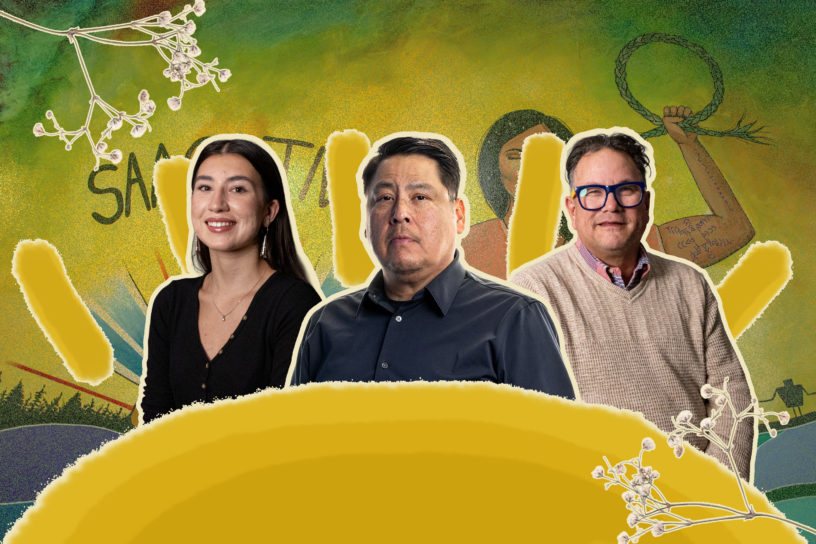
Storytellers at Saagajiwe Indigenous Studios (Saagajiwe) believe they are at the frontier of this Indigenous renaissance.
Toronto Metropolitan University (TMU)’s Indigenous hub, Saagajiwe, operates within the Creative School and provides opportunities for students to engage with Indigenous knowledge and research while aiming to create community.
Saagajiwe organizes events for Indigenous and Creative School students at TMU throughout the year that centre around engaging in Indigenous art and knowledge.
Derek Sands, Saagajiwe coordinator, recalled the types of events put on by the hub as largely successful.
“In the past, the Bell Media workshop and the speaker series was the big one we did [from] 2024 to 2025,” he said.
For the speaker series workshops, Saagajiwe invited Indigenous speakers such as Sarain Fox, Ryan J. Lindsay and Wendell G. Collier to speak about their experience as storytellers in the industry. This brought in people from the TMU and beyond. They also hosted a graduate workshop which was an opportunity for selected TMU students to connect with industry professionals at Bell Media.
“I think everyone took a lot from it…[it gave] them a really good picture of what the industry is all about,” Sands explained.
Emma Yerxa, fourth-year criminology student and events and communications ambassador for Saagajiwe explained what events are going on for the 2025-26 year.
“Right now we’re primarily focusing on using Jesse Wente’s expertise…doing movie screenings,” said Yerxa.
Jesse Wente, the Indigenous storyteller in residence at TMU, will be curating the catalog based on his personal DVD collection.
He hopes to inspire students with stories and places that folks may not have been exposed to in the past, such as those from Indigenous filmmakers across the globe.
“I think it’s maybe time for us to re-examine some of the work that tries to tackle those things from maybe a different, non-western point of view,” said Wente.
More information regarding the screenings can be found on Saagajiwe’s website.
As the storyteller in residence at TMU, Wente works out of Saagajiwe and supports Creative School students through mentoring, and holds office hours on Mondays for students to come by and discuss their storytelling journey.
Wente’s goal in his position at TMU and within Saagajiwe is to, “connect with young storytelling, the next generation of storytellers in Canada, and help them on their storytelling journey.”
Wente also emphasizes the importance of why Indigenous and non-Indigenous storytellers should be engaging with film.
“I think for…Indigenous storytellers, I just want them to see sort of the cutting edge and the best,” explained Wente.
And as for non-Indigenous students, he emphasized the importance of being open to Indigenous knowledge. He believes it can teach you about yourself and other cultures while understanding how Indigenous storytellers can engage with Western cinema masterfully despite it not being their creation.
On a broader scale, Wente said he hopes Saagajiwe can be, “a welcoming place where [students] can come and learn and be exposed to Indigenous excellence, thought leadership, cutting edge practice [and] good vibes.”
In addition to hosting events, Saagajiwe’s major initiative is the Saagajiwe Indigenous Knowledges Open Source Encyclopedia (SIKOSE).
Michael Doxtater, associate professor of documentary media at the Creative School and head of Saagajiwe, describes SIKOSE as a resource for students of all levels of education to use. SIKOSE, located on the Saagajiwe website, gives them access to practical Indigenous knowledge.
“There’s all kinds of resources in there on arts, music, culture, performance as well as all of the Indigenous Studies programs in Canada that we’ve been able to load into there,” said Doxtater.
Sands emphasized the importance of SIKOSE and how it can be a way to direct people to answers when they come to Saagajiwe in need of information.
“I think it’s very encouraging to see Indigenous people doing great things and achieving a lot, and then being able to learn from them and their experiences and how they navigate being Indigenous in western settings is always really useful,” Yerxa explained.








Leave a Reply