

A food report from a trip to Xinjiang Uyghur Autonomous Region
By Rin Yanase
One of the highlights of my 2025 was a trip that my university friends and I took to celebrate our graduation from undergrad.
The destination was Xinjiang region, which lies in far western China. It took a day and a half to get to Urumqi, the region’s capital. Xinjiang is not a popular travel destination for most Japanese people—it’s simply too far.
Our plan didn’t feel realistic until the very moment we arrived on Feb. 7. It was freezing out and we were so exhausted––little did we know, 10 days later, we’d be so proud of ourselves for deciding to visit there to explore the amazing food and nature. Let me guide you through some of the most memorable foods I encountered in the two cities we visited, Urumqi and Kashgar.
1. 黑羊羊特色羊羔肉店 (Hēi yáng yáng tè sè yáng gāo ròu diàn)(Black Sheep Speciality Lamb Restaurant), Kashgar
On our last day in Kashgar, we wanted to choose something special. The place we found on 百度地图 (Baidu maps), a local food review platform, was highly rated and known for its lamb dishes. A kind-looking middle-aged man who seemed to be the owner greeted us with a big smile. We didn’t have a single glimpse of the menu—instead, the owner immediately handed us a bite-sized piece of meat and bread, saying that was his recommendation. Of course, we ended up ordering it.
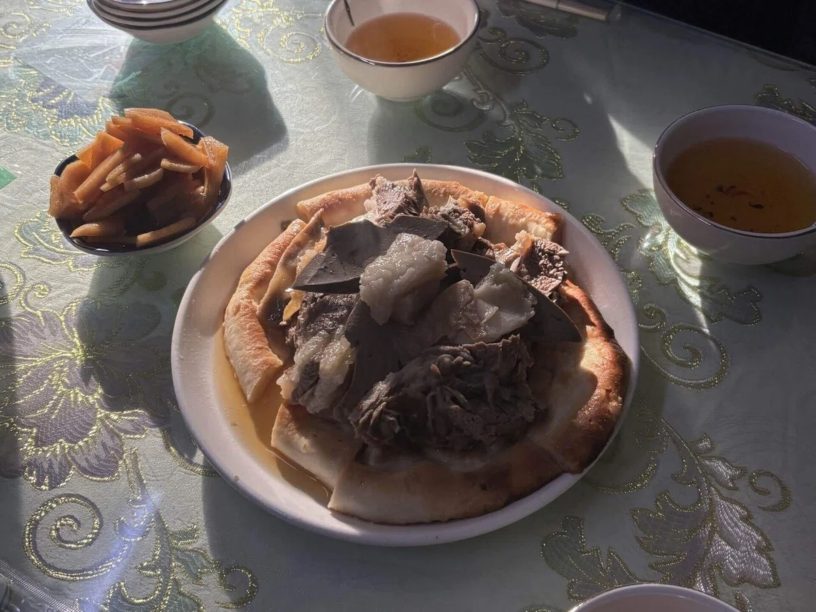
The dish was a combination of lamb liver, fat and soft bread to soak up the broth (pictured). The owner pulled out a language translating device that looked just like an iPod, and we chatted while eating. Most local people we met spoke both Uyghur and Mandarin. Younger people seemed more comfortable with Mandarin and English than older generations, since they’d been taught in school.
2. A diner in Kashgar
We came across a vibrant market, around 25 minutes walking-distance from Kashgar Old Town. There were a bunch of street stalls selling snacks, nuts, fruits, etc. The place we found was already full of people, and the air smelled of broth and boiled chives. At the entrance, people were coming and going like water. Ordering seemed like a challenge. All we had were translating apps, big smiles, loud voices and enormous appetites.
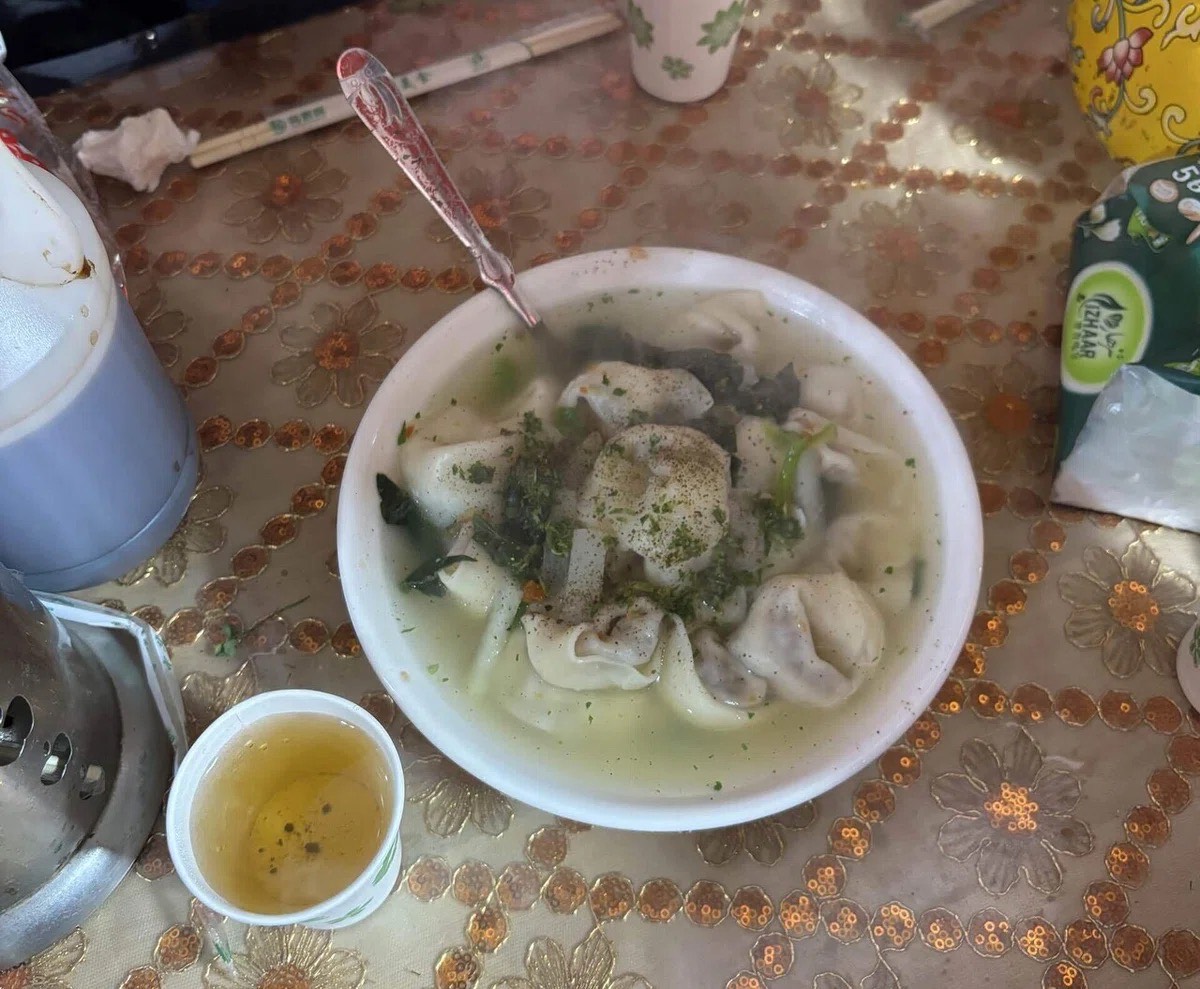
It was a small, cozy restaurant and seemingly cherished by the locals. We had 肉馄饨 (ròu hún tún), a mutton dumpling soup. While the mild soup warmed our bodies, the ladies at the next table kindly lectured us on how to use the spicy sauce in the tiny pots. After chatting a little bit, they said “好看(hǎoměi)(pretty),” which made us feel flattered and start bowing like those jiggly head toys.
3. 黑头羊抓饭 (Hēi tóu yáng zhuā fàn), Urumqi
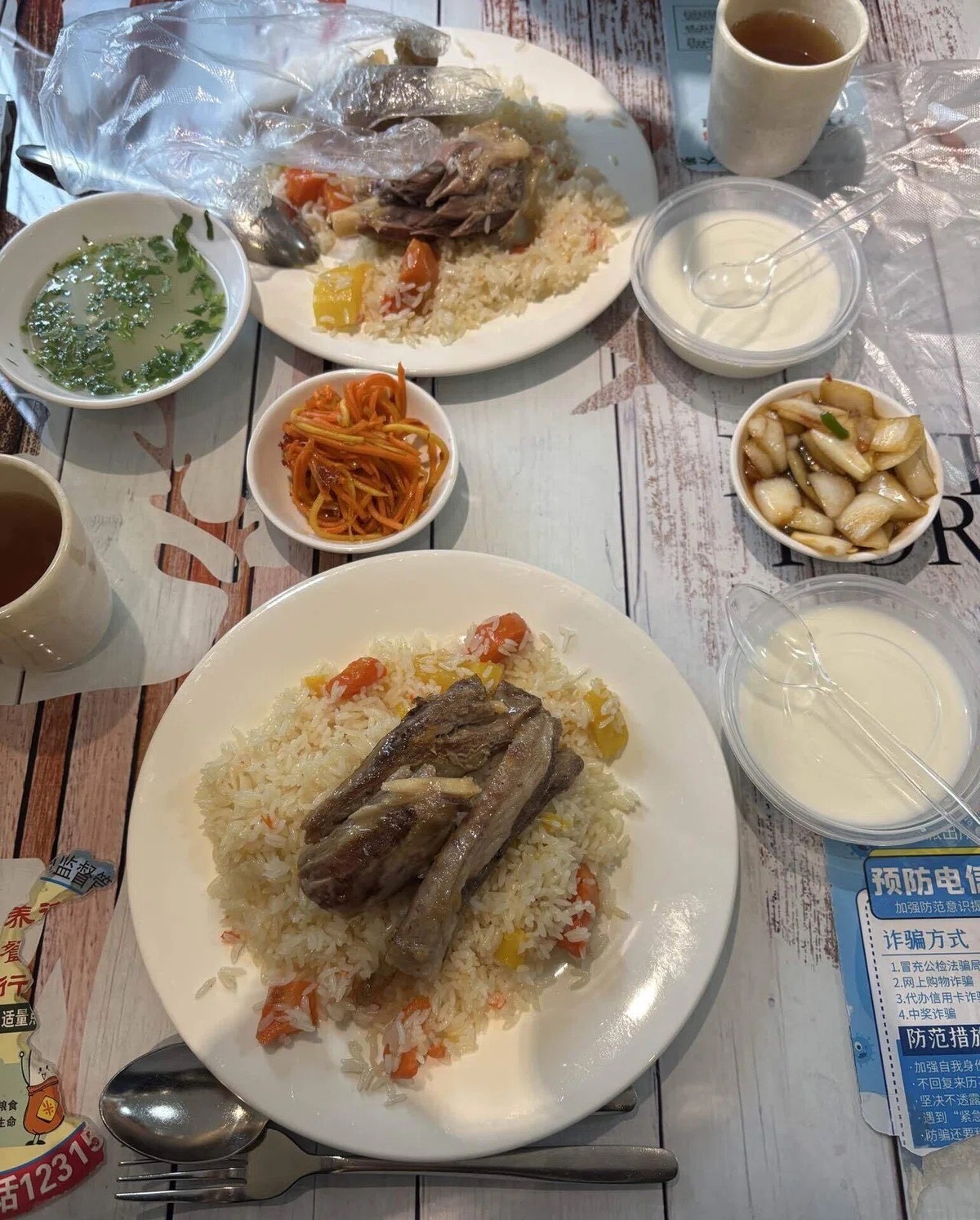
羊肉抓饭(yáng ròu zhuā fàn) (lamb pilaf) had us all obsessed. 羊肉抓饭, known as ‘polo’ in Uyghur, is apparently widely eaten in Xinjiang and other neighbouring countries. It originated in Uzbek cuisine, known there as ‘plov’ or ‘osho.’
This restaurant let us choose the amount and type of meat we wanted and also offered a free refill of soup. Xinjiang is known for its dairy production and their homemade yogurt was the cherry on top. The sweet bell peppers clung to the fatty spare ribs and the fluffy rice in the mouth. I kept switching up the flavors with the sides, refreshing my palate with yogurt that none of us could wait to start eating until we finished the main. Before realizing, time flew and the plates were empty. Oh, how I miss 羊肉抓饭!
While Xinjiang was a fantastic travel destination with beautiful nature and a unique food culture, walking through the streets, we frequently encountered subtle reminders of the Chinese government’s power. Surveillance everywhere. Signs that read “please speak Mandarin in public places.” The camera-prohibited exhibits at the state-run museum. It almost felt like that side of the city lay deeply hidden, a dynamic that we, as tourists, couldn’t easily see or touch.
According to Amnesty International, the Chinese government continues to oppress Uyghur language and culture in favour of Han Chinese culture (China’s ethnic majority). China has been accused of banning religious practices and targeting Muslim religious figures, as well as detaining Uyghur people in so-called “re-education camps.” Persecution and human rights violations that experts say amount to ethnic cleansing are ongoing in the region.
I still dream about those dishes—but even more so, I still think about the people we met on the trip. Taking the 20-hour slow train from Kashgar to Urumqi, making friends with local children, playing cards with teenagers and swapping cigarettes from each other’s countries with the train crew. I don’t know if I’ll see them again, but I’ll surely remember them every time I taste Uyghur food.









Leave a Reply