
By Eunice Soriano
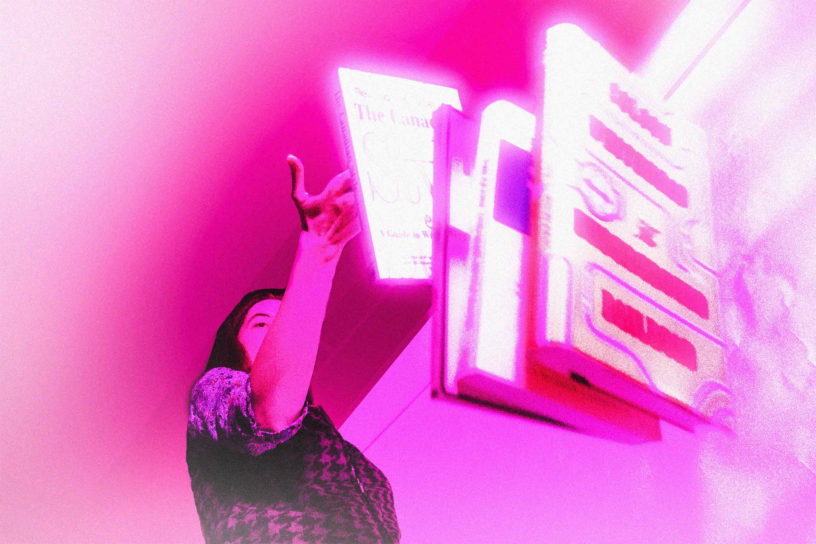
Books on feminism, left-wing politics and 2SLGBTQ+ voices are being taken out of schools and libraries across North America, with the U.S. banning over 22,000 books since 2021 and Alberta seemingly following their lead.
To uphold freedom of expression in different communities, public libraries across Ontario have made commitments to ensure that books don’t go under attack.
In light of these book bans, the Toronto Public Library (TPL) has curated various collections and hosted events that highlight Queer literature.
In 2023, TPL joined the Book Sanctuary movement—a title coined by the Chicago Public Library in 2022 for libraries who declare themselves places where the public can have unrestricted access to all materials, including titles that have been censored, challenged or banned, according to TPL’s website.
TPL also created a special Book Sanctuary Collection at the Toronto Reference Library, showcasing books that have been censored or removed from public and school libraries across North America.
Matt Abbott, senior manager of TPL’s collection development, said in an emailed statement to The Eyeopener that the library hosts panel discussions broaching the censorship centered around many 2SLGBTQ+ books.
“We invite people to take part in conversations where they can expect to challenge their own perspectives and learn from one another through civil discourse, creating opportunities for voices to be shared and ideas to be explored,” Abbott said. “We feel this is very important at this time.”
James Turk, the director of Toronto Metropolitan University (TMU)’s Centre for Free Expression, shared how the centre is actively updating their database—a hub maintaining records of every challenge to a book, library program or display that occurs in a public library, school library or academic library within the U.S.
Moving forward, Turk and the Centre are working with school boards across the country to enact policies and formal procedures for managing item removal requests from school library catalogues.
By keeping a closer eye on schools, he hopes that it can discourage any future book bans from making its way into Ontario.
“I’m hopeful that what’s happening in Alberta, couldn’t happen here…We could get a government that wants to do the same thing. But let’s hope that their attack on the Alberta government for what they’re doing will discourage any other provincial government,” Turk said.
While Ontario libraries have strived to foster a safe environment for young readers, some TMU students still worrt about the future of book bans south of the border.
For second-year politics and governance student Natalia Soliva, exploring 2SLGBTQ+ books took her on not only a literary journey, but also one of self-discovery.
She expressed how the representation between the pages of her favourite books made her feel seen, ultimately helping her harness the courage to come out.
“Seeing yourself, seeing these people on screen, in books throughout history who are like you, it ignites something in you. And it’s important that we keep that up because the more that we suppress it, the more people think that they are the problem, rather than the system,” Soliva said.
But with the ongoing pressures, Soliva described how the “erasure” of Queer voices from bookshelves only adds to the negative discourse.
“By removing these stories, these voices that uplift Queer people, it’s showing that there’s something that’s wrong with us and that’s something that we’ve heard for our entire existence,” she said.
Second-year social work student Adrian Mariano said he observed how many people have misconceptions among the content in 2SLGBTQ+ books.
He said that parents who challenge these books can dismiss the educational parts that commentate on self-identity and the history of the Queer community, cultivating more “isolation” among youth.
“I’m afraid for a lot of youth people that are…in the closet and I feel like it’s just nice to have those kind of, like education and knowledge towards LGBTQ people and those who are part of it just kind of gives them some sort of support,” Mariano said.
Whether the situation transcends, students like Soliva believe that holding more open discussions about the issue is a step that needs to be taken.
“These conversations need to be started here, because if we don’t, then it’s gonna come up behind us…you never know we don’t know who’s safe who’s not. So we really have to be talking about these [issues] before they get over our heads,” Soliva said.






Leave a Reply