

By Jasmine Makar

Lisa Pryce was playing on the field with her high school soccer team when she heard someone from the opposing team direct a racial slur at her. Her teammates turned to her, waiting for a reaction. What’s Lisa gonna do?
Assessing the situation, being the only Black girl on her team at the time and in her communities for most of her life, she knew she couldn’t react in the way people expected her to.
“I was obviously upset, it’s just not going to be good for my image to get upset in the way that I want to right now. So I just kind of need to move on,” said Pryce.
For Pryce, this was not a new reality but one that often daunted her throughout her soccer career growing up, eventually leading to her taking a break from sports for a few years.
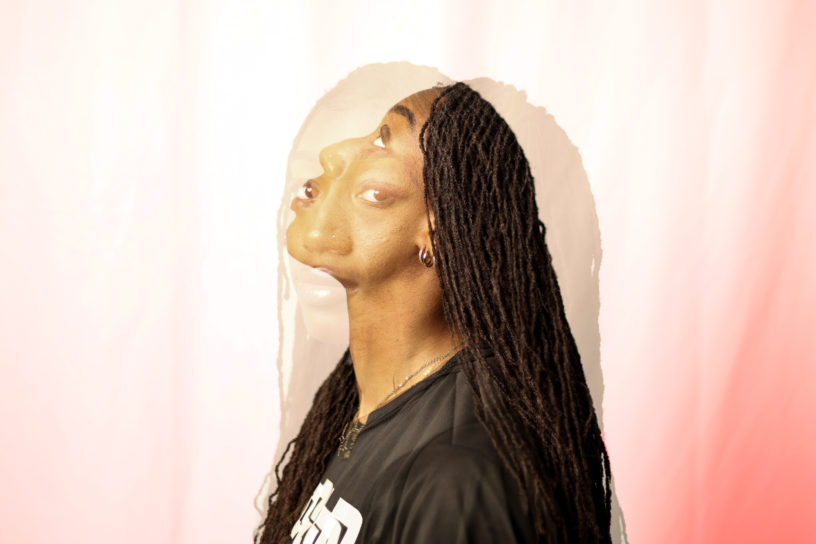
She made her way back to athletics in the fall of 2025 debuting as a scrum-half on the women’s rugby team in her final year of study at Toronto Metropolitan University (TMU). This will be her first year playing sports at a collegiate level.
She found herself having to work harder in soccer to get play time in her home city of Ajax, Ont. compared to other girls who already knew each other and had formed a relationship with the coach. Pryce also recalled how she noticed microaggressions against racialized players from both sides of the field when her team would play in certain neighbourhoods.
“I think that their lack of familiarity with cultural diversity definitely showed when it came to those teams,” said Pryce, specifically referencing a time when a Black girl on the opposing team was called “Minnie Mouse” for having her hair in two buns parted to either side of her head. The nickname was said enough times for the coach to adopt it as well, leaving Pryce disconcerted.
“That’s obviously going to affect how I show up in my sport as well. Because well, that’s also how my hair is,” she said.
In 2023, the Government of Canada reported 25 per cent of Canadians felt discrimination or experienced racism in community sports. Black athletes were also 35 per cent more likely to experience unfair treatment compared to their non-racialized counterparts, with physical appearance and skin colour being the major motivations of these cited discriminations.
“I want to prove to these people that this is not a sport just for white people”
For Black athletes, proving themselves is especially important because of the stereotypes placed on them. Kwame Baffour, a mid-distance track runner for TMU, often feels the burden of stereotypes when performing in his individual sport.
Like Pryce, Baffour came from a soccer background with very few Black players around him. Wanting to thrive in his sport, he had to prove himself, especially being from Etobicoke, Ont., an area that he said doesn’t often get recognition.
“I think it’s really hard for people from Etobicoke, like Black Creek, Rexdale, Weston, Jane and Finch and stuff like that. You don’t really get noticed a lot. You kind of have to break from that stereotype to kind of prove yourself,” he said.
Lack of resourcing emerges as one of the main contributing factors to the discrimination these Black athletes encounter with marginalized youth facing obstacles like lack of support with career planning and the rise of unaffordability.
Proving himself isn’t something Baffour takes lightly, especially when he feels like people don’t believe in his abilities as a Black athlete.
“You kind of do stand out a lot, because sometimes, it’s either, ‘He should be one of the quickest or one of the best on the team,’ or, ‘He shouldn’t be [on the team].”
Being in an individual sport also adds to the pressure compared to Baffour’s previous soccer career. With all eyes on him, he feels the physical and mental pressure to accomplish certain times but notes the importance of not letting accomplishments consume his identity.
Second-year women’s volleyball middle, Rayanna Amos-Ross Fisher, also reflects on how being a Black athlete has mentally and physically affected her drive for the sport. She said she puts pressure on herself but has also struggled with external expectations, especially in a white-dominated sport like volleyball.
“Pressure from other people is a little bit of an issue for me, because, in my head, I want to prove to these people that this is not a sport just for white people. It’s a sport for everybody, and everybody can join,” said Amos-Ross Fisher.
“You kind of have to break from that stereotype to kind of prove yourself”
Amos-Ross Fisher also said she often finds herself ‘code-switching’ because she doesn’t know how people will accept her identity, specifically, based on the way she talks.
Growing up in those spaces where expressing herself was difficult, she said it slowly became a mental struggle, “You kind of lose sight of who you are and who you want to be.”
Being the only Black member of the women’s volleyball team, Amos-Ross Fisher added she wants to show more Black girls that they can reach the same goals—with that sentiment comes the stress of representing the Black community.
“I love the sport so much, and I do enjoy seeing other Black girls joining the sport…putting pressure on myself to be that person of representation,” she said.
Pryce grappled with the lack of community she felt in sports saying she felt “ostracized at times.” She also emphasized the significant role institutions play in making racialized people feel comfortable and supported enough to continue playing at higher levels.
“I think the whole point of sports is community, obviously. That’s what I’m there for. That’s what I’m hoping to do…it was really hard because I wasn’t getting that,” Pryce said. “I was these people’s window into what a Black person was. I felt like anything that I did was now anything that we all did.”
Coming back to sports years later, Pryce reflected on the community aspect of it, especially entering rugby, another predominantly white sport. “Do I really want to be the only person in a community again?” she said. Despite these feelings, she has found her team to be accepting and extremely supportive of her identity and fully embracing her, a difference that’s taken time to experience.









Leave a Reply