

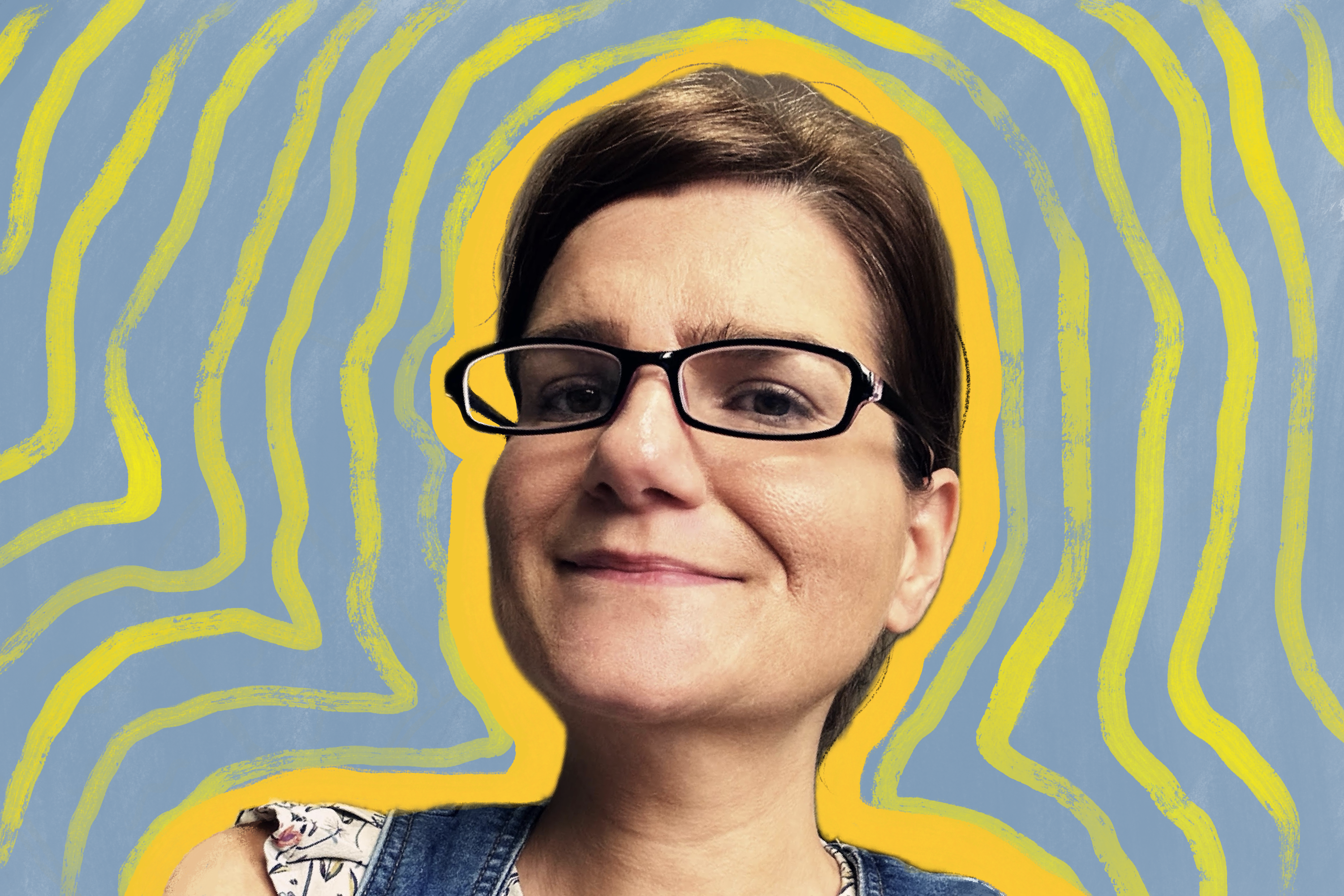
By Sophie Wallace
On Aug. 26, Toronto Metropolitan University’s (TMU) School of Disability Studies hosted British scholar Kirsty Liddiard to present her research in a talk titled ‘The Power, Place and Potentiality of Disability in the University.’
Liddiard is currently a senior research fellow at the University of Sheffield, U.K. But in 2012-2014, she was the TMU School of Disability Studies’ first ever postdoctoral fellow. “TMU was one of the first places in my mind to go back to,” when deciding where to share her research outcomes, Liddiard said in an interview with The Eyeopener.
Liddiard is a self-described feminist disabled researcher. Her work centres on making research more inclusive by building a more equitable academic environment for racialized, disabled, Trans and Queer people. Liddiard wants universities to think critically about the experiences of students and scholars who “don’t fit a standardized mould.”
“If you nurture disabled researchers and students and bring them into university, then the knowledge that we end up creating is ultimately different and more centred on the needs of disabled people,” she said.
A fundamental belief underpins Liddiard’s work: that universities are inherently ableist institutions.
“When I think about ableism in a university…it’s about being someone who’s unexpected, unwelcome, excluded and who experiences forms of poor access in many different ways,” said Liddiard.
“The university tends to think about access as an instrumental problem that needs to be solved for the individual,” she said.
Instead, she argues that access is a collective responsibility, and should be built into the design of cultures, spaces and courses so disabled scholars can “flourish, not just survive and make do.”
In her talk, Liddiard touched on the recent tragic death of Jason Arday, the youngest ever Black professor at the University of Cambridge in the U.K., who specialized in the sociology of race and education.
According to Liddiard, his role at Cambridge was once hailed as a progressive move for universities’ equity, diversity and inclusion policies. But his work was held up to immense scrutiny, leading to his resignation this summer amidst accusations of academic misconduct and plagiarism.
As reported by The Guardian, Arday was diagnosed with autism spectrum disorder at the age of three. “There are discourses of equity and diversity and inclusion in policy and in culture in our universities…to what extent does this work, to what extent does this protect people,” said Liddiard.
Disabled researchers have long been doing the work of thinking critically about inclusion, according to Tali Cherniawsky, the lab coordinator of the Disability Publics Lab, a research institution within the School of Disability Studies.
“It was through lots of work by disabled scholars to set up something like [the Disability Publics Lab],” they said. “Disabled scholars are really good at finding one another in the [university] and working together to think through those systems.”
According to Liddiard, the School of Disability Studies is a huge asset to TMU. “To have a dedicated intellectual space where disability is thought about critically is really important,” she said.
The Disability Publics Lab is currently undertaking research projects involving disabled students on how to make work-integrated learning, such as mandatory co-op placements in programs, more accessible.
“It’s a really complicated area to think about accessibility, because the responsibility…becomes unclear when you start to involve industry in that process,” said Cherniawsky. “It’s very difficult to imagine any ‘easy solutions’. But I think part of this is not trying to offer easy solutions.”
Megan Suggitt graduated from the School of Disability Studies in 2022. She completed her degree entirely online, also gaining a certificate in Indigenous Knowledges and Experiences from the Chang School of Continuing Education.
“As a disabled and neurodivergent person, [the program] was incredibly meaningful as it gave me an opportunity to explore disability through a social justice [lens]…it also allowed me to share my lived experience and to incorporate disabled storytelling,” she said.
Despite feeling empowered through being part of the School of Disability Studies, Suggit was often frustrated by the lack of support within the wider university. Suggit said the process of applying for accommodations was “tedious” and required a psychoeducational assessment. “You have to almost prove you’re disabled enough,” she said.
Even though Suggitt graduated in 2022, in order to register for Academic Accommodation Support (AAS), current TMU students still need to provide documented proof of their disability according to Policy 159.
A central pillar of disability studies is the concept of ‘crip time,’ which means how time can be a form of exclusion for people whose bodies and minds work in different ways, according to Liddiard.
“If you’re a researcher who lives with chronic illness and you need time away sick or for hospital admissions…that impacts your work in particular ways that mean you can’t possibly meet that normative time scale,” she said.
Suggitt said that although she learned about crip time during her time at the School of Disability Studies, it could be better incorporated by TMU on the whole.
In a emailed statement to The Eye, a representative from TMU said the university “aims to be a leader of excellence in accessibility and inclusion of persons with disabilities.”
“Students can work directly with Academic Accommodation Support (AAS) which provides resources, educational and awareness initiatives, and direct services such as individualized accommodation planning and learning and skill development,” the statement read.
The university also said it evaluates the success of its accessibility measures through “the enrolment and retention of students from underrepresented groups—namely persons with disabilities.” However, in the same statement they later said that “Diversity Self-ID data analysis does not currently include dropout rates disaggregated by disability status.”
At the core of Liddiard’s research is the belief that “everybody should have a right and a space and an opportunity to co-create knowledge.”
She asks academic institutions to consider: “What should our research cultures be doing to be able to welcome in disabled people and their knowledges into the university, not just as participants or tokenised others, but creators, thinkers, academics, scholars, intellectuals?”






Leave a Reply