

By Lucas-Matthew Marsh
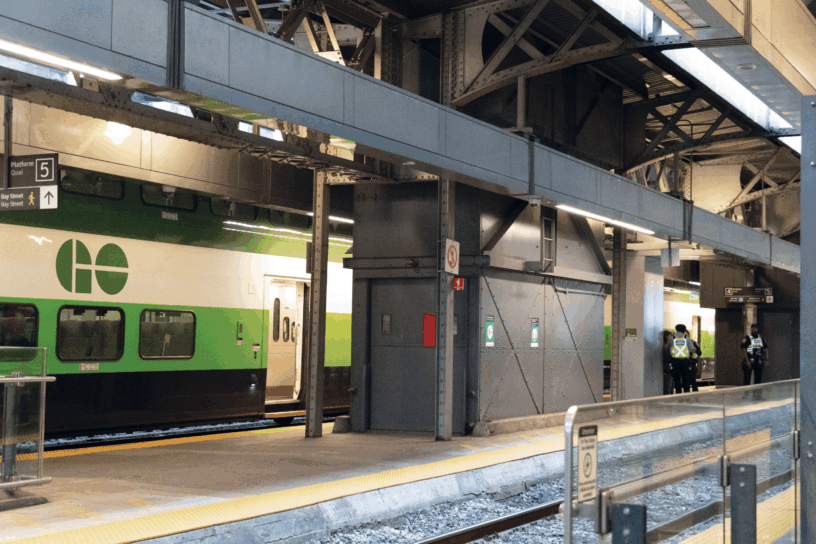
On Sept. 8, Metrolinx, which operates GO Transit and UP Express, reformed its fare evasion policy and raised the minimum fines distributed to fare evaders. In some instances, fines have jumped as much as 471 per cent.
The transit agency says the new policy will make up for the approximately $21 million lost yearly due to fare evasion.
Prior to their changes, first-time fare evaders were fined $35. Now, offenders will face a $200 fine, with Metrolinx adding on an additional $100 for every following offence. At the sixth or higher offence, evaders will receive a court summons and up to $1,000 in fines if convicted.
Metrolinx’s own estimates say only five per cent of riders evade fares, a statistic that Peter Miasek, president of Transport Action Ontario, says puts the fine increase’s reasoning into question.
“I think it’s too high,” Miasek said.
Miasek described a time where he forgot to tap while rushing to catch the train and received a ticket from a fare inspector, even after explaining the situation.
He believes most people evade their fare for similar reasons and the system should start with a warning, rather than the current policy which fines fare evaders on their first offence.
Last summer, second-year media production student Alice* was on the GO Train when her older sister showed her a “trick” to pay a lower fare.
“On the GO train, there’s a button that you can click where you can set your destination,” she said. “So instead of setting it…to the end of the line, we’re doing a few stops before, so at least it’s cheaper.”
While on board, a fare inspector noticed they had passed their stop and let the pair off with a warning. Alice said that the experience made her reconsider fare evading again. GO Transit has had a zero-tolerance policy for fare evasion since 2019.
In a statement to The Eyeopener, a Metrolinx spokesperson advised Toronto Metropolitan University (TMU) students to tap on and off at the start and end of every trip, carry a valid student card in case of a fare inspection and arrive at stations with enough time to activate their e-tickets or group passes to avoid fare evasion fines.
“Fare evasion affects everyone,” the statement read. “Increasing fines helps protect a transit system that’s reliable and sustainable for all riders.”
According to a study published by TMU in 2020, over 77 per cent of TMU students relied on regional transit to commute to school, more than any other university in the Greater Toronto Area. The average commute time was 56 minutes, the second-highest commute of all post-secondary schools in Toronto. TMU students’ commute times were just under a minute shorter than York University, whose students had the longest average commute at 57 minutes.
Mustana Maeen, a first-year biochemical engineering student at TMU, said his daily commute to school from Milton goes far beyond that, totalling approximately four hours every day.
“It works pretty well, but sometimes if you miss the train, the waiting hours can get pretty bad,” Maeen said.
*This source has been granted anonymity as fare evasion is a provincial offence. The Eyeopener has verified this source.








Leave a Reply