

By Debora Ca Quindecam
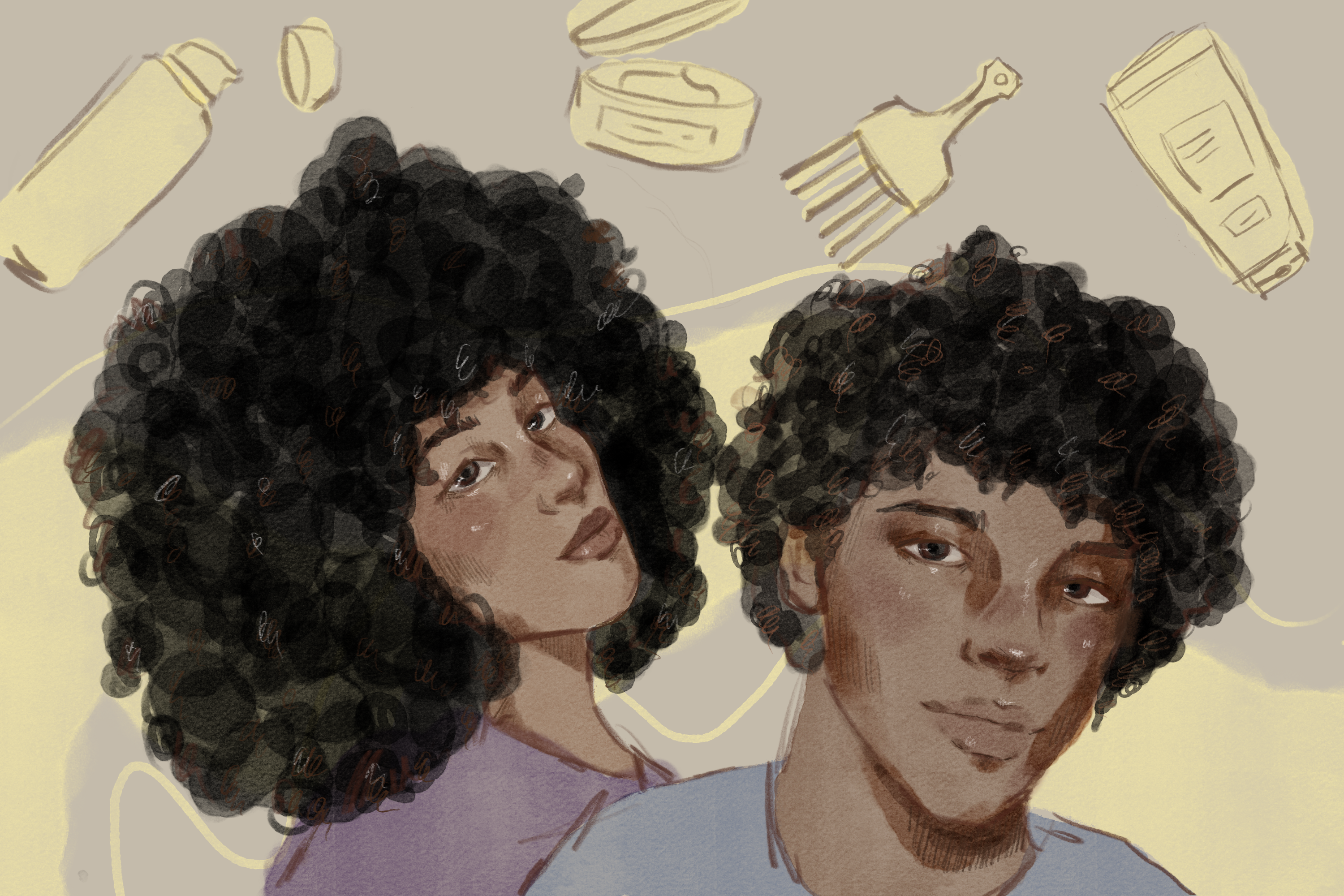
On Oct. 17, the National Society of Black Engineers (NSBE) at Toronto Metropolitan University (TMU) co-hosted The Crown Experience, an initiative meant to celebrate Black hair and provide information on how to properly take care of textured hair.
NSBE is a non-profit and student-managed organization created to support Black students in the STEM fields.
The event was hosted in collaboration with Nurvica, a company that offers personalized hair care, featuring special guidince in Black hair and prepared a panel of textured hair professionals for a well-informed conversation. The panel including hairdressers, a barber and a trichologist who conducted a live scalp analysis.
Bola Akintonwa, program coordinator of NBSE, said they decided to host the event with Nurvica because they have similar goals in common, including to build up “the next generation of Black professionals, building a stronger sense of community among Black students,” he wrote in an email to The Eyeopener.
At the event, a common sentiment amongst attendees was how to navigate through vast amounts of information online regarding textured hair care, which can be overwhelming.
Alwyn Mabe, second-year mechanical engineering student and member of NSBE TMU, said it’s not easy for everyone to identify the right information that’s applicable to each individual, because every person has different hair conditions.
“My hair is coarse and requires a lot of care, but during the winter, sometimes [there are] problems. If it gets too dry, wetting and taking care of it becomes difficult,” Mabe said.
Beyond being a simple physical attribute, hair can symbolize history, identity and resistance.
Diana Adu-Yeboah, second-year sociology student, said that historically, hair has been used as a means of survival for Black people. According to Face to Face Africa and Blurred Bylines, enslaved people across South Africa would cornrow escape routes on their heads to make their way north or braid rice seeds into their hair as they were transported to the West.
At the same time, some acknowledged the presence of a general beauty standard that doesn’t cater to Black features.
Njeri Muraya, a fourth-year sociology student at York University, attended the event. “There isn’t a hundred per cent acceptance of [Black] natural hair…It must be long and loose to be seen as ‘good,’” Muraya said.
Stephen Nikechukwu Evuleocha is the chief operating officer of Nurvica.
He said at times, problematic perceptions are further perpetuated by Black people when referring to their own hair.
“Apologizing for the state of their hair, as if it’s something to apologize for…we need to change the attitude of how we, as Black people, view hair problems.”
Akintonwa wrote that the event was “a good chance to educate our community on the importance of embracing our identity.”
He believes there are many in the community who struggle to truly express their identities in the workplace, feeling “a pressure to conform to the standards of others.”
“The Crown Experience addressed those expectations and reminded us that being authentic in our Blackness and professionalism can, and should go hand-in-hand.”
“NSBE cares for the Black community as much as any other Black [representing] group,” said Evuleocha, also a former member of NSBE’s chapter at McGill University.
NSBE originated in the U.S. at Purdue University in 1971 and has since grown throughout the world.
Akintonwa wrote that NSBE’s mission is to provide a safe space for Black students and “to lend a listening ear to the struggles” the Black communities face as a collective.
“I truly believe that organizations like NSBE is how we turn what can be an isolating, scary journey as Black students in STEM into a supportive, empowering experience where Black excellence can be celebrated and nurtured.”







Leave a Reply