

By Ananya Sharma
Torontonians are “amongst the loneliest Canadians,” according to 2023 report by the Toronto Foundation. But if you ask the researchers at The SingWell Project, part of the solution may be a simple activity many shy away from: singing.
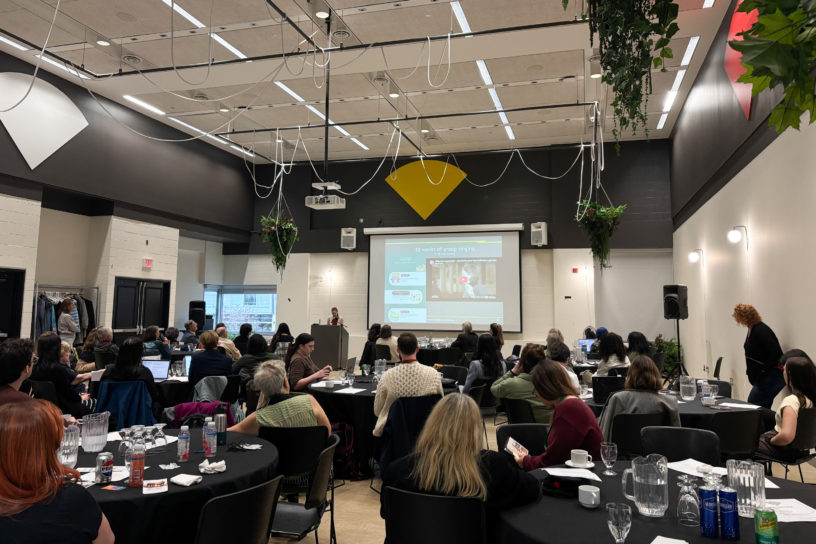
On Oct. 16, SingWell, an international network exploring the benefits of group singing for older adults’ well-being, held its fifth annual symposium at Oakham House.
According to the event description, the day included a keynote discussing the potential of music to help community building, networking workshops and “the chance to sing together.”
Arla Good, a research associate in the psychology department at Toronto Metropolitan University (TMU), is the chief researcher and co-founder of The SingWell Project. She said the project began with a gap she saw in society and “a need for people to feel more socially connected.”
Alongside Frank Russo, principal investigator at SingWell and a scientific director and psychology professor at TMU, Good studies both the psychological and physical outcomes of singing, including a sense of belonging and stronger voice and lung function.
Lee Willingham, a professor emeritus at the music faculty of Wilfrid Laurier University, delivered the symposium’s morning keynote and argued against music being treated as an elite art form reserved for perfection. Willingham said SingWell flips that idea by treating singing as everyone’s “inalienable right.”
Willingham said group singing offers something other community activities cannot always provide. “It connects human beings beyond the verbal, physical and social level. It is a deeply spiritual thing,” he said.
Calling group singing “social activism,” Willingham said it “engages people in thinking beyond getting the notes in tune, getting the words right, being in harmony.”
“We’ve seen it touch things like environmental justice, racism, poverty, gender discrimination. Singing can address all of these kinds of social concerns.”
A 2021 research article by Good and Russo suggests that group singing can lower cortisol and accelerate social bonding.
Aidan Giannopoulos is a fourth-year psychology student. He said musical activities, such as covering songs or playing instruments with friends, noticeably affect his mood and energy.
Giannopoulos believes singing could be a useful campus activity, especially by making it informal and welcoming to people without a musical background. He said that songs in different languages could help students from different backgrounds connect. “I feel like that would definitely help students and people to connect and understand each other more through, common media,” he added.
Tara Raessi, a 2024 TMU alumna, has watched that shift happen. She joined Russo’s lab as an honours thesis student in 2023 and has since helped support and lead SingWell events.
“There’s kind of a therapeutic effect of that,” Raessi said. At the start of a session, people are nervous about how they’ll sound. By the end, she says, they’ve “jumped a hurdle together” and are enjoying the sound of the whole group.
Good said SingWell avoids the word “choir” because it can imply auditions, talent and performance, while its programs offer singing groups that include no audition, no performance and “talent optional.”
Good said the hardest part is getting people into the room for the first time. Once there, someone may hum along, then begin to sing and realize it does not matter how they sound.
Good said funding is a major barrier to expanding accessible programs. Funded by the Social Sciences and Humanities Research Council of Canada, SingWell is building an evidence base to make the case for sustainable community funding.
The symposium, she said, was a step toward the network needed to bring singing programs to more communities.
“Seeing those relationships being built…that’s how we’re going to create this network that will make this program possible. That’s what I hope for this symposium.”





Leave a Reply