

By Claire Van De Weghe
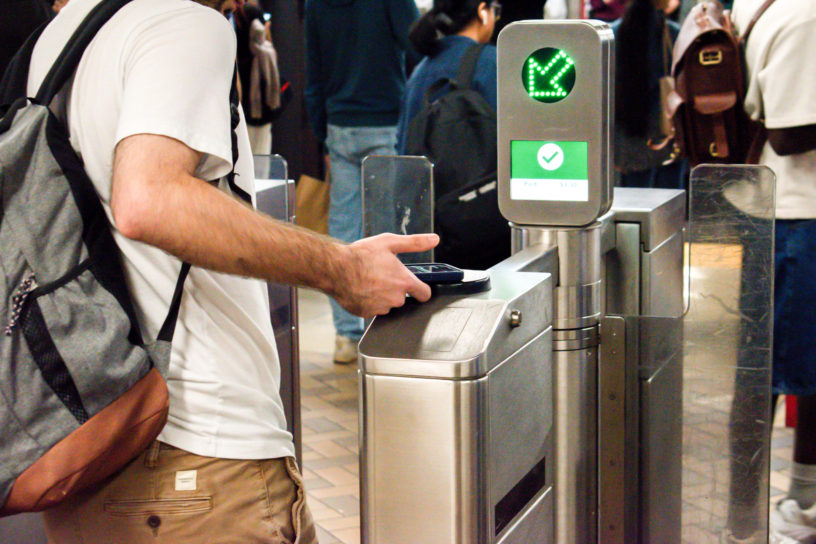
The Toronto Transit Commission (TTC) is considering replacing its long-standing monthly pass with a new fare cap system, which may save money for frequent commuters at Toronto Metropolitan University (TMU).
In a proposal released to the public on Sept. 4, the TTC’s Strategic Planning Committee said this fare cap would give passengers free rides on all systems after a set number of trips during that month, ranging between 40 to 47.
The system is aimed at encouraging ridership and replacing the $156 monthly pass with a cheaper alternative. But for students who are already on discounted fares, the benefits aren’t straightforward.
Andrew Pulsifer, executive director of the transit advocacy organization TTC Riders, said fare capping could encourage more ridership.
“A cap is just a more equitable way of getting people to take transit…it inspires people to take transit,” he said. “The TTC reports show that different caps of different levels will lead to a significant increase in ridership.”
Currently, post-secondary students or those under 19 are paying $128.15 per month for a discounted monthly pass. Under fare capping, trips will be priced at $3.30, meaning riders could pay between $132 and $155.10. Depending on the cap level, commuters could lose up to $30 monthly with fare capping.
For younger riders under 20, Presto fares are $2.35 per trip, so a 40-ride ride cap could cost only between $94 and $110 per month, cheaper than the current pass prices.
The financial impact will also vary depending on how often students ride. A more frequent rider would hit the cap quickly, while others with lighter schedules may not reach the cap.
Antoine Belaieff, a former Metrolinx sponsor and now head of new markets at Swiss ticketing firm Fairtiq, says the financial weight of this new pass system could affect the TTC as well.
“Capping in isolation is great, but I think the devil is in the details,” he says, “if something is cheaper, and you don’t replace it with more riders. It’s not enough, at least in the short term, to make up for the shortfall. Does it have any impact on funding? Is the quality going to decrease? Is the [fare] level set right?”
According to the TTC report, the council plans to pay between $10 and $35 million in the first year. Whether the TTC will benefit from increased ridership to make up for the gap remains uncertain. However, some students are worried about the overcrowding that may result from it.
“If [the proposal] does work, it may raise another concern, which is the overcrowding on transit,” expressed TMU second-year mechatronics student Jumi Bogis. “Maybe, if they upgrade the carts, or the amount of carts, [add] more timings for trains or subways, maybe that will solve the issue. Because it might backfire.”
Bogis has already seen the effects of overcrowding on her day-to-day life, taking the GO train from Mississauga. She’s had times where she’s had to push through crowds just to get one of the few remaining seats on a train.
For students juggling tuition and bills, some remain cautiously optimistic, as spreading out the costs instead of paying a big expense at the start of the month could ease pressure.
One of these students is Jeanne Bilap, a second-year biomedical sciences student at TMU. Last year, they were constantly commuting between North York and the TMU campus. Bilap ended up spending $25 a day, just getting to school.
Bilap said commuting often meant paying separate fares for both GO or UP and the TTC passes, which adds up to nearly $300 a month. They expressed “I [had] my tuition paid off and everything, but sometimes I literally just [couldn’t] afford to go to school.”
Because of the price they faced, Bilap says they had to quit their extracurriculars to avoid additional fares. Now living closer to campus and paying less to commute, Bilap sees other students facing similar issues.
More benefits and drawbacks will become clear as the TTC finalizes the details and considers how to balance its own finances with affordability.
Belaieff explains that “[fare capping] has a very different impact on different people,” he says. “Depending on how much they use transit, how much they rely on transit, and their income level. So that’s what needs to be looked at.”






Leave a Reply