

Indigenous peoples’ solidarity with Palestine is about parallels between their love for their native lands
By Daniyah Yaqoob

The Mediterranean Sea was quiet, calm and blue-as-ever, as a ship sailed over its surface in late September, this atmosphere was shared with the world through videos across social media.
The Conscience, a large white boat—with its name flanking its side panels in bold letters, was one of dozens part of the Global Sumud Flotilla, a global humanitarian mission whose aim was to break Israel’s illegal siege on Gaza. Nearly 100 health care workers, journalists and activists were on board the Conscience, according to their website.
Among them was Mskwaasin Agnew, a Cree and Dene harm reduction practitioner living in Toronto and a contributor to Toronto Metropolitan University (TMU)’s Yellowhead Institute. In a black t-shirt, a red tatreez bag hanging cross-body and a skirt with ribbons the colour of Palestine’s flag, Agnew began the trip by singing the Bear Song, a prayer meant to be carried from her native land to the lands of Palestine.
The Conscience set sail on Sept. 30—National Truth and Reconciliation Day in “so-called” Canada. On this day, allies wear orange for all the Indigenous families, communities and especially children impacted by residential schools—people who were stripped of their culture and agency. The day is a reminder of the atrocities the Canadian government committed against Indigenous peoples.
It was fitting, then, that when Agnew livestreamed from a point at sea, the sun behind her tinted the sky in an orange hue, the waves of the sea reflecting that same orange. Those on board the ship also wore orange accessories as they sailed toward a land where, now, Palestinian children are losing their youth at the hands of a similar colonial system
“It’s like fate,” Agnew said in a video from aboard the ship, the salty air stirring the strands of her braid, held together by an orange band. “My ancestors survived so I could be here,” she said.
Over the last two years, as Palestinians have faced a genocide in Gaza, many Indigenous peoples across Turtle Island have been vocal and proud in their solidarity. A statement signed by the Assembly of First Nations in December 2023 had called for a ceasefire and the immediate end of the Israeli occupation of Gaza. However, the solidarity between most Indigenous peoples and Palestine goes further back than 2023—many Indigenous peoples on Turtle Island say it’s because the struggle of Palestinians reflects their struggles and their ancestors. Their love for their land is reflected in the Palestinians’ love for theirs.
On Oct. 26, 2023, weeks into Israel’s relentless bombing of Gaza, Indigenous peoples worldwide signed a letter of solidarity with Palestine. In it, they wrote, “It has been heartbreaking and unsurprising to see the colonial powers in Canada, the United States, Australia, New Zealand, and Europe line up behind this genocide. Israeli settler colonialism, apartheid, and occupation are only possible because of international support.”
Eva Jewell, an associate professor at TMU’s sociology department, was among the signees. At the time, professors around the world, particularly in the U.S., were being fired from their jobs over expressing pro-Palestine sentiments, as reported by The Intercept. But that didn’t worry Jewell, who couldn’t help but feel shock at watching the genocide in Gaza unfold—and the parallels to the suffering of her own people.
“They see themselves through my story and I see them through my story as well”
“Our conversations with Palestinian communities and connections to them actually preceded Oct. 7,” says Jewell. “The politics of who is actually settling on the land aside, we understand what it’s like to have our land stolen from us.”
Jewell is a member of the Chippewas of the Thames First Nation and grew up on the reserve—more specifically, on the grounds of Mount Elgin Indian Residential School.
Mount Elgin began operations in 1851, becoming one of Canada’s first residential schools. It was one of many where Indigenous children were forced into farm labour, assimilated with the help of the Methodist church and made to live in abysmal conditions, according to the residential school database The Children Remembered. The school closed in 1946. As of Nov. 18, the National Centre for Truth and Reconciliation recorded sixteen deaths at Mount Elgin.
Jewell says her grandparents, great-grandparents and even great-great-grandparents went to residential schools. The forced assimilation attempted to change their understanding of the land, to see it as a resource, just like the colonizers do, she says.
It wasn’t until her mother’s generation and her own that her family began to reclaim the land as an extension of themselves.
Jewell spent long days on the reserve near London, Ont., playing in the front yard of her mother’s house. At school, she was taught “bush skills” from an Ojibwe teacher, like how to walk through a forest without making noise. Despite the best attempts of Canadian colonizers, Indigenous practices lived on.
“We are descendants of the land and it’s our relative,” says Jewell. That connection is what makes settler violence against the land—from Turtle Island to Palestine—all the more “gut-wrenching,” she said.
Israel, in addition to its genocide of the people, is committing what is widely considered an ‘ecocide’ on Palestinian land—that is, the deliberate destruction of the natural environment.
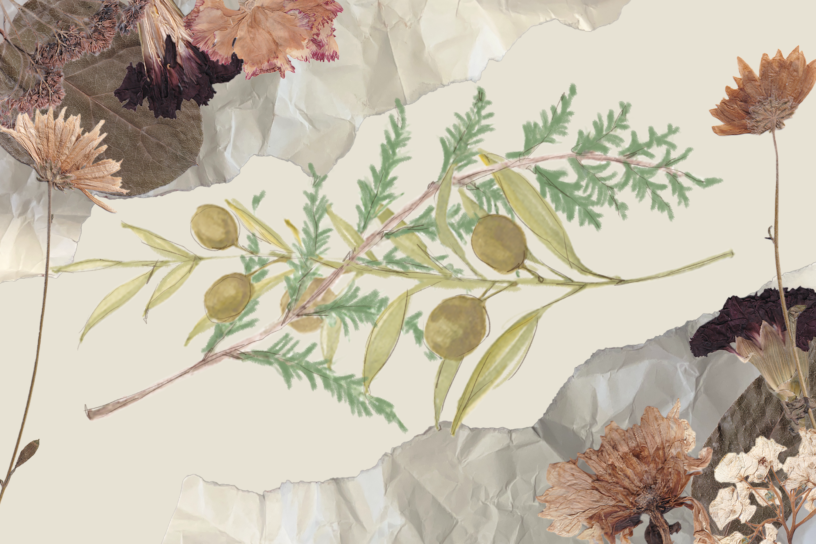
According to the Institute for Middle East Understanding, in 1948, Israel uprooted native Palestinian trees and crops to replace them with four million non-native European species. Now, pine trees grow in parts of Palestine, where they had never grown before. Since 1967, Israel has uprooted more than two million trees in the occupied Palestinian territories. Among them, nearly one million olive trees were also destroyed.
Maher El-Masri, professor at TMU’s Faculty of Community Services, said that in Palestine, the children grew up learning about the sanctity of olive trees.
“We love the look of the olives. We decorate our homes with olive branches. Our soap is made from olive oil,” he said. “It’s like no soap you will ever, ever try.”
El-Masri was born in the Gaza Strip, to a Gazan mother and a father who was forcibly displaced to Gaza during the Nakba of 1948. El-Masri had left Gaza in the 1990s to pursue an academic career abroad. But he says he misses his land with sincerity.
As a child, El-Masri grew up visiting olive groves and sitting amongst citrus trees. He spent hot summer days under the shade of the branches, enjoying a picnic with his family. And then there was the beach, Gaza’s shore. At least once during the summer, every family in Gaza would have an outing and a meal there, he says. With them, they would take special fruits and a special rice. It didn’t matter how poor a family was, El-Masri says—at least once, the parents would take their kids to the beach and bask in Gaza’s sun.
El-Masri played in the old city of Gaza, near the Kitab al-Wilaya Mosque, which shares a wall with the Church of Saint Porphyrius, considered to be one of the oldest in the world. To him, it was a symbolic depiction of the way Jewish, Christian and Muslim Palestinians lived in harmony. The history the streets of Gaza held were known to him. He played in the shade of the church until the sun set and the dim flicker of the kerosene lamps called him home.
“We have a special connection with the land,” El-Masri said. “And I mean that with every interpretation of the word.”
The people of Gaza used to take leave from their jobs, as doctors and engineers and government employees, to join the olive harvest. El-Masri says nothing compares to the oil that came from it: the look of it, the smell. Now, he says Israeli settlers burn olive trees, uproot them from their native soil or simply cut the branches so that the trees turn into stumps.
Israel has also destroyed more than 100 historical sites in Gaza amidst its indiscriminate bombing campaigns. On Oct. 19, 2023, Israel struck the Church of Saint Porphyrius, claiming many lives. Kitab al-Wilaya shared some of the damage. The structure now looks nothing like the church El-Masri played in.
“It makes me so frustrated to see these colonial settlers who have no respect for the land,” he says.
“I thought about what my ancestors went through and all the ways that they resisted settler colonialism”
El-Masri lost his older brother during Israel’s genocide in Gaza. He lost his cousins—the family lost their home. Pretty much everything El-Masri had known in Gaza is now bombed. And yet, the Palestinians stay on their land. When one of the ‘ceasefires’ was announced earlier this year, scenes from Gaza showed Palestinians walking back towards the rubble in droves. When journalists asked them where they were going, they proudly said they were going home.
“Home for them is not the walls, it is the land,” says El-Masri. “The connection is something only natives can understand. And that’s why the people of Gaza endured this genocide.”
If they must die, then they will do it on their homeland, he says.
When El-Masri came to North America in the 1990s, he would be asked: Where are you from? And when he responded Palestine, he would often be met with confusion. They would ask: What is that? Or: Do you mean Pakistan?
They all responded that way, except for one group, he said: the Indigenous peoples of Turtle Island.
“Every time, not once did I meet an Indigenous person without having an immediate connection with them, without even talking politics,” says El-Masri, holding back tears.
Around 2008, El-Masri was introduced to an Indigenous elder who was very informed on the situation in Palestine. El-Masri saw his grandmother in her. She would see him in a room of 200 people and point to him, pulling him aside to chat at whatever event they attended.
“The thing is, they see themselves through my story and I see them through my story as well,” says El-Masri.
Jewell similarly sees her own people reflected in Palestinians
“You’re drawing so many parallels between the contexts,” she said. “I thought about what my ancestors went through and all the ways that they resisted settler colonialism and encroachment on their lands and thinking how Palestinians are doing a very similar practice of protecting their land.”
Jewell expressed that in an Indigenous worldview, politics is a highly spiritual practice. And so, political activism and supporting the Palestinian people, is the least they can do.
At rallies in support of Palestine on Turtle Island, Indigenous peoples practice jingle dress dancing. It is significant, Jewell said, because that is a healing dress and a healing dance. They bring their eagle feathers and eagle staffs to share parts of their culture in the vein of mutual respect. And the Palestinian people reflect their solidarity back, in recognizing whose land they are truly on.
El-Masri said concepts like truth and reconciliation on Turtle Island are connected to the situation in Palestine. You cannot be an advocate for one without advocating for the other.
Colonialism is ongoing in Canada—it’s in the boil water advisories placed on reserves, in the sky-high prices for groceries in the north, anti-Indigenous racism in healthcare, the overrepresentation of Indigenous peoples in the criminal justice system and so much more.
The genocide here is not “gun in your face,” says Jewell but more of a “bureaucratic, slow death.”
Meanwhile, Jewell says the genocide in Gaza is a combination of multiple settler colonial policies, that have been tested on various Indigenous peoples across the globe over time.
“That’s what makes it such an extreme phenomena, as you see all of the policies that settler colonial powers have refined over time occurring in one place,” says Jewell. “We were the prototype, whereas Israel now has, like a map and a guide [to follow] with horrific precision.”
Though the temporal spaces of the Palestinian and Indigenous genocide differ, that’s what makes continuing solidarity between the groups so important, Jewell says. They will continue to discuss how to support each other and how to protect one another from similar fates.
In fact, their solidarity stems from a sentiment expressed in many Indigenous community circles: “Our oppressors are talking. And so we should be too.”
This story, about these people and their lands, is a love story, El-Masri says.
It is told in the way every Palestinian child can name the cities of Palestine—despite the fact that today, many city names have been changed.
El-Masri’s father was a refugee from Bir al-Saba, now called Be’er Sheva. But his father, for as many years as he lived, did not forget the name. He was a broken man, with a yearning for his land in his heart. He taught his children the original names of the Palestinian cities.
El-Masri’s grandmother, for as many years as she lived, clutched the ownership papers to her house, from which she was forcibly displaced. A return was all she longed for. El-Masri never saw where his paternal side was born and raised but he could tell you what it looked like, from the trees which governed it, down to the build of the staircase. And the key—the key to his ancestral home, he could tell you all about it.
“I will never forget the scene of that big, huge key that [my grandmother] used to hold in her chest all the time,” says El-Masri. “I talk to you and I have that key presented in front of my eyes.”
This love story is told in the way Indigenous peoples in Turtle Island have reclaimed their land from violence and from settlers.
Jewell remembers being four years old, sitting on her mother’s porch with a bag of candy in her lap, swinging her feet where they dangled over the edge. There, she watched one of the last remaining structures of Mount Elgin Residential School burn. She didn’t know then what it meant for the school to burn or why the people of her community celebrated a building on fire. Testimonies from Indigenous peoples are some of the only kept records of historic events like these.
But nowadays, she reflects back on the vivid memory of her childhood. She lives around the corner from that area today. And from a nearby walnut tree—possibly the same one her grandfather would have taken walnuts from to hide in a cache for the winter—she harvests walnuts with her child.
Jewell thinks about the connection that she gets to have to the land—the connection that her child does, too. The fire that day symbolized the cleansing of a violent institution that imprisoned children, she says. And the generations that live there now are teaching their children the languages—the practices that their ancestors were once punished for speaking or doing in the exact same place.
This love story is told in the way that Indigenous and Palestinian freedom is intertwined, Jewell says. It is told in the way that, according to Jewell, their native lands are an extension of their bodies.
This love story is told in the verse of Palestinian poet Mahmoud Darwish and his letter to Palestine on behalf of its people: “My land, my lady: you are a reason to live.”







Leave a Reply