

By Ellie Southerland
Second and third-year TMU performance: dance students showcased their storytelling prowess at Choreographic Works 2026.
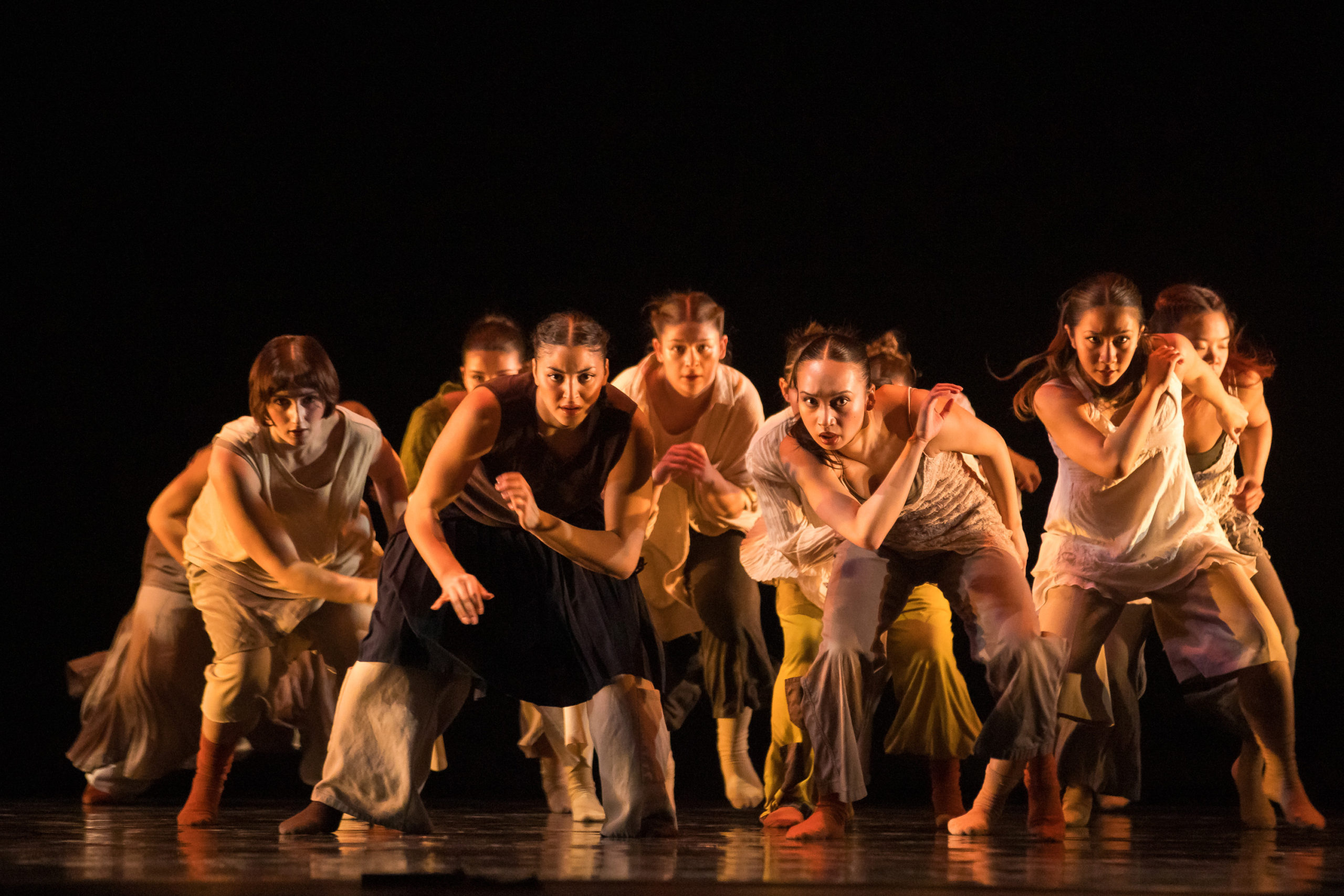
Students exhibited months of work through 26 unique pieces in this year’s production, shown in the Creative School Chrysalis between Feb. 10 and 13. Choreographers tackled several different themes in their works, combining beautiful visuals with powerful and visceral narratives.
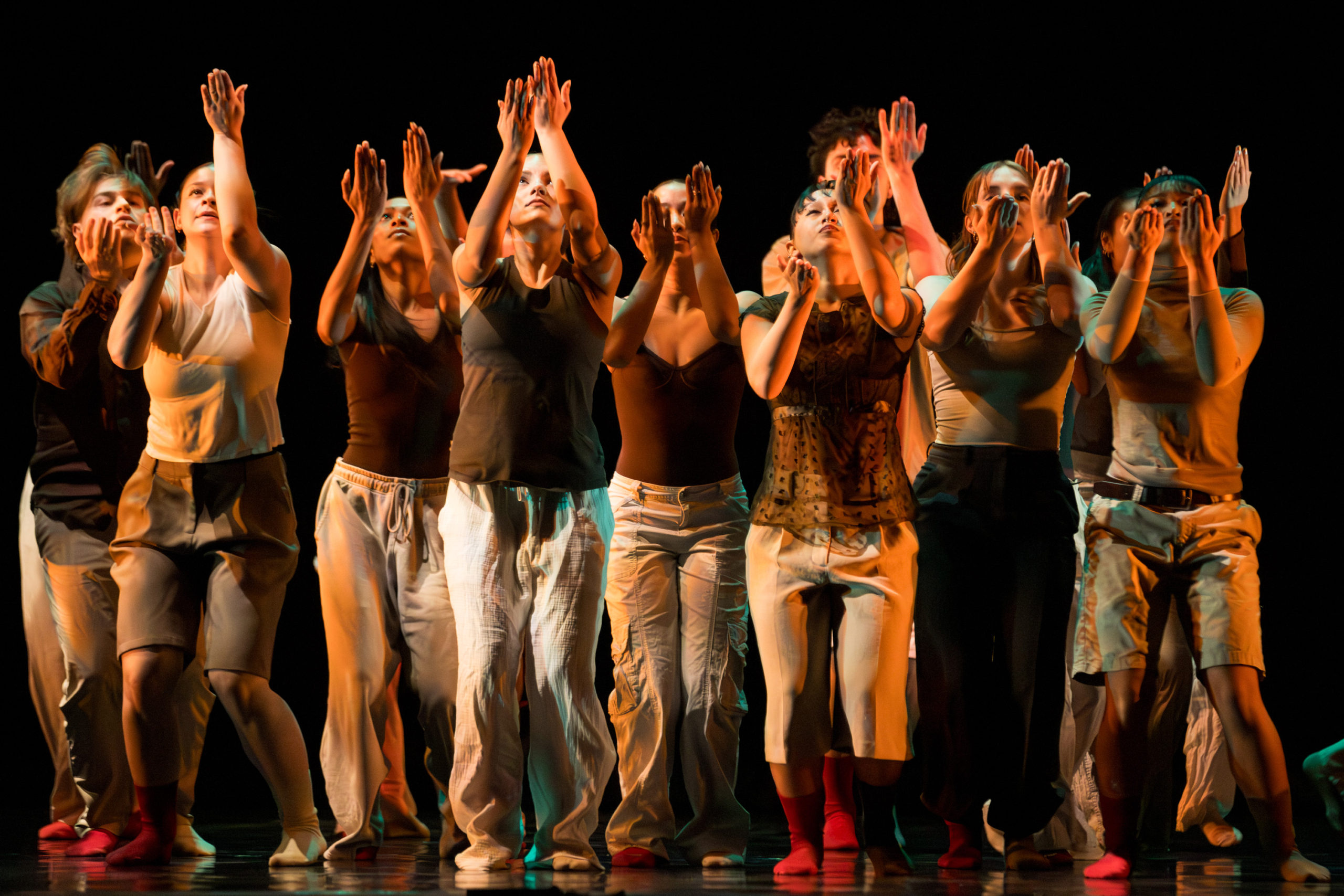
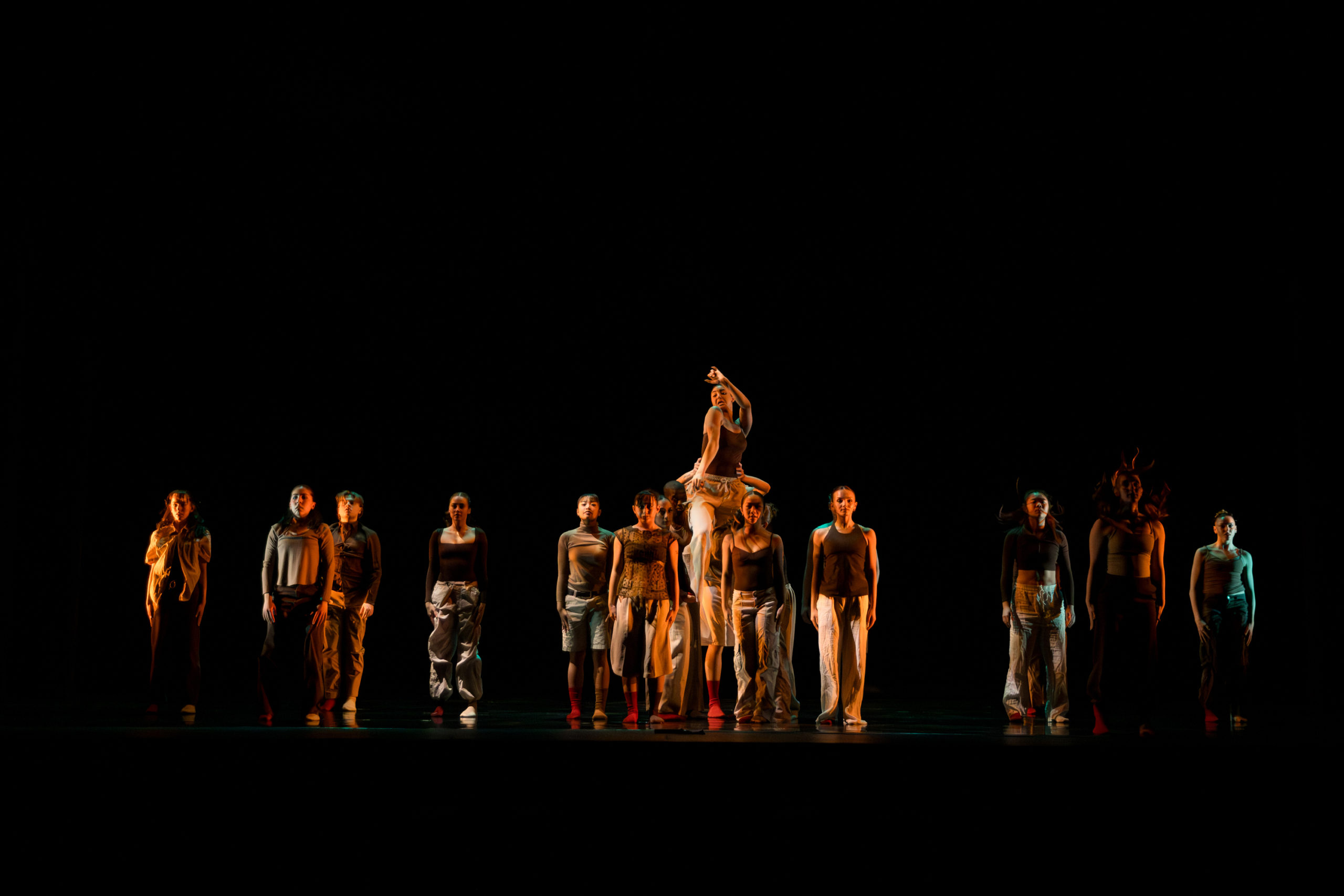
Second-year student Ethan Ryder opened the show with a bang, to the bass-heavy “Les humains” by Salut C’est Cool. Titled Champignons, the piece included 19 dancers, moving in and out of formation, creating shapes similar to a cluster of mushrooms.
Costumed in earthy tones and a single red sock each, to evoke mushroom caps, the performers resembled a living forest floor. The visuals were inspired by an ecological story Ryder wanted to tell.
Ryder described his choreographic inspiration to be a comparison of humans and mushrooms. “Mushrooms are very invasive, but they also have a purpose,” Ryder said. “They help get rid of a lot of diseases on other plants, even though they may cause their own.”
The piece’s movements, though often uniform, always featured a leader, reflecting the nature of our society. “They really work in this big pack, but then there’s always that one who seems to have more power over the rest,” Ryder said.
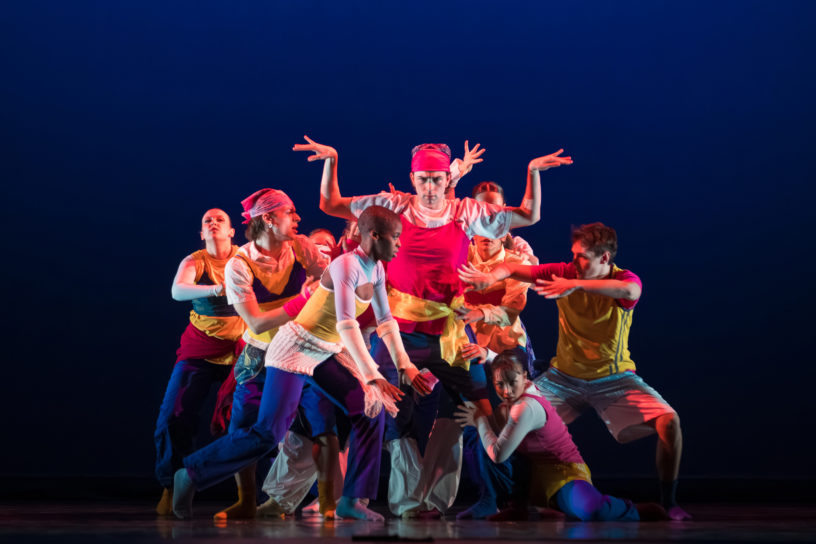
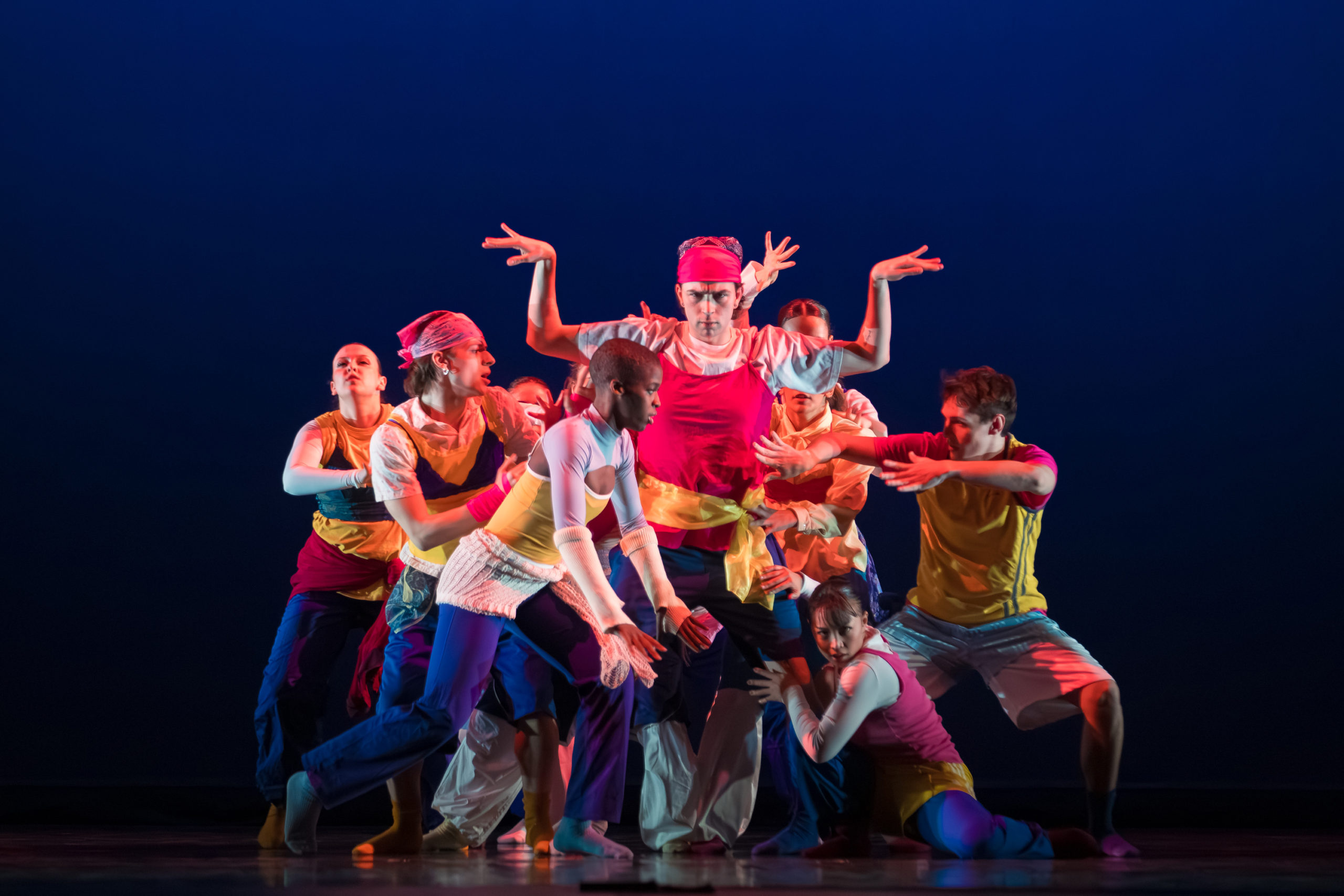
A visual prompt also informed Mecha (メカ), a quirky, high-energy piece complemented by colourful costumes. Hailey Baliat, a second-year student, credits its inspiration to a song and album cover shown to her by her dad: “Love Missile F1-11” by Sigue Sigue Sputnik. Baliat titled the piece after the Japanese word for the figure on the cover: a humanoid robot.
To capture her desired visual, Baliat’s choreography featured structured movement and lifts to mimic the formation of a robot. The piece’s costuming was very intentional, with lots of colour and layering. “I was hoping each dancer would have each of the [robot’s] colours on them,” she said. “So that it would look like a unified, giant mecha suit.”
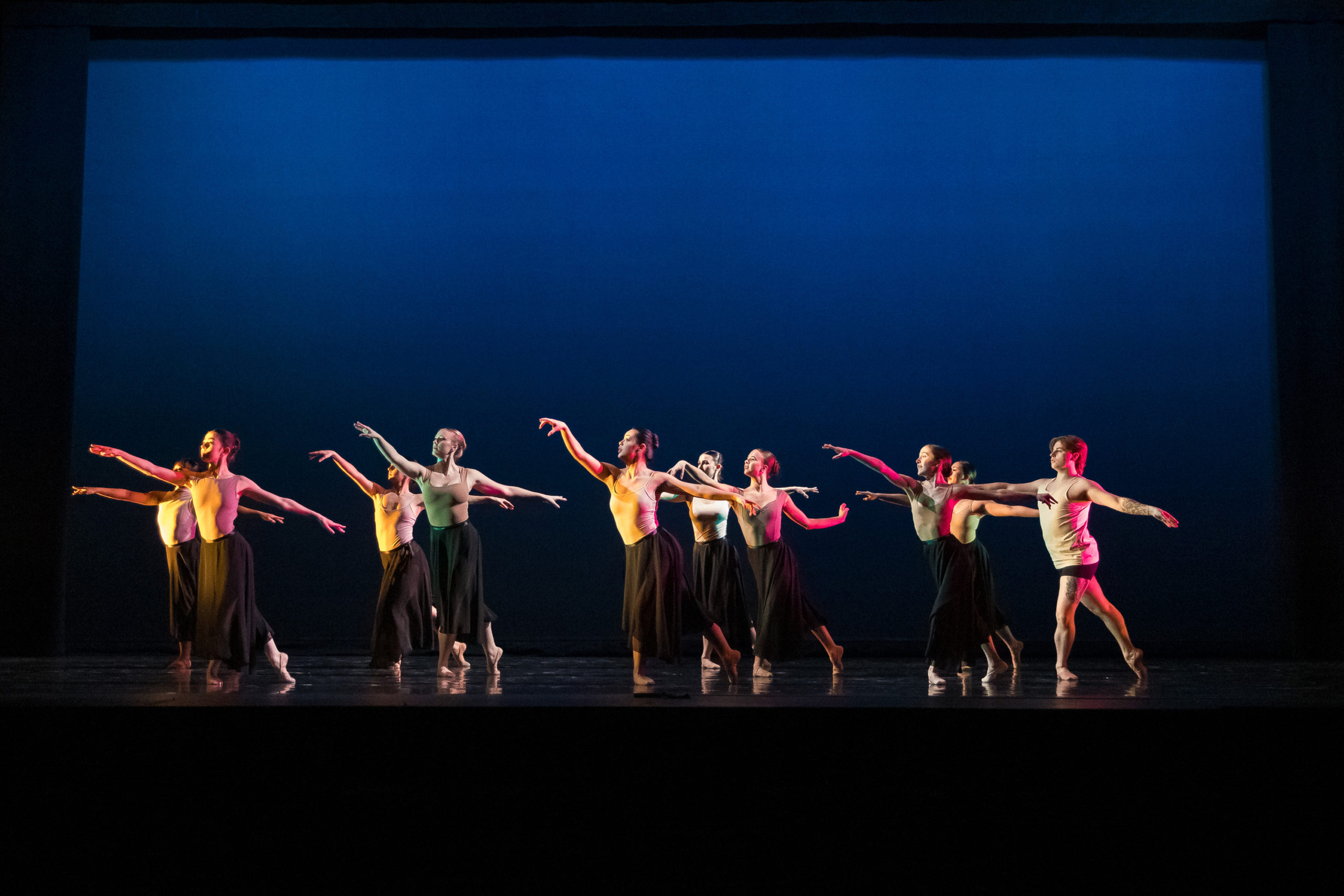
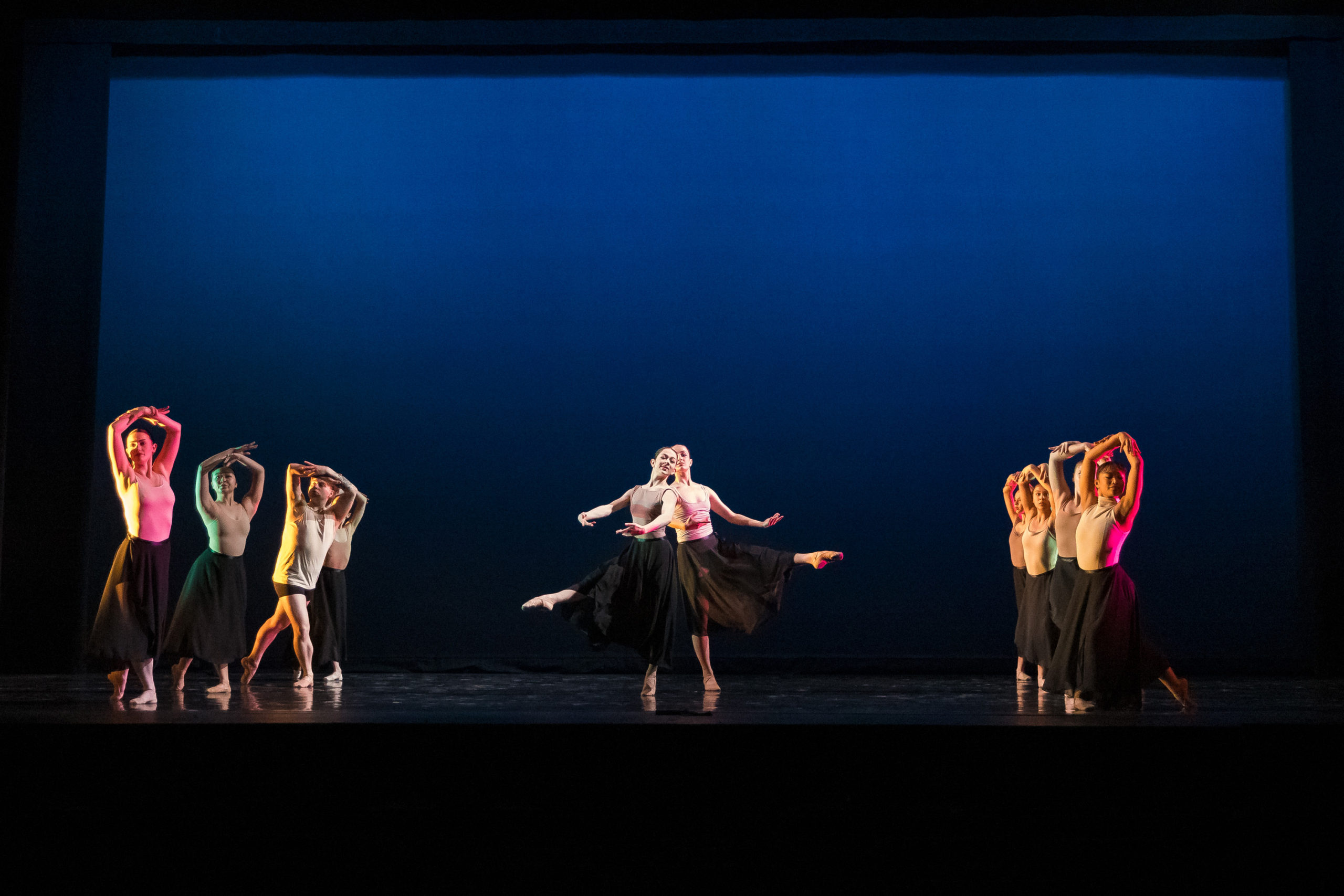
The show’s range stood out through its tonal contrasts, including both upbeat performances and pieces that explored emotional struggle and perseverance. In Elegy for Innocence, second-year student Marcella Battel paid homage to her passion for ballet while exploring the weight of life’s transitions.
The piece was separated into three parts, gradually shifting until “the movement qualities broke the barriers of classical ballet,” she said. Through stylistic transitions, Battel aimed to depict the naiveté of youth and and the suffering of our transition into adulthood. The performers fell, leaned on each other and concluded the piece standing tall and proud.
“I hope that in the dancer’s expressions…through their posture, through their face, through their movements, that it shows something uncomfortable did happen but we were not beaten down for that. We did not suffer. We came out stronger on the other side,” Battel said.
Another profoundly emotional piece was choreographed by third-year student Jade Rocan, capturing the experiences of grief and loss. The piece began with dancers laying and kneeling alongside one another, backtracked by an orchestral song featuring wavering, wailing vocals. As the song progressed, the dancers’ movements accelerated to a dramatic crescendo.
Rocan wanted to create a piece that provoked authentic catharsis for the dancers and audience alike. “The way we are…brought up doesn’t quite equip us to be able to understand mechanisms of adaptation or of growing through the pain,” she said. “There’s a lot of frustration that builds up.” The choreography was designed so the dancers could “build up the feelings that they needed to feel in the moment,” Rocan said.
Louis Laberge-Côté, the show’s producer, has worked on the show for many years. When asked what he hoped audiences would take away from this year’s performances, Laberge-Côté touched on the power of dance’s universality.
“It is magical,” he said. “It is non-verbal communication that happens through people who are not even looking you in the eye. They are distant from you and yet, their feelings might affect you. And I love that.”








Leave a Reply