

By Nadine Alsaghir
After nearly two years of advocacy, Toronto Metropolitan University (TMU) has extended domestic tuition eligibility to a group of international students who were approved for reclassification before a policy change in July 2024.
This policy allowed a group of international students with open work permits to pay domestic fee rates. However, on July 10, 2024 an email sent to affected students from the Office of the Registrar announced that starting Fall 2025, the policy would no longer include those with open work permits. To remain eligible for an international tuition exemption, students needed to submit new documentation of a closed work permit, the email read.
The Eyeopener has obtained both emails.
The change to exemption eligibility affected over 200 TMU students, most of whom are Iranian, forcing them to pay close to five times as much in tuition.
This policy was originally put into place after the federal government made it easier for Iranian citizens to stay in Canada if they were already here, amid brutal crackdowns in Iran by the Islamic Republic (IR), as previously reported by The Eye.
Now, TMU is extending the exemption for students with open work permits who were approved for domestic fee rates prior to the updated eligibility change on July 10, 2024, according to an email sent by Provost and Vice-President Roberta Iannacito-Provenzano on Aug. 27.
In the email, which was sent to the president of TMU’s Iranian Students’ Association (ISAMET), Iannacito-Provenzano wrote that the goal of the extension is to, “ensure students receive the domestic fee assessment and any applicable account adjustments as efficiently and accurately as possible.”
The email also stated that all impacted students will later receive an update from the Office of the Registrar, “outlining what this extended exemption means and the next steps to be taken.”
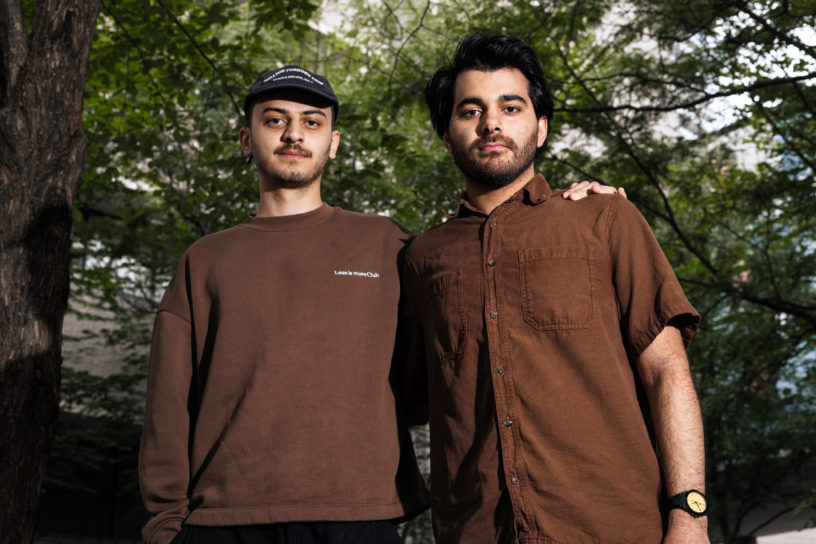
Karan Kaviani, a fourth-year biomedical sciences student and president of ISAMET, said in an interview with The Eye that reading the email was both a shocking and happy moment.
“It proved to me one more time that if we keep pushing and we don’t give up, we’re finally gonna get the achievement that we are looking for, or at least motivate other people to continue the work that we started,” Kaviani said.
He said that in a conversation with Saied Vafa, co-founder of the University of Toronto Students for a Free Iran, Vafa described ISAMET’s advocacy as one of the biggest student campaigns he’d seen produce a positive result.
The nearly two years of advocacy included numerous meetings, petitions, protests, conversations with members of provincial parliament (MPPs) and an Ombudsman complaint, as previously reported by The Eye.
This included an in-person demonstration in front of Jorgenson Hall on June 17.
Kaviani said pursuing peaceful negotiations and meetings could encourage the university to acknowledge its actions, which helps build trust between the two sides.
Amirreza Foroughifar a first-year master of occupational and public health student, and advocacy lead and vice-president of ISAMET said the decision felt “too good to be true,” given how long they had been pursuing this effort.
“All the indications we had was that it’s not going to work…we were in the depth of the darkness and we were kind of brought back from it,” he said.
Kaviani said he believes the turning point was a petition they created with the help of three Iranian professors at TMU, collecting 110 signatures from faculty members and staff at the university.
He also said he reached out to the former Ontario Minister of Colleges and Universities, Reza Moridi. Kaviani said Moridi sent a letter on behalf of ISAMET to TMU President Mohamed Lachemi, which he believes may have also played a role in the decision.
Kazem Fayazbakhsh, an associate professor of aerospace engineering at TMU, was one of the professors who helped create the petition. He said he sees his role much larger than simply instructing courses.
“International students need much more help, because they don’t really have a support network, like domestic students have. So when they come to me after classes, I always try to help them more,” he said.
Fayazbakhsh said he is also motivated to help because he understands the students’ challenges and the desire to build a future, having moved to Canada from Iran to pursue his PhD.
“Now I know that those students can really focus on their studies, because this was a huge burden for them…distracted by whether you can make the tuition payment and what you’re going to do, and about your expenses and the fact that you cannot get money out of the country,” Fayazbakhsh said.
In February, the IR cut off internet access to Iran following bombing by the United States and Israel, according to Al Jazeera. This, combined with international bank sanctions, have made money transfers from the country difficult or impossible. As of late May, internet access began to be restored but restrictions remain for most.
In an interview with The Eye, Lachemi said over the past two years, the university also introduced “a number of financial and other support measures to help Iranian students.”
He said this included, “suspending late fees and collection activities, as well as other measures to provide students with additional flexibility and support.”
Kaviani said there are some international students who did not get approved before the July 10, 2024 deadline that are excluded from the exemption eligibility and are facing the same financial barriers as before.
Foroughifar is one of these individuals, despite knowing he would not personally benefit if any changes were made because he had applied after the deadline. He said he continued advocating because he wanted to support friends and peers facing financial hardships.
He said he continues to face financial pressures and is working three jobs in order to pay for food and the international tuition rate.
“I’m kind of trying to juggle it all and balance it all…it impacts my sleep, it impacts my quality of eating and my mental state…but I have no other choice,” he said.
Kaviani said ISAMET plans to continue advocating for students who were not included in the policy extension.
He said they are also working with faculty members to find a solution for students in Iran who want to study abroad but are no longer able to take English proficiency exams. According to The New York Times, expanded sanctions were implemented on Aug. 24.
Foroughifar added these students remain in the association’s thoughts and ISAMET will continue working to raise their voices. He hopes their advocacy work will inspire other students who may come from marginalized or racialized communities.
“There are things on our plate. The advocacy and the work doesn’t stop,” he said.






Leave a Reply