

By Jasmine Makar and Amira Benjamin
Content warning: This editorial discusses sexual violence and trauma.
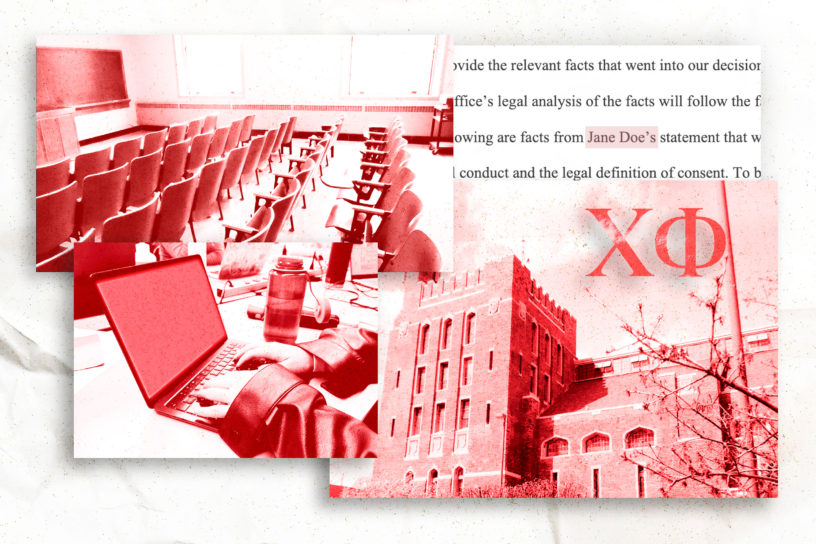
The coverage of Cornell University student Jane Doe’s sexual assault case didn’t begin on Sept. 16 when she first filed a lawsuit against her university, the Chi Phi fraternity and the seven main defendants. It started on Nov. 8, 2024 when The Cornell Daily Sun first reported a fraternity’s suspension following reports of sexual assault and drugging.
For months, Sun senior editor Cereese Qusba had been following the story: speaking to Jane Doe and her lawyers, researching Cornell’s policies and getting the facts right. Qusba told The Cut that although it’d been a year since the incident when she began reporting on it, she was determined to not let it go uncovered .
The culture of sexual violence and predation on Cornell’s campus—as well as the administration’s failure to respond to it—had been long acknowledged, based on many passionate responses to the case by both current and former students. The Sun reported that in 2024 alone, 23 cases of on-campus rape were reported to Cornell.
To ensure the names would not be buried, the Sun published an editorial doing what the university “would not,” naming the seven accused: Matthew Ingalls, Jonathan Newell, Winston Lee, Gillio Lopes, Diego Sarabia, Scott Norris and Scott Kretzschmar.
Weeks after Jane Doe’s initial report, interim Cornell president Michael Kotlikoff issued a public statement regarding the university’s intention to investigate. “Only those who perpetrate sexual violence benefit from its concealment,” it read.
Kotlikoff wrote this in November 2024, while his university was simultaneously supplying incomplete information from its investigation to the District Attorney’s (DA) office. From the information Cornell supplied, the DA decided a criminal investigation was unnecessary, and no charges were laid. The Sun also reported that the Ithaca Police Department never received reports of Jane Doe’s alleged sexual assault.
According to The New York Times, Jane Doe then engaged the university’s Title IX office, which ensures the school complies with federal civil rights laws against sex-based discrimination, sexual harassment and sexual violence. This launched another investigation into the incident in January 2025—another step taken by Jane Doe months after her initial report.
Following Jane Doe’s lawsuit, the DA reopened the case, but just a few days later, New York Governor Kathy Hochul signed an executive order to appoint a special prosecutor to oversee an investigation, ending the DA’s involvement entirely.
“This has, in turn, undercut my faith, and the public’s faith, in the District Attorney’s ability to effectively investigate and prosecute the case at this time,” Hochul wrote in her statement.
Although legal action should have been conducted in 2024, the blame cannot solely be placed on the DA. Cornell can also be held responsible for a lack of transparency, withholding information in the initial investigation.
Just a day before the alleged assault occurred, the Sun reported that a drug-related arrest was made at Chi Phi by Cornell campus police.
The university is now accused of negligence, violation of state human rights and education laws, and negligent infliction of emotional distress.
Throughout Jane Doe’s lawsuit, it is reiterated that Cornell had a duty to protect Jane Doe as an undergraduate student in the university’s care. But two years later, here we are: Jane Doe did everything she was ‘supposed to do’ as a victim—and it was her own university that failed her.
Jane Doe travelled across the country alone, as a non-legacy admittant, to one of the most academically rigorous schools in the United States with an eight per cent acceptance rate. She paid nearly $100,000 USD in tuition, involved herself in Greek life and took a chance to achieve her goals at Cornell. It’s a story that has played out on so many other campuses.
The Sun’s continued coverage of the seven accused and the lawsuit is providing the care and justice the university did not. By documenting every step (and misstep) of the administration, the Sun is serving justice to students who deserve to know what is being hidden from them.
The Sun’s reporting has been remarkable. And it’s far from the first time student journalism has achieved this. University administrations benefit from complicity to protect their image. In Cornell’s case, this enabled dangerous behaviour. But student journalists, who are beholden to students and students alone, are in the unique position to call this out.
In 2021, after rumblings online, Western University’s student newspaper, the Gazette published a story with The London Free Press, detailing mass drugging and sexual assaults during O-Week festivities. The story broke news of the horror over 30 women experienced at a student residence and sent shockwaves across Canada.
Concordia University’s The Link has historically covered the toxic culture of sexual assault and harassment on their Montreal campus, holding the administration accountable for their lack of transparency. This problem that can be traced over a decade.
Less than a week ago, The Stanford Daily reported that their university cut a sexual assault awareness program due to “budget cuts and program changes”—the same campus which was at the centre of the Brock Turner case a decade ago.
Time and time again, stories from sexual violence survivors indicate a need for change, whether it’s in the legal system, conversations surrounding rape culture or university policies. And until change comes, until survivors receive the peace and justice they are denied, journalists are obligated to keep calling on those with the power to bring about these changes.
As Qusba said in her interview with The Cut, “Our reporting is also bringing to light that this is not an isolated incident and that people have experienced similar things in Greek life, whether at Cornell or other universities. Our coverage was absolutely completely raw from the lawsuit and nothing was concealed. At a minimum, that’s what we can do as the student newspaper.”




Leave a Reply