

By Izabel Mensah
Image Arts: Film alum and author Jordan Tannahill’s latest novel The Living Realm is a compelling contemplation of Queerness, aging and nature.
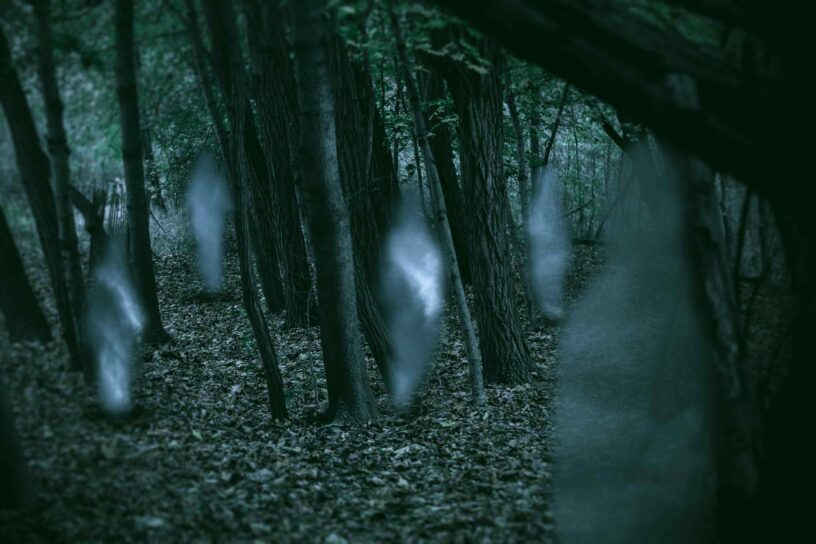
The novel explores a complex interpretation of Queer aging through the lens of an unnamed male protagonist. As an older gay British archeologist, the character finds himself confronted by the ghosts of dead lovers wandering Teufelssee, a lake in Berlin popular among gay men for cruising.
Written over four years and published this September, The Living Realm is Tannahill’s third novel. Since graduating from Toronto Metropolitan University in 2011, Tannahill has had a storied career in both theatre and literature. He lived in Toronto for a decade before moving to London, and during this time developed plays for Canadian Stage. Tannahill now lives in New York City where he’s debuted plays Off-Broadway. In 2021, his novel The Listeners was shortlisted for the Giller Prize.
In an interview with The Eyeopener, Tannahill said he took inspiration for his latest novel on a trip to Berlin in 2021 where he visited Teufelssee, which is within the locality of Grunewald, an expansive urban forest.
“It’s a site that has always drawn me since I first visited,” he said. “Probably sometime not long after I graduated university.”
The name of Teufelssee, and its neighboring hill—Teufelsberg—on the eastern side of the lake have the same origin: the word for “devil” in German. Teufelsberg itself is a manmade hill built from the ruins of Berlin after firebombing in the Second World War.
“The fact there were men cruising in the shadow of the ruins of firebombed Berlin—and sort of amidst the ghosts of post-war Berlin—really sparked something in my imagination,” he said.
Tannahill said his inspiration centres on “the idea that the forest and that cruising therein could be a sort of communion with the dead, or with everyone who ever experienced pleasure in the woods,” Tannahill said.
The novel’s protagonist spends nights in the forest, where he encounters his past lovers.
“Our protagonist is somebody for whom the forest represents both a space of refuge and of pleasure and escape—but also of great loss,” Tannahill said. “He’s quite literally haunted by the spectres of his past.”
Tannahill said the way he wrote about cruising in the novel was inspired by the “lyrical detail” he found in the writing of Annie Dillard, specifically her 1974 book Pilgrim at Tinker Creek.
“She documents the rewards of patience—of time-taking, noticing and slowing down to the pace of nature,” he said.
During an Oct. 31 panel at the Toronto International Festival of Authors titled “Ghost, Secrets & The Uncanny,” Tannahill joined Saleem Haddad, author of Floodlines, to discuss their novels and their respective places within the Queer literature scene.
At the panel, Tannahill spoke on the creative decision behind the namelessness of his protagonist. He wanted to create a “portrait of place” through its setting and a voice with multiple perspectives rather than a single narrative. The decision, he said, allows the reader to be fully immersed.
For the protagonist, seeing his deceased lovers brings feelings of repressed survivor’s guilt. This sentiment is devastatingly shared amongst older gay men that lived through the AIDS epidemic and lost friends and lovers alike.
At the core of the novel, and Tannahill’s exploration of cruising, is a conversation on the connection between bodies and nature.
“When you’re having sex in nature you’re also having sex with nature, to a degree,” said Tannahill, “You’re leaning up against a tree or moss, and that’s part of the sensorial experience of it.”
Tannahill said the novel allowed him to explore this connection through his own ruminations on topics ranging from pleasure to time and mortality, and specifically, the “idea that we are of the Earth and return to the Earth.”
In a lot of ways, Tannahill says, he wrote the book as a way for himself to explore these ideas.
“There is this quite literal communion with nature,” he says. “A lot of time cruising is just spending time alone in nature. You’re walking, you’re waiting, you’re waiting for something to happen.”




Leave a Reply