

By Aditi Roy
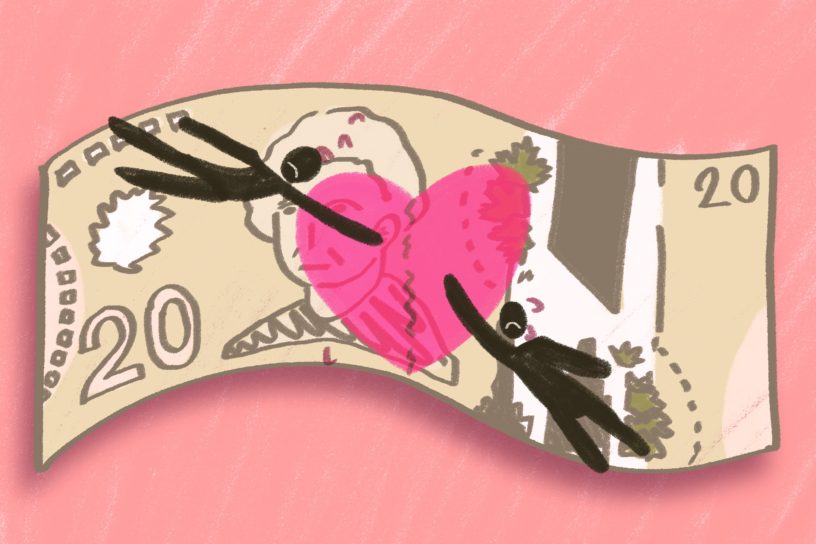
A 2026 BMO study reveals that Canada is in the midst of a “dating recession.” Toronto Metropolitan University (TMU) students are sharing their perspective on the dating scene. The rising costs of living and youth unemployment are significantly affecting students’ desire and ability to date. The study shows that around 49 per cent of the singles sampled said dating was cost inefficient.
The term “dating recession” refers to the stark decline of romantic relationships among the younger generations.
Esha Mudassar, a third-year public health student at TMU, shared her rather bleak thoughts on the current dating landscape.
“Honestly, it’s been challenging to the point I’ve just stopped for now…the more you date in Toronto, you’re like, ‘it’s a waste of time’,” she said.
“I feel like everybody’s focused on themselves, which I don’t blame. Everyone’s trying to work on their career, and be financially stable, so they just don’t have time for dating,” she added.
BMO’s sampling of nearly 2,500 Canadians shows that 55 per cent of single people have not been on a date in 2025.
Many TMU students see financial burdens as a barrier for them to enter and sustain relationships.
Louis Assad, a third-year business management student has been working all through his university career.
“I wouldn’t really be able to take my girlfriend out to dinner or anything if I didn’t have [two] part-time jobs,” he said in regard to his almost four-year long relationship.
Mudassar believes that not being financially stable is a good enough reason to abstain from dating.
“If you do want to be able to treat the person [you are interested in] the right way, you do have to be financially stable,” she said.
Evgenia Bogdanova is a registered psychotherapist at Kat Kova Therapy and doesn’t label this approach as good or bad.
“I do see how they’re pushing and delaying dating because they’re more concerned with financial stability and so it’s not coming from a place of fear,” she said. “It’s more coming from: this is what I have to do first…but then it means they’re delaying relational experience, and there could be some…shame and insecurity around that later.”
Many students on campus still remain optimistic, believing that fostering relationships doesn’t necessarily require a large budget.
Assad shares that most of his date nights consist of less “extravagant” activities.
“We do most stuff without having to spend money…just watch movies, we always watch a show together or something, it’s just small stuff like that,” he said.
Meiling Menin, a third-year film studies student, seeks out inexpensive activities to spend time with her partner.
“We found cheap options, we only default to those options because I’m not spending $25 for a meal,” she said.
“During the summer, we tend to do more low-cost things…walking around the city, buying a drink, but keeping it cheap, on the lower end not really expensive stuff,” she added.
Traditional gender norms have also played a large role in why heterosexual students fear dating prospects.
The same BMO survey found that 58 per cent of men expect to pay for all date expenses including food, drink and transportation. 35 per cent of male participants felt like dating was hampering their financial goals.
Schroeder Reitzel, a third-year film studies student said, “There’s definitely more pressure on men to pay for that stuff…I think men kind of put that pressure on themselves by asserting that they ought to be ‘breadwinners.’”
Assad agrees, saying that “Maybe [it’s a] pride thing, how they were raised, maybe a little bit of ego. As a man, you’re raised to be like, ‘A man should provide.’”
He also challenges this notion, adding that he would perceive a person demanding for all the bills to be paid by their partner as a “red flag.”
“We live in a world now where men and women, we’re supposed to be on the same level…I grew up with my mom, who’s a doctor, she supported [the family] more than my dad,” he said.
Haozhi Li, who is studying his PhD in management at TMU, explains the larger issue of economic induced social comparison. “If young men observe others who can afford expensive gifts/restaurants, they would most likely engage in upward social comparison…[this] will likely induce some detrimental reactions/feelings such as envy and resentment,” he said in an emailed statement to The Eyeopener.
Reports show that 34 per cent of men do feel pressure to treat partners to expensive dates.
Mudassar recognises the importance of women’s financial independence, but carries the expectation of her date paying, especially during the “courting phase.”
“Show me that you’re worth it and show me that you can take care of me…even subconsciously as women, that’s what we’re looking for,” she said.
Mudassar clarifies that she doesn’t always expect them to pay but does expect thoughtful gestures and dates.
However, Menin stands firm in her belief that things should be split 50/50.
“I think women should be financially independent, do not rely on somebody…keep money for yourself as well never go 100 per cent, you never know what will happen in life,” she said.
Bogdanova’s professional advice to the issues discussed is simple. “Just date,” she said.
“I recommend to have serious conversations…sit down and have a conversation together in terms of how you’re going to be going about budgeting,” she said, noting that not doing so in the early stages could cause serious issues later on.








Leave a Reply