

By Milla Ewart
A Toronto Metropolitan University (TMU) class of 2020 alumnus is building a prediction exchange that aims to comply with Ontario guidelines as Polymarket faces a two-year ban.
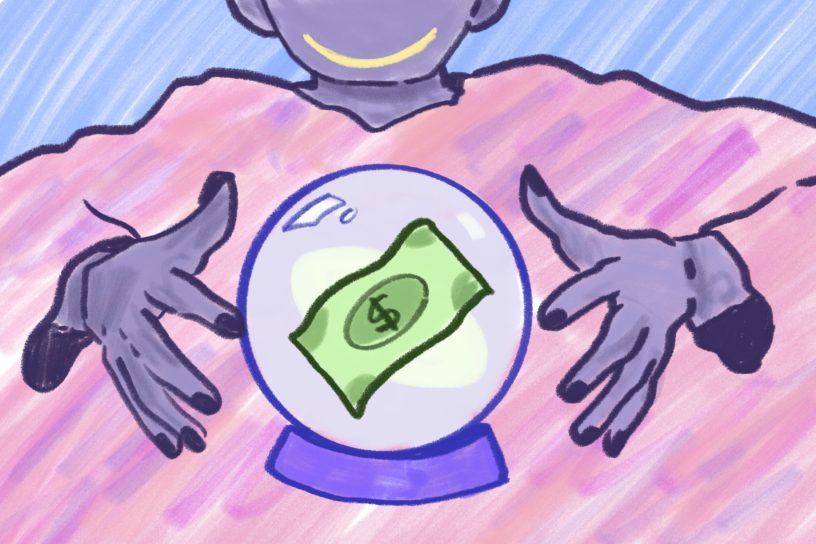
Prediction markets let users trade on yes-or-no contracts whether a specific result will happen by a certain date. As interest continues to grow, particularly among young people, a TMU alum using the pseudonym MJ is developing a Canadian prediction exchange, arguing regulation is better than prohibition.
MJ says his creation, the Toronto Prediction Exchange (TPX), is corresponding with the Ontario Securities Commission (OSC) to become a regulated exchange using Canadian dollars, saying “we’re funded and ready to have these conversations and explain why we’re not binary options.”
Canada has banned such platforms due to concerns of manipulation and ethicality. Users can still access US-based platforms, such as Polymarket and Kalshi, through VPNs.
As they fall under the categorization of binary options, prediction markets were banned by the Canadian Securities Administrators in 2017.
Binary options are short-term trades with only two outcomes—if the prediction is right, one receives their pre-determined payout. If wrong, their investment is lost.
Polymarket, an American-based cryptocurrency prediction market, was available to Ontario investors between June 2020 and May 2023. Polymarket did not obtain approval from the OSC, and was able to provide services to Ontarians by operating online from outside the country.
After breaching OSC rules, the company reached a settlement in 2025, paying CA$200,000 and is currently under a two-year trading ban.
While prediction markets are still outlawed in Canada, the business of these markets have seen explosive growth in the United States—growing from less than US$100 million monthly trades in early 2024 to more than US$13 billion per month by the end of 2025.
The TPX website launched on Dec. 25, 2025, recreating the experience of a prediction market using virtual currency, with no monetary value.
“We have the opportunity to do a real good thing here and give a regulated environment for Canadians to participate,” said MJ.
To further reduce risk, he adds that the team is working with data scientists and researchers to develop algorithms that can detect unusual activity and market manipulation on the platform.
“People have to realize, if you’re a student with no mathematics background, your competition is a data scientist who is an expert and they have a desk of people of like four or five traders, with a team of like 20 engineers supporting them,” MJ warns students.
For MJ, the intention of the TPX is not to encourage risky behaviour, but to acknowledge the reality behind these platforms.
The idea behind MJ’s platform seems to resonate with students as they continue to express interest in the field of prediction markets.
Michel Tadros, a third-year business management student, would “absolutely” use prediction markets if legalized in Ontario. “I find it very fun…I know a lot of my friends and peers would also, it would be something that they’d be very interested in,” he adds.
Sebastian Kokalov, a third-year business management student, says “I think because it gives them a little more control in their life. They want to sort of make money where they originally think they couldn’t have.”
The promise of quick cash also makes prediction markets appealing. Platforms like Polymarket and Kalshi attract younger users with engaging predictions that range from economic indicators to extreme scenarios, such as finding out whether Jeffrey Epstein will be confirmed alive by 2027.
Upon reaching an agreement with the OSC, MJ says his platform will only offer contracts that focus on economic indicators rather than sports-betting or provocative events. He says they will be “very traditional products that are not susceptible to market manipulation or insider trading.”
For Tadros, the outrageous predictions are part of the appeal.
“They don’t necessarily have to be edgy, but just like cool— I would say there’s stuff that we couldn’t find normally on other platforms or other informational sites,” said Tadros.
Kokalov points to how far some contracts on Polymarket go to make money, with some even being based on religious beliefs.
“You can trade whether you think Jesus is going to come back this year. You’re stealing money from the people that actually do believe it,” he said.
Whether prediction markets become regulated or remain restricted in Canada, their appeal to young people continues to emerge. Young users are far more aware of prediction market platforms. According to survey data from The New Consumer and Coefficient Capital, 17 per cent of Gen Z and Millennials recognize what Polymarket is, compared to just four per cent of Gen X.
“I think because everyone is selfish at the end of the day and everyone wants money for themselves and they want their own power, they don’t care about the morals or the ethics behind it,” Kokalov said reflecting on the rise of prediction markets amongst youth.
MJ emphasizes the need for regulators to evolve and stay ahead of new ways bad actors might try to exploit these markets and younger users. “If bad actors are stopped, then all of society benefits,” he said.






Leave a Reply