

By Sy Burr
Disclaimer: Yes, there actually is a new cyber science program at TMU but no, even they can’t figure out the elusive concept of two-factor authentication.
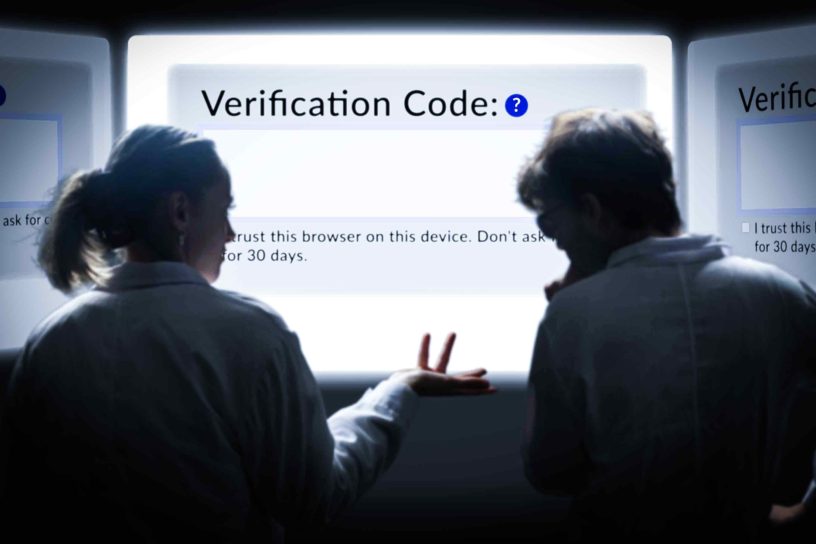
Following the introduction of the new cyber science BSc program at Toronto Metropolitan University (TMU), students and faculty of the program set their sights on figuring out the largest source of cyber security confusion at TMU: two-factor authentication (2FA).
Since its introduction at TMU in 2019, 2FA has plagued every staff member uploading slides at the last minute and every student trying to quickly check their exam grade on their phone at a family dinner during the holidays.
Dean of cyber science at TMU, Liam Keyboard, said he believes the program was a necessary addition to the school, even if it sounds like what a four-eyed computer nerd studies in an 80s movie.
“I came up with the idea for the program when I was tired and cold. I sort of sighed and was shivering when I utilized the onomatopoeia meant to represent the sound of breathing while shivering, also known as ‘brr.’ So it was a sigh and then a brr, and thus cyber [science] was born!” said Keyboard.
Though he may believe this to be true, many students of the new program believe its origin came from the actual concepts the program teaches.
“Wouldn’t the idea for the cyber acience program come from the concept cyber science? I think Dr. Keyboard is a little too ‘deep in the research’ as we cyber scientists say—you wouldn’t get it,” said first-year cyber acience student Keisha Hax, as she hacked into the mainframe.
Regardless of its original origin, as it stands, the program has shifted its entire focus and all of its resources on figuring out 2FA and possibly how to put an end to its confusion for good.
“We have every single oversized loud computer and whirring data machine working overtime on cracking these elusive six number codes,” said Keyboard.
First-year student Whirr Burr (no relation) believes that, while the steps taken to fully understand the complicated system of 2FA may be complex, as a whole, the method of completion is not as hard as it seems.
“It’s a fairly simple process. We take the mainframe of the coagulated bicentennial overdraft loop and connect that to the ransomware phishing encryption key to override the compressor that bypasses flux capacitation on a cryptographical scale never before seen in the cyber world. From there it’s a simple DDoS attack sequence that will create an asymmetric key capable of beaconing browser-based exploitation with the goal of exfiltrating that end-to-end encryption. It’s not rocket science, it’s cyber science,” said Burr, as he input the final keystroke logger into the malware node.









Leave a Reply