

By Molly Simpson
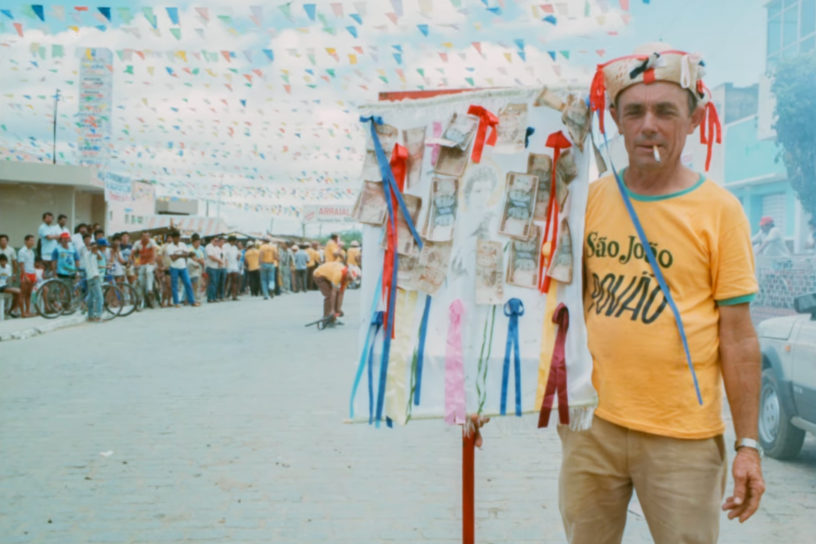
Famed Brazilian filmmaker Katia Mesel visited Toronto Metropolitan University (TMU) on Oct. 6 to showcase five short films and documentaries made over the course of her six decade long career.
The event was hosted at TMU on the second floor of the Rogers Communications Centre. The Cinema of Katia Mesel was hosted in partnership with TMU and Brazil Film Fest Toronto. The event page described it as an opportunity for people to “discover and celebrate” the director and her impact on Brazilian culture.
The director was born in Recife, the state capital of Pernambuco, Brazil in 1948. Described as “pioneering,” Mesel has been attributed to “preserving and celebrating Brazil’s cultural identity,’ by Brazil Film Festival Toronto in a recent Facebook post.
Mesel graduated from architecture and graphic arts in 1970 according to Rio2C, a platform that hosts creative meetings in Latin America. A 1999 article in Ilustrada said Mesel’s film Recife de Dentro Para Fora (1997) won the first international environmental film and video festival.
Mesel began her career in 1968. At the time, filmmaking was a gradual, labour intensive process. In her early career, she would send her film to be developed in Panama, and would sometimes receive it two or three months later. As technology has changed and shifted, she too has adapted.
Mesel said she’s considering using artificial intelligence in her next film, Recife de Clarices. In the question and answer period, she said “it’s a new technique,” she may use “a little,” in the opening of the piece.
The documentary film will cover the story of Clarice Lispector, a Ukrainian-born Brazilian novelist considered one of the most influential and experimental Latin American writers, according to Bosco da Costa, the event organizer and an RTA lecturer at TMU.
The screened films spanned clips of her work from Oh De Casa (1985) to the more recent Parto Sim (2018). Most of the works were documentaries, but Parto Sim, unlike the other four, was more fictionalized.
This film centred the story of a woman from Fernando de Noronha, an archipelago off the coast of Brazil, who was forced to leave the island in order to give birth due to limited healthcare resources on the island.
This film was a departure from the typical documentary style, as Mesel did not typically script her films she explained during the event’s Q&A. However, to get funding for the piece, she applied for a grant meant for fictional work. This translated to actresses with a script based off real interviews Mesel had conducted.
Her film Recife De Dentro Pra Fora was also shown at the Brazil Film Festival Toronto on Oct. 9 alongside Gugu’s World (2026).
Ricardo Bernhard, the deputy consul of the Brazilian Consulate General in Toronto attended the event. He noted Mesel’s final shown film, Parto Sim, had a character living in Canada.
He said there are many similarities between Brazil and Canada culturally and geographically, and said opportunities exist to bring the two cultural ecosystems closer together.
“We have large territories, big populations, big economies, very important native populations, challenges in populating specific parts of the country and protecting the environment,” he said.
He said these similarities show up in the types of art the two countries create.
Bia Piza Maia dos Santos, a fourth-year media production student, came to the event as someone wanting to enter the film industry with an awareness of Mesel’s work.
“She’s done so much for a female and Brazilian filmmaking,” she said.
Dos Santos grew up in Canada but was born in Brazil. She said watching projections of Brazilian culture on screen is motivating.
“I think keeping that part of your identity is really, really important. And she brought a piece of home to Canada,” she said.
When an audience member asked for advice for young women entering film, Mesel gave words of encouragement: “I love this…I say, do it!” she said emphatically.






Leave a Reply