

By Daniel Opasinis
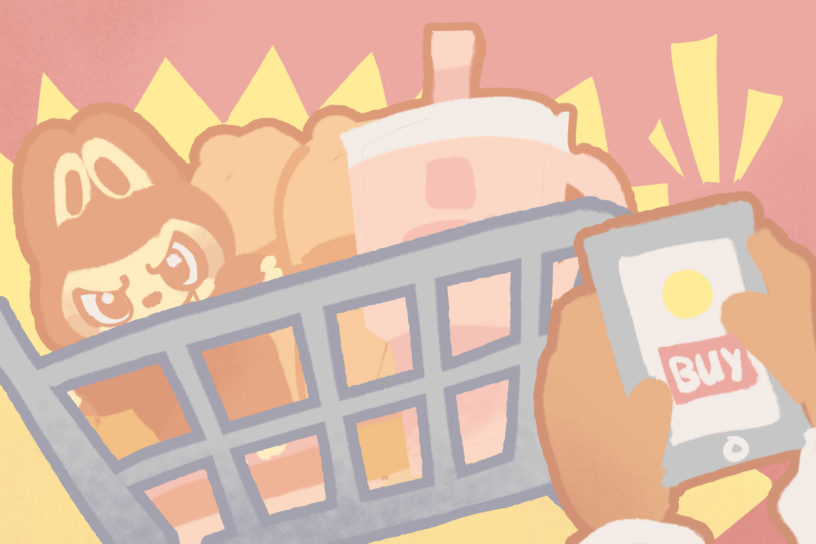
After a summer packed with fleeting trends, students at Toronto Metropolitan University (TMU) are back on campus. Labubus, Dubai chocolate and matcha were just a few words that took the internet by storm over the break, none of which come at cheap prices.
Initially introduced in 2015 as part of a series of picture books by Hong Kong artist Kasing Lung, according to manufacturer Pop Mart’s website, Labubus have since been adapted into the popular plushies that rapidly gained popularity online.
The cheeky creatures are one of many blind boxes—mystery capsules that upon opening, give collectors a chance to find a unique item within.
Third-year politics and governance student Omar Fedawy has spent his summer online, watching the Labubu frenzy from afar.
“It’s nice but I would pay maximum 30 bucks for something like that, not these massive amounts of money. Like, where does this money go?” he said.
Labubus retail on the Pop Mart website for $30 to $40 but can be found through resellers for over $100, not to mention special variants of the doll reaching over $500.
As an international student from Egypt, Fedawy says he is swamped in too many student fees to bother buying trending collectibles. “Instead of paying $400 on a toy, I could use the same $400 to grow something in myself, because things like these [Labubus] just go away,” he said.
Fedawy said he used to feel a sense of loneliness not engaging in the same trends as those around him but that feeling has recently faded.
Zorianna Zurba, a professional communication professor at TMU, says Fedawy might not be so alone in this feeling.
“We’re going out and buying something that we have a general sense of what it is, but we don’t actually know what’s inside the box, right?…We like the idea of what this thing is, we get this added surprise,” she said.
Zurba said Labubus, and blind boxes more generally, provide an element of chance that makes your purchase a gamble. These items “infuse the mundane with a little bit of magic,” she explained.
“We’re sort of seeing something similar to what happened with the beanie babies,” she said, explaining that resellers marking up the price of in-demand merchandise is nothing new.
Abi Junop, a second-year performance production student, says she is an avid collector of trinkets like the Labubu.
“I think I’m a good median for what the average, chronically online person is watching,” she said.
Although she’s never bought a Labubu, Junop says she owns knock-off Smiskis, another blind box character. “I completely understand collectibles. They’re adorable. And it kind of puts you in ‘the know,’ or in the ‘it crowd,’” she said.
Zurba said this “it crowd” is a real thing.
“You can be a fan, for example, of the Blue Jays simply by keeping tabs on the score. You can be a fan of Taylor Swift by knowing all her songs and listening to her on the radio. These are all low cost measures to fandom,” she said.
Since Labubus have a visual indicator—as many people will clip them to their bags—it’s immediately obvious if someone is in on the culture, she explained.
Junop said as a high school student, she felt comfortable spending money on collectables. “I felt completely okay dropping $1,000 over two years because they were things that made me happy…I liked the community that came with it.”
As she’s come into university she said those funds feel better allocated towards rent and food. “I just can’t really justify it, so I’ve been learning to be content with what I have.”
In recent years, according to Zurba, steadfast trends that cater to the need of the time have slowly shifted to microtrends—shortlived fads that piggyback on a viral topic.
To combat the overconsumption that comes with microtrends, Janop said she calculates how long it takes for her to work for an item. “If an item is 60 bucks, is this worth three hours of my labor?”
Fedawy said, “Life has way more meaning than just spending so much money that’s just gonna go in people’s pockets.”





Leave a Reply