

By Sophie Wallace
Disclaimer: a source in this story, Negin Khodayari is the outgoing Editor-in-Chief of The Eyeopener. She was not involved in the production or editing of this story.
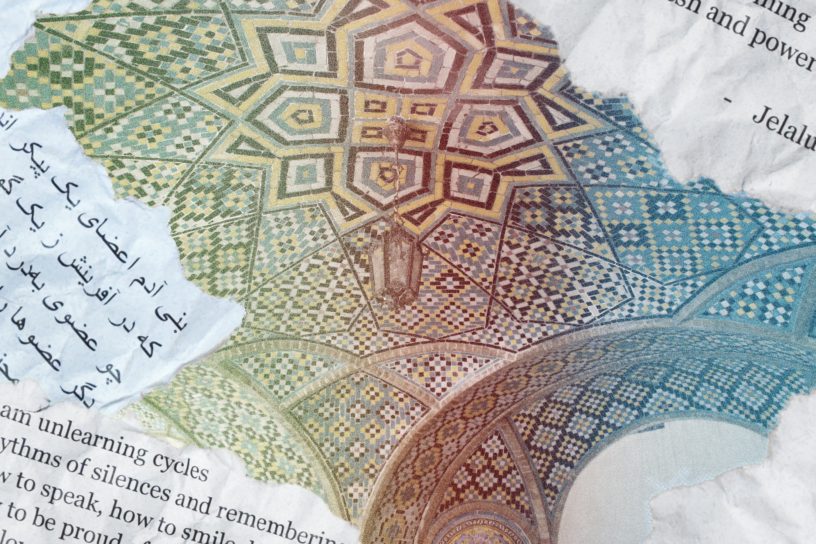
On March 2, U.S.-Israeli air strikes caused irreparable damage to Iran’s historic Golestan Palace, a 14th-century cultural treasure with an intricate hall of mirrors.
Al Jazeera shared that 56 sites of historical and cultural significance have been damaged since the beginning of the US-Israeli war with Iran on Feb. 28.
The bombs fell, despite United Nations Educational, Scientific and Cultural Organization supplying coordinates of protected cultural properties under the 1954 Hague Convention.
Shaya Rahmani, a first-year Master of Journalism student at Toronto Metropolitan University (TMU), hasn’t been back to Iran since he was 17.
Born in Toronto to Iranian parents, Rahmani said he used to visit Iran at least every year throughout his childhood and adolescence to stay with family in Tehran.
Even though Rahmani was born outside of the country, Iran’s theocratic regime conscripts all male Iranian citizens over the age of 18 for two years of military service. So for his last trip, his parents decided to take him around the country to visit some of Iran’s historical, cultural wonders.
“Every Persian kind of carries a pride for [those historical artifacts],” he said.
This year, Nowruz, otherwise known as Persian new year, fell on March 20, almost a month into the current conflict.
Negin Khodayari, an instructor at TMU and The Eyeopener’s Editor-in-Chief, said “there was almost this fire under all of us to make sure that we celebrate, and to make sure that we continue to observe, even though it might not feel right.”
According to Khodayari, Persian poetry is a foundational part of her language and culture. “It’s kind of just a given every family gathering, every party, always, always comes back to us sitting in a circle and singing songs and reciting some sort of poetry,” she said.
Similarly, Rahmani said his mother’s relationship with Persian poetry is akin to a kind of “religion.” “It’s a faith, hope, maybe a direction towards life, a destiny in some sense…it is a part of your history, you might have grown up in it…it’s all you
know, pretty much,” he said.
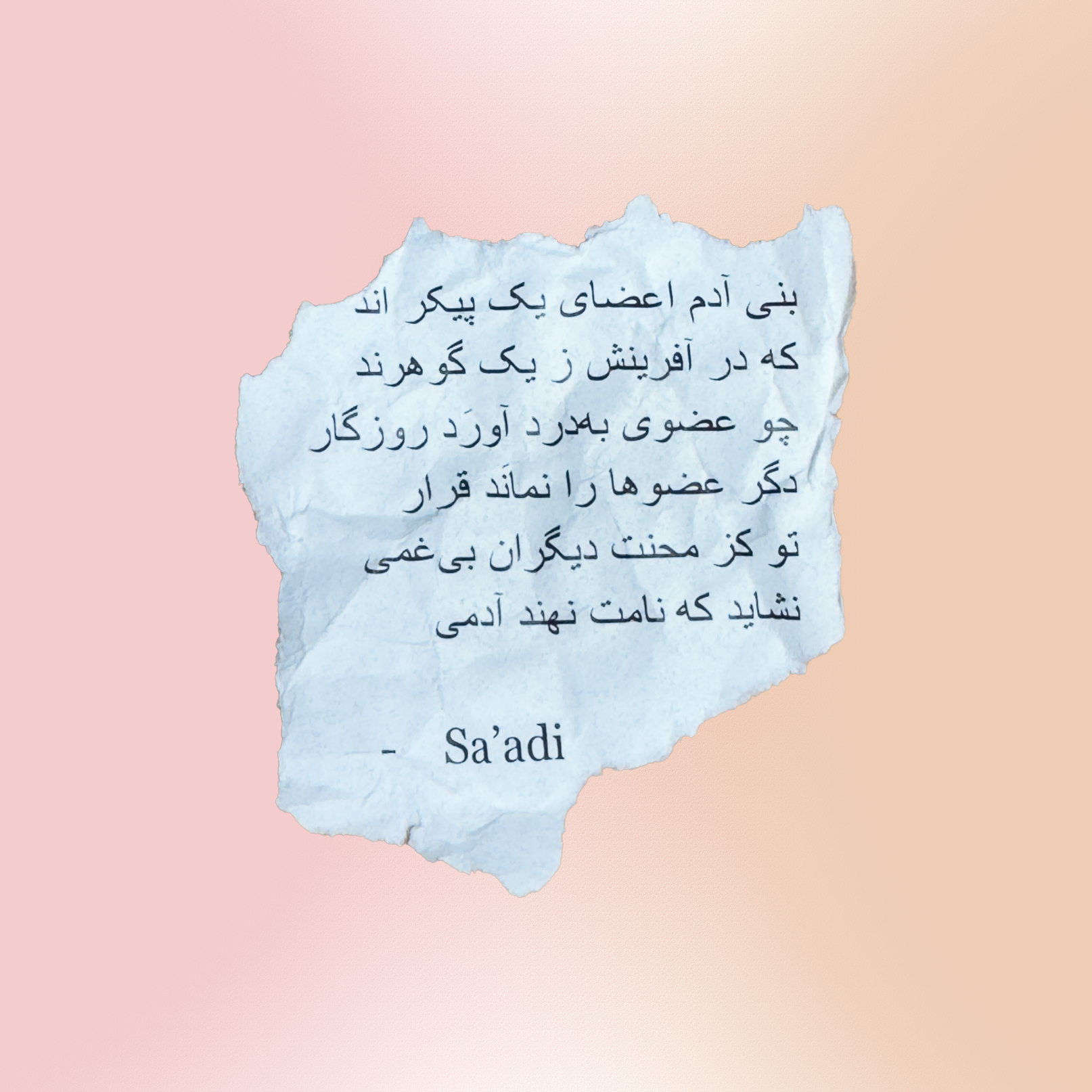
Khodayari said she too grew up in awe of her parents’ knowledge of Iranian poetry. “Someone who is well versed in poetry and literature and has this vast knowledge holds a very almost sacred kind of position in society and in families and in friendships.”
When she was young, Khodayari describes poems existing as a kind of currency in her family. Whenever she wanted something, her mother would ask her to memorise verses by Hafez, Rumi or Sa’adi —whether she got what she wanted depended on whether she could recite the poem by a set date.
Khodayari believes her mother chose to do this partly because, “she felt the greatest gift she could give to her country was to relay language to her children.”
Khodayari cites the many Iranian holidays that revolve around poems. For example, on Yalda, the Persian winter solstice, people stay up all night with family reading the poetry of Hafez, using his book to divine their fortunes for the year ahead.
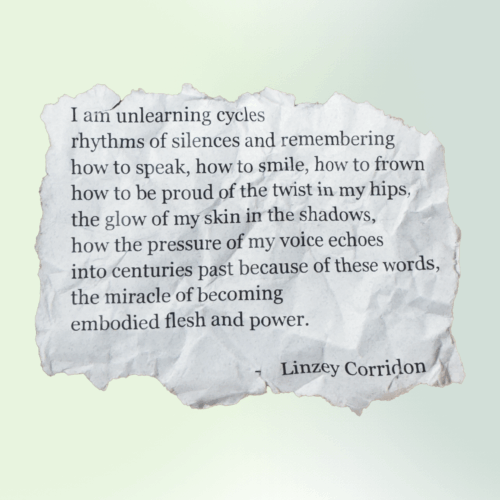
Linzey Corridon, a postdoctoral fellow in TMU’s department of English said, “poetry is one of the oldest forms of expression we have as a species.” Corridon shared with The Eye that he believes language carries an innate ability to move people as well as providing solace and community.
“If a piece of poetry is able to stir anger or to sort of conjure concern in someone, then I think that, in my opinion, could be considered the beginnings of potentially some kind of activist desire…some kind of radical desire to not only feel but to hopefully act on those feel ings,” he said.
Jumoke Verissimo, an assistant professor of English at TMU agreed, saying poetry can be a powerful survival tool in times of conflict. “Poetry tries to, through
looking through the silences in the words that are brought together, create meaning for people who have lost meaning in their situation,” she said.
Verissimo recently published a poetry collection titled Circumtrauma, which navigates the inherited grief, divisions and resilience from the Nigeria-Biafra war (1967-70). “Back in Nigeria during the military dictatorship, poetry helped many survive.”
According to Verissimo, in times of conflict, “[poetry] provides an opening for wounds that do not heal, and it teaches them how to heal because you find a language for the things that you do not know how to speak.” As an Iranian outside
of Iran, Khodayari shared, “there’s a beauty in realising that Persian poetry has reached all crevices of the earth.”
“There’s a deep pride that comes with it. There’s a deep sorrow that comes with it. But I think both of those demand to be felt and demand attention,” she said.
According to Dale Smith, the undergraduate English program director at TMU, the rhythms of poetic language can create a shared bodily experience for people, creating opportunities for empathy. Smith also shared a poem from Canadian poet Norma Cole’s collection Alibi Lullaby with The Eye.
I
it
if
like
was
saw
were
filled
rising
billowing
blooming
smoke
flames
smoke
hilltops
ridge
sky
inevitable
visible
shimmering
pinks
purples
browns
off
not
for
gone
Poetry has the potential to place you concretely on the ground on the other side of the world, said Smith. It asks you not to look away.




Leave a Reply